Neoprene vs Leather Seat Covers: Which Lasts Longer?

Leather lasts longer when you maintain it regularly; neoprene lasts longer when you don’t. Choose leather for a decade-plus lifespan with conditioning, or neoprene for water resistance and minimal upkeep.
When you compare neoprene vs leather seat covers, the real question isn’t which one looks better in a showroom — it’s which will still look good after years of daily driving, sun exposure, spills, and whatever your routine throws at the cabin. Both materials protect your factory upholstery, but they age very differently depending on climate, usage, and how much care you’re willing to invest.
- Lifespan: Cared-for leather can last 10+ years; neoprene typically shows wear in 3–7 years.
- Water resistance: Neoprene shrugs off spills; leather stains and dries out without prompt cleaning.
- Safety: Verify airbag compatibility, seat sensor clearance, and seat-belt buckle access for either material.
- Maintenance: Neoprene needs only a damp cloth; leather needs regular conditioning and UV protection.
- Cost: Neoprene is cheaper upfront, but leather’s longer lifespan can balance the higher price per.
The Short Answer: Which Material Actually Lasts Longer?
Well-maintained leather seat covers can last a decade or more, while neoprene covers typically show meaningful wear within three to seven years. But that headline answer hides an important trade-off: leather only reaches that lifespan with regular conditioning and UV protection, while neoprene shrugs off moisture and requires almost no upkeep. In other words, the “longer-lasting” material depends heavily on your environment and your willingness to maintain it.
| Factor | Neoprene | Leather |
|---|---|---|
| Typical lifespan | 3–7 years with normal use | 10+ years with regular care |
| Water resistance | Excellent | Poor unless treated |
| UV resistance | Fades and degrades over time | Fades and dries without protectant |
| Maintenance | Minimal | Regular conditioning required |
| Upfront cost | Generally lower | Generally higher |
If you park outdoors in a sunny state or regularly carry pets and wet gear, neoprene’s water resistance gives it a real-world survival edge. If you keep your car garaged and don’t mind a quarterly cleaning routine, leather can outlast the vehicle itself.
Material and Construction: What You’re Really Paying For
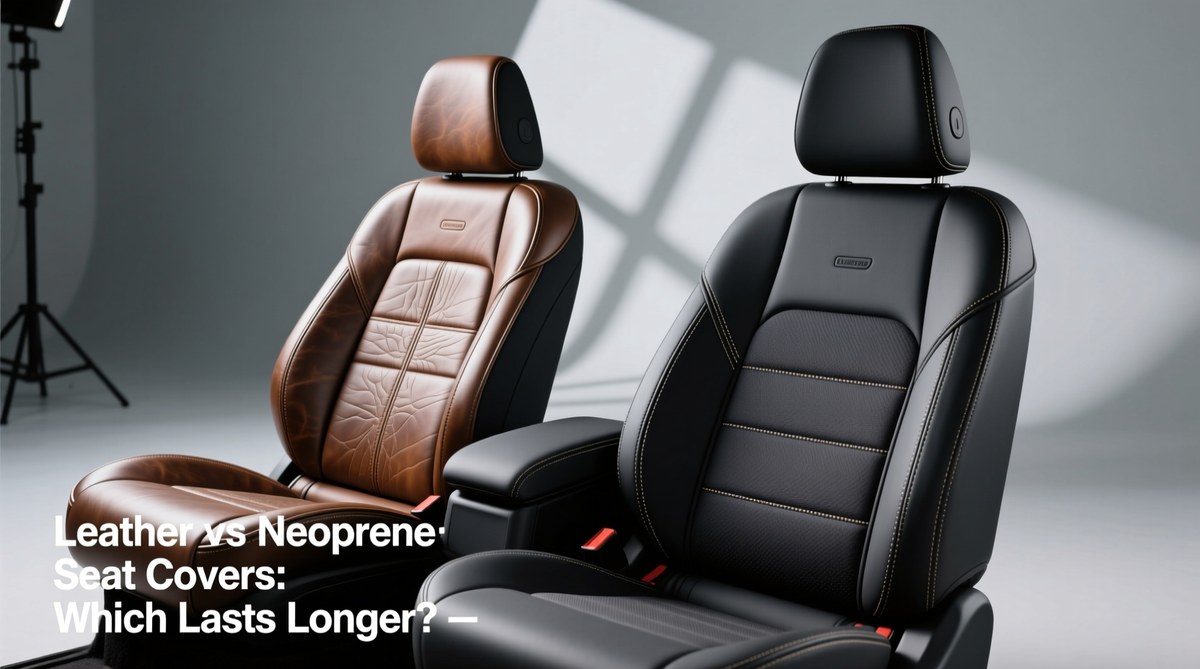
The durability gap starts with how each material is made. These aren’t just different textures — they’re fundamentally different products with different failure modes.
Neoprene: Wetsuit-Grade Flexibility and Water Resistance
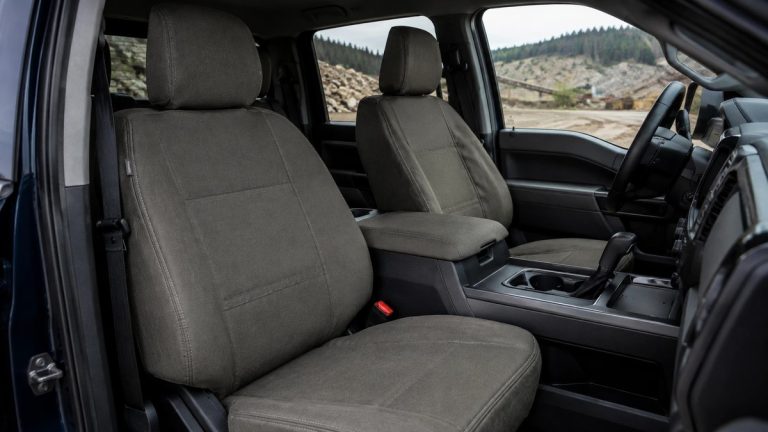
Neoprene is a synthetic rubber originally developed for wetsuits. It’s thick, flexible, and naturally water-resistant. Most automotive neoprene covers are layered with nylon or polyester on one or both sides, which adds abrasion resistance and makes the cover easier to slide over the seat.
That construction gives neoprene its two biggest strengths: it stretches to hug the seat contour, and it won’t soak up spills the way fabric or untreated leather will. The trade-off is that neoprene is essentially a foam — it compresses, and over time that compression shows as sagging or flattening in high-use areas.
Check whether a neoprene cover lists the rubber thickness and outer fabric weight. Thicker neoprene with a denser outer layer tends to hold its shape longer, but it also adds bulk that can make heated seats less effective.
Leather: Full-Grain, Top-Grain, and Bonded Quality Tiers
Leather seat covers come in three broad quality tiers, and lifespan varies dramatically between them:
- Full-grain leather uses the top layer of the hide with natural markings intact. It’s the most durable and develops a patina over time, but it’s also the most expensive.
- Top-grain leather is sanded to remove imperfections and embossed for a uniform look. It’s slightly thinner than full-grain but still durable and the most common premium option.
- Bonded leather is made from leather fibers glued together with polyurethane. It looks like leather at a distance but peels and cracks far sooner — often within a few years.
If you’re shopping on a tight budget, be aware that “leather” at a low price almost always means bonded leather. That material won’t deliver the lifespan the word “leather” implies.
Durability Showdown: UV Exposure, Abrasion, and Daily Wear
Real-world durability comes down to three stressors: sunlight, friction, and moisture. Each material handles them differently.
How Neoprene Holds Up to Sun, Heat, and Moisture
Neoprene’s water resistance is its superpower. Spills bead up, wet swimsuits don’t soak through, and muddy dog paws wipe off with a damp cloth. That makes it the better choice for trucks, off-roaders, and families with kids or pets.
The weakness is UV and heat. Prolonged direct sunlight breaks down the rubber, causing fading, surface brittleness, and eventually cracking. The same degradation accelerates in hot climates. A neoprene cover that looks great after two years in a garage may look tired after one summer parked outside.
Owner-reported patterns also show neoprene wearing thin at the bolsters and seat-bottom edges where occupants slide in and out. The material can also trap heat against the seat, which matters if you live somewhere hot.
How Leather Handles Scuffs, Cracking, and Fading
Leather is naturally abrasion-resistant — that’s why it holds up well to decades of getting in and out of the car. But it’s not waterproof. A single spilled coffee that isn’t wiped up can stain or, worse, dry out the hide and contribute to cracking.
UV light is leather’s other enemy. Sun exposure fades the color and pulls moisture out of the hide. Without regular conditioning, the surface dries, develops fine cracks, and eventually splits at stress points like the side bolsters.
Pet claws are a genuine concern with leather. A dog’s nails can scratch and puncture the surface, and those marks aren’t easily repaired. Neoprene, with its thicker, more forgiving surface, handles claws better. If you’re worried about what a cover does to the factory leather underneath, our guide on whether seat covers damage leather seats covers that angle.
Fitment and Compatibility: Airbags, Heated Seats, and Seat Controls
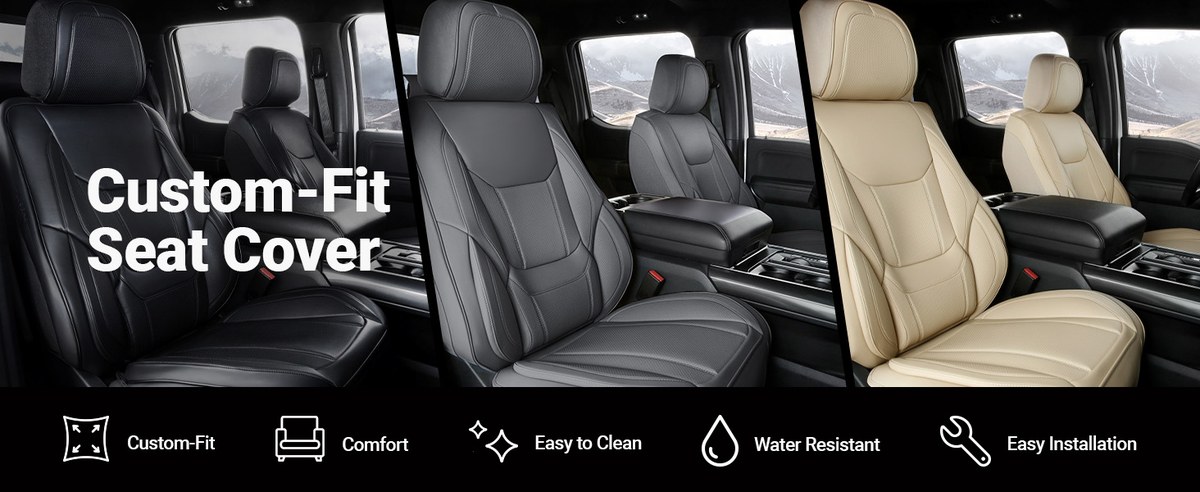
Durability doesn’t matter if the cover interferes with your car’s safety systems or comfort features. This is where fitment decisions carry real consequences.
Airbag Clearance and Seat Sensor Interference
Side-curtain and seat-mounted airbags need a clear deployment path. A seat cover without a designated airbag seam — or one that fits too tightly — can slow or redirect deployment. Always confirm the cover is marked airbag-compatible for your specific vehicle before installation.
Many modern seats also contain occupant weight sensors and seat-belt reminders. A thick neoprene cover can dampen the sensor’s ability to detect a passenger, while a poorly fitted leather cover can shift and trigger intermittent warnings. Our guide to airbag-compatible seat covers explains what to verify before you buy.
Heated and Ventilated Seat Performance With Each Material
Heated seats work by transferring warmth through the seat surface. Neoprene’s thick foam layer acts as an insulator, so heat takes longer to reach you and the seat may never feel as warm as it did with the factory fabric. Leather conducts heat much better, which is why it pairs naturally with heated seats.
Ventilated seats are the opposite problem. Perforated leather covers can allow some airflow, but the material still traps heat in direct sun. Neoprene blocks ventilation almost entirely. If you rely on ventilated seats in summer, that’s a real consideration. For a closer look at the interaction, read our guide on using leather seat covers with heated seats.
Verify make, model, year, and trim before ordering. Check whether the cover accommodates seat-mounted airbags, occupancy sensors, power seat controls, folding rear sections, and seat-belt buckles. Custom-fit covers for your exact vehicle are far less likely to interfere than universal options.
Comfort and Appearance: The Daily Driving Experience
Durability is only half the equation. You have to live with these seats every day, and comfort and looks drive satisfaction as much as longevity.
Neoprene’s Cushioned, Non-Slip Feel
Neoprene adds noticeable padding. The material is soft and slightly grippy, so you don’t slide around on it during cornering. That’s a genuine comfort upgrade for drivers who find factory cloth too thin or slippery.
The downside is warmth. Neoprene doesn’t breathe well, and in summer it can feel like sitting on a wetsuit. If you park in the sun, expect a hot seat until the cabin cools down.
Leather’s Premium Look and Temperature Swings
Leather delivers an interior upgrade that neoprene can’t match. The surface looks and feels premium, and even a well-made top-grain cover can transform a base-trim interior. It also tends to hold its visual appeal better over the long term — provided you maintain it.
Temperature is leather’s daily trade-off. It gets hot in summer sun and cold on winter mornings. Perforated leather helps with airflow, but it still won’t feel as neutral as cloth or neoprene until the seat adjusts to cabin temperature.
- Water-resistant and easy to clean
- Adds cushioning and grip
- Low maintenance
- Fades and degrades in direct sun
- Traps heat and blocks ventilation
- Compresses and sags over time
- Premium look and feel
- Long lifespan with proper care
- Conducts heat well with heated seats
- Requires regular conditioning
- Vulnerable to spills and pet claws
- Higher upfront cost
Installation and Retention: Slipping, Buckling, and Effort
A cover that shifts around isn’t just annoying — it wears faster. Installation quality directly affects how long either material lasts.
Ease of Installation for Each Material
Neoprene’s stretch makes it easier to pull over the seat. Many neoprene covers can be installed without removing the seat, and the flexible material forgives minor alignment mistakes. The challenge is getting the cover evenly positioned before securing the straps, or it can bunch around the bolsters.
Leather is stiffer and heavier. Custom-fit leather covers often require more force, careful alignment, and sometimes the removal of the headrest or even the seat itself for a clean result. If you’re not comfortable with that, professional installation is worth budgeting for. Our step-by-step guide on how to install leather seat covers walks through the process.
Long-Term Retention: Slipping, Creasing, and Seat Belt Buckle Access
Neoprene’s grip keeps it in place initially, but as the foam compresses, it can stretch and develop slack. Leather holds its shape better, but it creases at the natural flex points and can crack along those creases if the hide dries out.
Both materials need to leave the seat-belt buckle fully accessible. A cover that crowds the buckle makes buckling slower and can interfere with the belt’s fit. Check this during installation, not after a week of driving.
- Confirm custom fit for your exact make, model, year, and trim
- Verify airbag compatibility and seat sensor clearance
- Check whether the cover works with heated or ventilated seats
- Review the cleaning instructions and warranty terms
- Confirm seat-belt buckles and seat controls remain unobstructed
Cleaning and Care: Maintenance Effort and Cost Over Time
The material that’s easier to maintain is the one that will actually get maintained. Here’s how the two compare in real-world care.
Neoprene: Rinse, Wipe, and Dry
Neoprene is the low-maintenance winner. Most spills wipe off with a damp cloth and mild soap. Mud, sand, and pet hair don’t embed the way they do in fabric. Some neoprene covers are even machine-washable — check the manufacturer’s instructions before assuming yours is.
The main care rule is to avoid harsh solvents and high heat. Bleach, strong degreasers, and hot dryer cycles can break down the rubber. Air-dry the covers if you remove them for cleaning.
Leather: Conditioning, Cleaning, and UV Protection
Leather demands a routine. You’ll want a pH-balanced leather cleaner for spills and a conditioner every few months to keep the hide supple. A UV protectant designed for automotive interiors helps slow fading and drying in sunny climates.
This isn’t expensive, but it’s consistent. Skip the conditioning for a year and the leather will start to feel stiff, then crack. The cost of replacement leather covers far exceeds the cost of a bottle of conditioner. For a fuller breakdown, our article on whether leather seat covers are worth it weighs the maintenance against the payoff.
Always test any cleaner or conditioner on a hidden area of the cover first. Products formulated for factory leather may not behave the same on aftermarket covers, especially bonded leather.
Safety Limitations and Ownership Costs: What the Brochures Skip
Two topics rarely appear in marketing photos: safety limitations and total cost of ownership. Both matter more than the material’s appearance.
Safety Limitations: Airbag Deployment and Seat Belt Fit
Seat covers can interfere with safety systems in three ways. First, a non-compatible cover can block or slow side airbag deployment. Second, a thick cover can change how the seat-belt buckle and belt geometry fit your body, especially for smaller or younger passengers. Third, occupancy sensors can misread a passenger’s weight through a thick or shifting cover.
None of these are reasons to avoid seat covers entirely — millions of drivers use them safely. But they are reasons to buy airbag-compatible, custom-fit covers and to verify the seat-belt buckle remains fully exposed after installation.
Ownership Costs: Upfront Price vs. Replacement Cycles
Neoprene covers generally cost less upfront than leather at the same fitment level. Custom-fit neoprene sits in a mid-range price band, while full-grain leather custom covers sit at the top of the market. Bonded leather is cheaper but replaces the durability problem with a shorter lifespan.
The math changes when you factor in replacement. A neoprene cover that lasts five years and costs half as much as a leather cover that lasts ten may end up costing about the same per year. The difference is that leather requires ongoing conditioner purchases and more cleaning effort. If you want a detailed look at pricing, our guide to leather seat cover costs breaks down the bands.
The Verdict: Match the Material to Your Driving Routine
There’s no universal winner. The right choice depends on where you park, what you carry, and how much effort you’re willing to spend.
Choose Neoprene If You Value Utility and Low Maintenance
Neoprene is the right call if you drive a truck, SUV, or off-roader; carry kids, pets, or wet gear; park in a garage or shaded area; and want covers that handle spills without a second thought. It won’t last as long as cared-for leather, but it will survive the daily abuse that would destroy leather in a year.
Choose Leather If You Prioritize Aesthetics and Resale Appeal
Leather is the better choice if you want a premium interior look, keep your car garaged, are willing to condition the covers regularly, and want a material that can last a decade or more. It also tends to appeal to buyers if you sell the car later. If you’re deciding between leather and cloth as factory options, our comparison of leather vs cloth seats adds more context.
Leather lasts longer when it’s cared for; neoprene lasts longer when it’s neglected. If you want a decade of service and don’t mind a conditioning routine, choose quality leather. If you want water resistance, easy cleaning, and a lower upfront cost, choose neoprene — and accept that it will likely need replacement sooner. Before buying either, verify airbag compatibility, custom fit for your exact vehicle, and how the cover interacts with heated or ventilated seats.