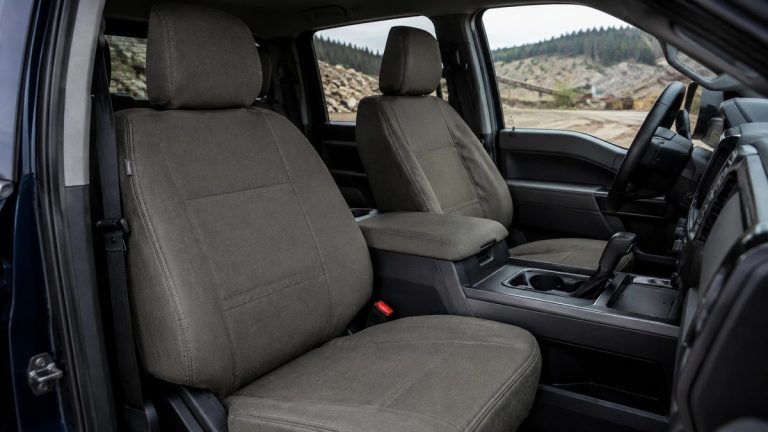
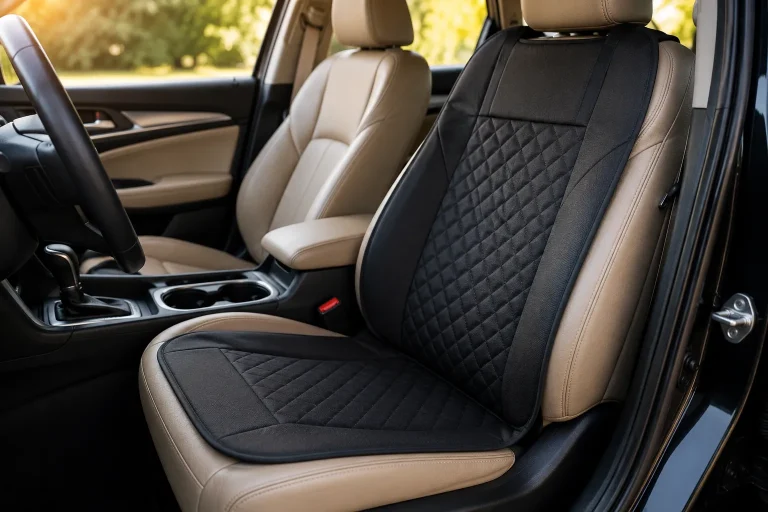
Can You Use Leather Seat Covers With Heated Seats? Safety and Compatibility Guide

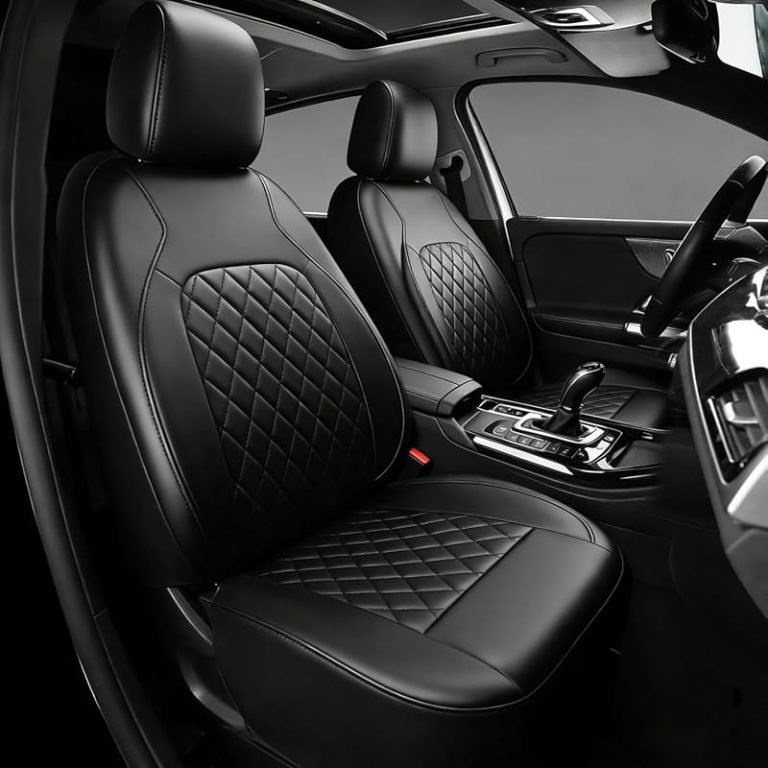
Yes, you can often use leather seat covers with heated seats. Choose a thin, heat-compatible cover made for your exact seat. It must not block side airbags, seat controls, ventilation holes, or passenger sensors. Always check your vehicle owner’s manual and the cover manufacturer’s instructions before installation.
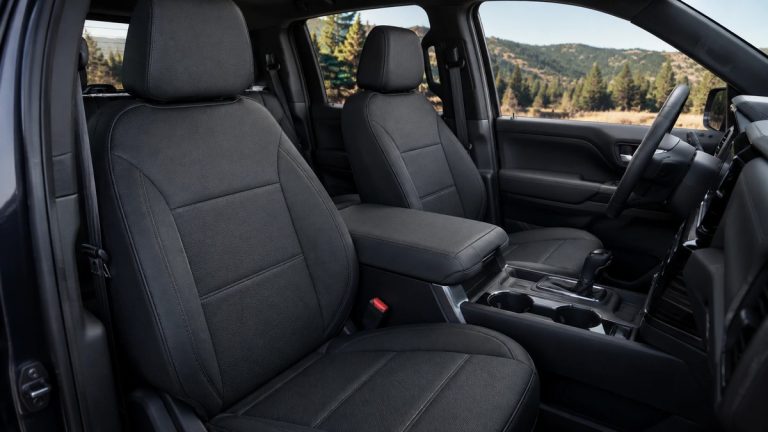
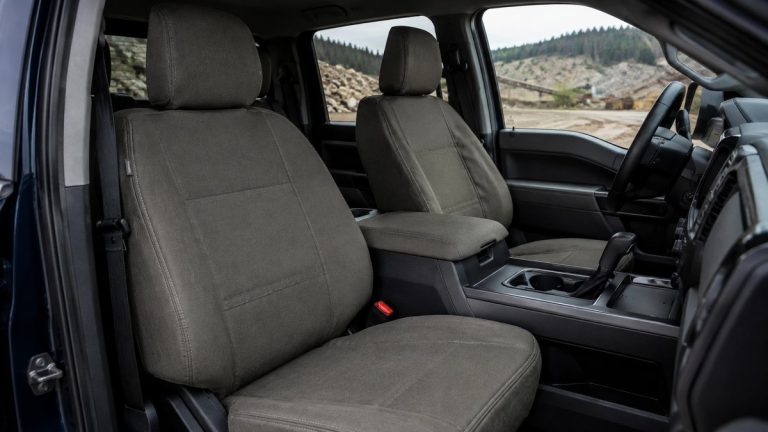
Leather seat covers can work with factory heated seats, but compatibility matters more than appearance. A thick or poorly fitted cover may slow the heat, create uneven warm spots, slide around, or interfere with important seat safety features.
By Brandon Walker
I’ve driven through enough cold mornings and long winter road trips to understand why heated seats are so useful. They warm your body faster than waiting for the whole cabin to heat up.
I also understand why drivers want leather seat covers. They can protect the factory upholstery, improve the interior, and make cleanup easier. The trouble starts when a driver buys a universal cover without checking how the original seat works.
In this guide, I’ll explain when leather covers are safe to use, what can go wrong, how to install them, and how to test the heated seat after installation.
How Heated Seats Work Under Leather Seat Covers
A factory heated seat normally uses electric heating elements beneath the original upholstery. When you turn the heater on, those elements warm the seat cushion and backrest.
The heat must pass through the factory fabric, vinyl, or leather before reaching you. An aftermarket leather seat cover adds another layer between your body and the heating element.
A thin cover may only make the seat take a little longer to feel warm. A thick cover with dense foam, waterproof backing, or heavy padding can block more heat and may make the warmth feel uneven.
My preferred choice is a vehicle-specific, airbag-compatible leather or leatherette cover with thin padding and clear approval for heated seats. It should fit tightly without covering switches, sensors, seams, or ventilation holes.
Leather Does Not Automatically Make a Cover Compatible
The word leather only tells you about the surface material. It does not tell you what is underneath it.
One cover may use a thin leather layer with a light backing. Another may contain thick foam, waterproof material, several stitched layers, and a rubber anti-slip pad. Those hidden layers affect how heat moves through the cover.
Before buying, look for a clear statement that the product is compatible with heated seats. Do not assume compatibility because a listing says universal fit.
Factory Heated Seats and Plug-In Heated Covers Are Different
A factory heated seat has heating elements built into the seat. A plug-in heated seat cover has its own electrical heating pad and usually connects to a 12-volt outlet.
This article focuses mainly on putting a leather cover over a factory heated seat. If you are considering an electric heated cushion, review its power draw, plug quality, shutoff feature, attachment system, and airbag compatibility.
You can see how tested plug-in products differ in temperature, fit, power use, and safety features in Car and Driver’s heated seat cover testing.
How to Install Leather Seat Covers on Heated Seats
Search the seat, heated seat, airbag, occupant detection, and accessory sections. Some automakers warn against placing covers, cushions, blankets, or other material on certain seats. Follow that instruction even if the seat cover seller says the product is universal.
Look for an airbag tag on the outside edge of the seatback. A seat-mounted side airbag often deploys through a specially designed seam. Your cover must leave the correct deployment path free or use a tested breakaway seam made for that seat.
Read the complete product description and installation manual. Look for direct confirmation that the cover works with factory heated seats. Also check compatibility with side airbags, power controls, adjustable headrests, armrests, and seat-mounted seat belts.
Make sure the seat is dry and free from sharp debris. Check that the heater works normally before covering it. This gives you a useful baseline for warm-up time and heat distribution.
Fit the cover according to its instructions. Do not push hooks through wiring, foam, or upholstery. Keep straps away from seat tracks, electrical connectors, adjustment motors, and moving hinges.
Move the seat forward, backward, up, and down. Recline the backrest and adjust the lumbar support. Confirm that no strap tightens, catches, rubs a wire, or blocks a control.
Start the vehicle and select the lowest heat level. Sit normally and pay attention to how the seat warms. Turn it off if you notice a burning smell, smoke, unusual heat, an electrical warning, or one small area becoming much hotter than the rest.
Seat covers often settle after you enter, exit, and drive. Pull over safely and check for wrinkles, loose hooks, sliding panels, blocked buckles, or straps near the seat rails.
Test your factory heater before and after installing the cover. If the seat becomes much slower to warm or develops one sharp hot spot, remove the cover and inspect the fit instead of turning the heater to its highest setting.
Why Compatibility Matters for Car Owners
This is not only about staying warm. Modern seats may contain airbags, occupant sensors, wiring, power motors, ventilation fans, massage parts, haptic alerts, and seat belt hardware.
A cover that works on an older basic seat may be a poor choice for a newer seat filled with safety and comfort technology.
Side Airbag Deployment
Many vehicles place a side-impact airbag inside the outer part of the front seatback. The airbag must break through a planned seam during a crash.
The National Highway Traffic Safety Administration says drivers should avoid reducing the effectiveness of vehicle safety systems. NHTSA also explains that aftermarket seat covers are not covered by a direct federal certification standard, so buyers should not treat a general airbag-compatible claim as government approval.
Review NHTSA’s guidance about aftermarket seat covers and side airbags before covering a seat with a built-in airbag.
Passenger Occupant Sensors
The front passenger seat may use pressure or weight information to decide how the passenger airbag system should respond. A thick cover, added cushion, loose object, or unusual seating position may change how pressure reaches the seat.
If the passenger airbag indicator does not show the expected result, remove the cover and check the owner’s manual. NHTSA notes that changes in pressure on the seat bottom can affect occupant classification.
Ventilated and Cooled Seats
Perforated leather and small fans allow ventilated seats to move air. A solid cover can block those holes and greatly reduce airflow.
If your seat has both heat and ventilation, choose a perforated cover designed for both systems. Even then, expect some reduction in airflow because you are adding another layer.
Seat Comfort and Driving Position
Thick padding changes how high you sit and how firmly the side bolsters hold you. It may also change the distance between your body and the head restraint.
After installation, check your mirror position, steering wheel reach, pedal reach, and head restraint height. A cover should not force you into a poor driving position.
On cold-weather drives, I’ve found that thin, fitted covers usually let factory seat heat come through with only a small delay. The worst results come from thick universal covers that bunch near the bolsters. They warm unevenly, move during entry, and need constant adjustment.
- Check the owner’s manual before buying a cover
- Choose a cover made for your vehicle, trim, and seat shape
- Confirm heated-seat and side-airbag compatibility in writing
- Use the lowest heat setting during the first test
- Keep straps away from wires, tracks, motors, and hinges
- Stop using the cover if heat becomes uneven
- Recheck the fit after the first few drives
- Do not cover an airbag seam with ordinary material
- Do not assume every universal cover fits every vehicle
- Do not stack a leather cover over another padded cushion
- Do not force hooks under powered seat components
- Do not ignore an airbag warning light
- Do not keep using a cover that smells hot or scorched
- Do not use high heat for long periods without checking comfort
Features to Look for in a Compatible Leather Seat Cover
A cover that fits one model year may not fit the next. Seat shape, airbag seams, headrests, armrests, controls, sensors, and ventilation patterns can change between trims. Match the cover to the vehicle year, make, model, trim, seat type, and seating position.
For more cabin protection options, compare materials and fitment styles in our interior accessories guide. For heated seats, 12-volt accessories, wiring, and other powered cabin features, visit our car tech guide.
- Does the vehicle manual allow a cover on the heated seat?
- Does the product list your exact year, make, model, and trim?
- Does it clearly state factory heated-seat compatibility?
- Is it made for seats with side airbags?
- Does the airbag opening match the correct side of the seat?
- Will it leave power controls and seat belt hardware open?
- Is the backing thin enough to allow useful heat transfer?
- Is it perforated if your vehicle has ventilated seats?
- Can it be returned if the fit or heat performance is poor?
- Does the seller provide clear installation instructions?
How Much Do Compatible Leather Seat Covers Cost?
Prices vary by material, vehicle coverage, fit, stitching, and airbag design. A low price does not always mean unsafe, but very cheap covers often use generic patterns and limited fitment information.
These are broad shopping ranges, not fixed prices. Custom patterns, genuine leather, rear-seat coverage, detailed stitching, and professional labor increase the total.
I would rather pay more for correct airbag construction and secure fitment than save money on a loose cover that needs constant adjustment.
Installation Tips for Better Heat and Safer Fitment
- Install the cover in a warm garage so the material is easier to stretch and position
- Clean and dry the factory seat before fitting the new cover
- Center the seat-bottom panel before tightening any straps
- Keep seams flat so they do not create pressure points or hot spots
- Do not route straps across yellow airbag connectors or electrical harnesses
- Leave enough slack for the full movement of power seats
- Check that the cover does not pull on the seat belt buckle
- Confirm that the airbag section is installed on the correct side
- Test each heated-seat setting while parked
- Inspect the cover again after one week of normal use
Take photos underneath the seat before installation. They give you a reference for wiring, connectors, motors, and factory cable routing. If a strap shifts later, you can compare it with the original layout.
There is no single federal approval label that proves every aftermarket seat cover is safe for every side-airbag seat. NHTSA explains that aftermarket cover manufacturers are responsible for avoiding safety defects, but buyers still need to verify vehicle-specific compatibility.
Do not use a seat cover that blocks a side-airbag seam, causes an airbag warning light, interferes with the passenger airbag indicator, traps wiring in a seat track, or produces smoke, odor, melting, or concentrated heat. Remove it and have the seat inspected if the problem continues.
Airbags work together with seat belts to protect occupants. You can review the system basics through NHTSA’s airbag safety information. Drivers building a broader roadside setup can also explore our safety gear guide.
Can Leather Covers Damage Heated Seats?
A properly approved and correctly installed cover should not damage a healthy factory heater during normal use. Problems become more likely when a cover is too thick, folded, wet, damaged, or not allowed by the vehicle manufacturer.
Do not keep increasing the temperature because the cover feels slow to warm. The heating element underneath may already be working at its normal output.
If the heater cycles off, shows a fault, smells unusual, or produces a sharp hot area, stop using it. Remove the cover and test the original seat. A technician may need to inspect the heater mat, wiring, switch, control module, or temperature sensor.
What About Genuine Leather Versus PU Leather?
Both can work with heated seats when the complete cover is designed for that use. The backing and padding are often more important than the top surface.
Genuine leather may feel more natural and age well, but it still needs a correct airbag seam and thin construction. PU leather is easier to find and often costs less, but low-quality material may become stiff, peel, or hold more heat at the surface.
- Protects original upholstery from wear and spills
- Allows continued use of factory seat heat
- Can improve the cabin’s look and feel
- May be easier to clean than worn factory fabric
- Can be removed when the vehicle is sold
- May increase warm-up time
- Can reduce ventilated-seat airflow
- May slide if the fit is poor
- Can affect airbags or sensors if incompatible
- Thick padding may change the seating position
Side airbags can deploy faster than frontal airbags because there is less space between an occupant and the object striking the side of the vehicle. That is why keeping the seat-mounted airbag path clear matters so much.
Special Cases That Need Extra Care
Seats With Both Heating and Ventilation
Choose a perforated cover approved for both systems. A solid cover may still allow some heat through, but it can block most of the moving air from the ventilation system.
Seats With Massage Functions
A thick cover may reduce how strongly you feel the massage. It may also pull tight as the seat changes shape. Use a flexible cover made for that seat design.
Performance Seats With Large Bolsters
Universal covers often bridge across large side bolsters instead of following their shape. This causes wrinkles, sliding, pressure points, and uneven contact with the heated surface.
Seats With Integrated Seat Belts
Some trucks, convertibles, and special seat designs mount the seat belt directly to the seat. The cover must have the correct openings and must not restrict the belt’s movement.
People With Reduced Heat Sensation
Anyone with diabetes, nerve damage, reduced circulation, limited mobility, or another condition that affects heat sensation should use extra caution. Heated seats can cause skin irritation or burns when a person cannot feel rising temperature normally.
Use a low setting, limit continuous use, wear normal clothing, and follow medical guidance when needed.
- Leather seat covers can be used with many factory heated seats
- The owner’s manual has priority over general product claims
- Thin, vehicle-specific covers usually transfer heat better
- The cover must protect the side-airbag deployment path
- Passenger sensors, seat controls, wiring, and rails must remain clear
- Ventilated seats need compatible perforated covers
- Test the heater on low and stop if heat becomes uneven
Yes, you can use leather seat covers with heated seats when both the vehicle maker and cover maker allow it. Choose a thin, exact-fit, airbag-compatible product. Install it without touching wiring or moving parts, then test the heater on low. When compatibility is uncertain, leave the factory seat uncovered.
Heated-Seat Cover Compatibility Table
| Seat Feature | Can a Leather Cover Work? | What to Check |
|---|---|---|
| Factory heated seat | Usually | Heated-seat approval, thin backing, even fit |
| Seat-mounted side airbag | Only with correct design | Vehicle-specific airbag opening or breakaway seam |
| Passenger occupant sensor | Possibly | Owner’s manual and correct airbag indicator operation |
| Ventilated or cooled seat | Sometimes | Perforated material and airflow compatibility |
| Massage seat | Sometimes | Flexible construction and movement clearance |
| Large performance bolsters | Only with exact fit | Model-specific shape with no bridging or wrinkles |
| Seat-mounted belt | Only with proper openings | Unrestricted belt movement and secure hardware access |
| Basic manual rear seat | Often | Buckle access, folding operation, and rear airbag locations |
Common Problems After Installing a Seat Cover
| Problem | Likely Cause | What to Do |
|---|---|---|
| Seat warms very slowly | Cover or padding is too thick | Use a thinner heated-seat-compatible cover |
| One area feels much hotter | Folded material, uneven contact, or heater fault | Turn off the heater, remove the cover, and inspect the seat |
| Cover slides while driving | Loose universal fit or poor anchor placement | Refit the anchors or replace it with an exact-fit cover |
| Passenger airbag indicator changes | Pressure on the seat may have changed | Remove the cover and follow the owner’s manual |
| Airbag warning light appears | Possible wiring, connector, or sensor problem | Stop installation work and have the system inspected |
| Ventilation feels weak | Cover is blocking perforations and airflow | Use a perforated cover approved for ventilated seats |
| Seat will not move fully | Strap or hook is caught in the track | Stop moving the seat and reroute the attachment |
| Burning or plastic odor | Overheating, damaged material, or electrical trouble | Turn everything off, remove the cover when safe, and inspect |
FAQ
Yes, if the vehicle manual allows it and the covers are approved for heated seats. Choose thin, vehicle-specific covers that do not block airbags, sensors, controls, or wiring.
They normally will not stop the heater, but thick padding can slow heat transfer and make the seat feel less warm. A thin compatible cover gives better results.
An incompatible, folded, or heavily padded cover may contribute to uneven heat. Turn the heater off if you notice a hot spot, odor, smoke, melting, or unusual cycling.
Not automatically. The cover needs the correct airbag opening or breakaway seam for your exact seat. A general universal-fit claim is not enough.
Sometimes. Use a perforated cover approved for both heating and ventilation. A solid cover can block airflow even when heat still passes through.
No. Start with the lowest setting while parked. Check for even warmth, unusual smells, warning lights, or concentrated heat before trying a higher level.
Check the manufacturer’s instructions for a direct heated-seat compatibility statement. Also verify your vehicle year, model, trim, airbag position, seat controls, and ventilation features.
Stop using the cover and check for trapped wiring or disturbed connectors without unplugging safety components. Have the vehicle inspected if the warning remains on.
Conclusion
So, can you use leather seat covers with heated seats? In many vehicles, the answer is yes. The right cover can protect your interior while letting you enjoy the warmth of the factory heater.
The safe choice is a thin, vehicle-specific cover that is clearly approved for heated seats and correctly designed for seat-mounted airbags. It must also leave controls, wiring, sensors, seat belts, and moving parts alone.
Check the owner’s manual before spending money. Install the cover carefully, test the heater on low, and inspect the fit after a few drives. Product reviews and general car accessory safety advice from Consumer Reports can help, but your vehicle manufacturer’s instructions should make the final call.
When a seller cannot confirm airbag and heated-seat compatibility for your exact vehicle, I recommend skipping that cover. Protecting the factory upholstery is useful, but protecting the seat’s safety systems is far more important.