
Leather Seats vs Cloth Seats: Which Is Better for Your Car?

Leather seats are easier to wipe clean and give a car a more premium look. Cloth seats usually cost less, stay more comfortable in hot or cold weather, and provide better grip. For families, pets, and easy cleanup, leather or synthetic leather may be best. For value, comfort, and low-cost ownership, cloth is often the smarter choice.
When comparing leather seats vs cloth seats, there is no single winner. Leather is easier to clean and often feels more upscale. Cloth is more breathable, less slippery, and usually cheaper to buy and repair. Your climate, passengers, driving habits, and budget should decide the best option.
By Brandon Walker
I’ve spent plenty of long road trips in both leather and cloth seats. I’ve also cleaned coffee, mud, pet hair, snack crumbs, and more than one mystery stain from car interiors.
Both materials can be good. Both can also become frustrating when they do not match the owner’s lifestyle.
In this guide, I’ll compare comfort, safety, cleaning, durability, temperature, technology, resale value, and cost. My goal is to help you choose the seat material you will still enjoy several years from now.
Leather Seats vs Cloth Seats: The Main Difference
Leather has a smooth, coated surface. Most spills stay on top long enough to be wiped away. This makes leather a strong choice for drivers with children, pets, work gear, or frequent passengers.
Cloth has woven fibers. It feels softer and more breathable, but liquid can soak into the padding beneath it. Deep spills may require an extractor or professional cleaning.
Leather also tends to appear on higher trim levels. Cloth is common on base and mid-level trims, though some modern cloth interiors look and feel far better than older economy-car seats.
For most value-focused drivers, I recommend high-quality cloth seats with fitted, airbag-compatible protectors in high-wear areas. For families, rideshare drivers, and pet owners who clean the cabin often, durable synthetic leather may offer the best balance of easy care and reasonable cost.
Not Every Leather Seat Is Fully Leather
A seat listed as leather may use genuine leather only on the main seating surfaces. The side panels, back, headrest, or lower sections may use vinyl or synthetic material.
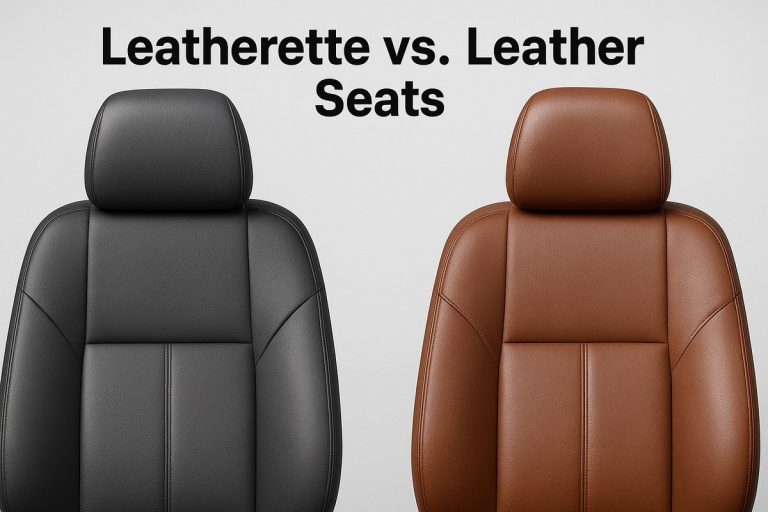
Many newer vehicles also use synthetic leather instead of animal hide. These materials may be called leatherette, vegan leather, SofTex, MB-Tex, SynTex, ActiveX, or another brand name.
Edmunds explains the growth of synthetic leather in modern cars and why automakers use it for durability and easier maintenance.
Check the window sticker, vehicle brochure, or trim specifications before paying extra. Do not assume that every surface is genuine leather because the salesperson uses the word leather.
How to Choose Between Leather and Cloth Seats
Leather can feel very hot after sitting in summer sun and very cold on a winter morning. Cloth is usually more temperature-neutral. Heated and ventilated seats can reduce the difference, but those features may cost extra.
Do you carry children, pets, coworkers, or rideshare passengers? Leather is easier to wipe after many spills. Cloth may feel more comfortable for passengers who dislike sliding or sticking to a warm seat.
Leather may require buying a higher trim with wheels, electronics, driver-assistance features, or appearance upgrades you do not need. Compare the total vehicle price, not only the upholstery charge.
Spend at least several minutes in each seat. Check lower-back support, cushion firmness, side-bolster grip, head restraint position, and how easily you enter and exit.
Try the heaters, ventilation fans, power controls, memory settings, lumbar support, and massage function when equipped. Make sure you understand which features are standard and which are optional.
Leather needs gentle cleaning and occasional conditioning. Cloth needs frequent vacuuming and quick stain treatment. Choose the material you are willing to maintain correctly.
On a used car, look for cracks, peeling, stretched seams, worn bolsters, stains, odors, pet hair, dampness, and poor repairs. Seat condition can matter more than the original material.
- Will the seats be comfortable in your local summer and winter weather?
- Are heating or ventilation features included?
- Is the upholstery genuine leather, synthetic leather, or a mix?
- Will children, pets, tools, or food ride in the vehicle often?
- Can you clean and maintain the material correctly?
- Does the higher trim include features you actually want?
- Are the side bolsters comfortable during a long test drive?
- Does the passenger seat work with your family and child-seat needs?
- Are replacement panels or repairs available at a reasonable price?
- Does the interior color show dirt, lint, scratches, or dye transfer easily?
Why Seat Material Matters to Car Owners
Seats are among the most-used parts of a vehicle. You touch them every time you drive, and small comfort problems can feel much larger after two or three hours on the highway.
Seat material also affects cleaning time, cabin temperature, odor control, pet use, appearance, and ownership cost. It may even affect which trim level you buy.
Comfort on Long Drives
Cloth often provides better grip. Your body stays more planted during turns, which can reduce the need to brace yourself with your legs.
Leather is smooth and can feel softer at first, but some finishes become slippery. Good side bolsters help, while flat leather seats may allow more movement.
Comfort also depends on the foam, seat shape, suspension, driving position, and lumbar support. A well-designed cloth seat can feel better than a poorly shaped leather seat.
Hot-Weather Comfort
Dark leather can become uncomfortable after a car sits in direct sunlight. Cloth also heats up, but it normally feels less harsh against bare skin.
Ventilated seats make leather much easier to live with in hot areas. Perforations and small fans move air between your body and the seat.
No upholstery makes a parked vehicle safe for a child or pet in hot weather. Cabin heat can become dangerous regardless of the seat color or material.
Cold-Weather Comfort
Leather often feels colder when you first sit down. Heated seats can solve this quickly, though the feature may only come with certain trims.
Cloth feels warmer at first contact. Drivers in cold areas who do not have seat heaters may prefer it for that reason alone.
Cleaning and Stain Resistance
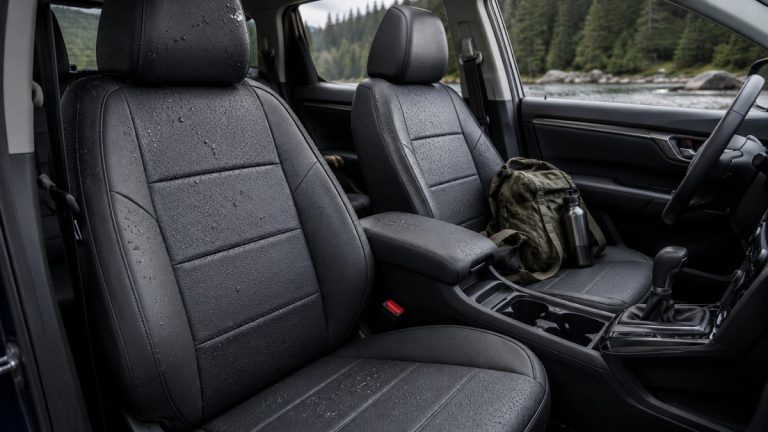
Leather and synthetic leather are usually easier to wipe after a fresh spill. Cloth absorbs liquid faster, so quick action matters.
However, leather is not maintenance-free. Strong household chemicals can damage its protective coating. Consumer Reports’ interior-cleaning guidance recommends gentle methods for treated leather and vinyl surfaces.
For cleaning tools, conditioners, brushes, and protectants, visit our car care guide.
Pets and Children
Leather makes it easier to remove mud, drool, food, and many fresh spills. Pet hair also tends to sit on the surface instead of weaving deeply into fibers.
Sharp claws can scratch or puncture leather. Cloth may hide light scratches better, but it can trap hair, moisture, and odor.
A fitted rear-seat protector can help either material. Browse our interior accessories guide for cabin protection ideas.
On long summer drives, I usually prefer cloth when the car has no seat ventilation. It stays more stable under my body and does not feel as hot after a fuel stop. For messy family trips, leather wins because I can wipe it down before the spill becomes a full weekend cleaning job.
Leather Seat Pros and Cons
- Fresh spills are usually easier to wipe away
- Often gives the cabin a premium appearance
- Pet hair is easier to remove from smooth surfaces
- Does not absorb odors as quickly as most cloth
- Pairs well with heated and ventilated seat systems
- May improve buyer interest when kept in good condition
- Usually costs more when buying the vehicle
- Can feel hot in summer and cold in winter
- May crack, crease, fade, or peel without proper care
- Can become slippery during spirited driving
- Sharp objects and pet claws may cause visible damage
- Professional repairs can be expensive
Cloth Seat Pros and Cons
- Usually costs less than leather upholstery
- Feels less extreme in hot and cold weather
- Provides good grip during turns
- Often hides light scratches and creases
- Does not require leather conditioner
- Can be very comfortable on long drives
- Absorbs spills and stains more quickly
- Can hold pet hair, dust, pollen, and odors
- May require extraction for deep cleaning
- Can develop shiny or worn patches in high-contact areas
- Usually looks less premium to some buyers
- Wet seats may take hours to dry fully
Leather, Synthetic Leather, and Cloth Spec Sheet
Seat material can change between trims, packages, rows, and seating positions. Some vehicles use leather on the front contact areas but synthetic material elsewhere. Confirm the exact upholstery, heating, ventilation, airbag, and sensor equipment for the specific vehicle you plan to buy.
How Much Do Leather and Cloth Seats Cost to Own?
Leather usually increases the purchase price because it is often tied to a higher trim or option package. That upgrade may also include power seats, memory, heat, ventilation, upgraded audio, or driver-assistance technology.
Cloth costs less at the start, but deep stain removal can require special equipment. Leather products cost more than basic fabric cleaner, yet regular care is usually simple.
These are broad shopping ranges. Local labor, vehicle design, product quality, and the amount of damage can change the final cost.
When comparing trim levels, divide the total price difference by the features you truly want. Paying thousands more only to get leather may not make sense. Paying more for leather, heated seats, better safety technology, and power controls may offer better value.
Install Tips for Seat Covers and Interior Accessories
Many owners protect their factory seats with aftermarket covers. That can work, but modern seats may contain side airbags, pressure sensors, heating elements, ventilation fans, wiring, and power motors.
- Check the owner’s manual before covering any seat
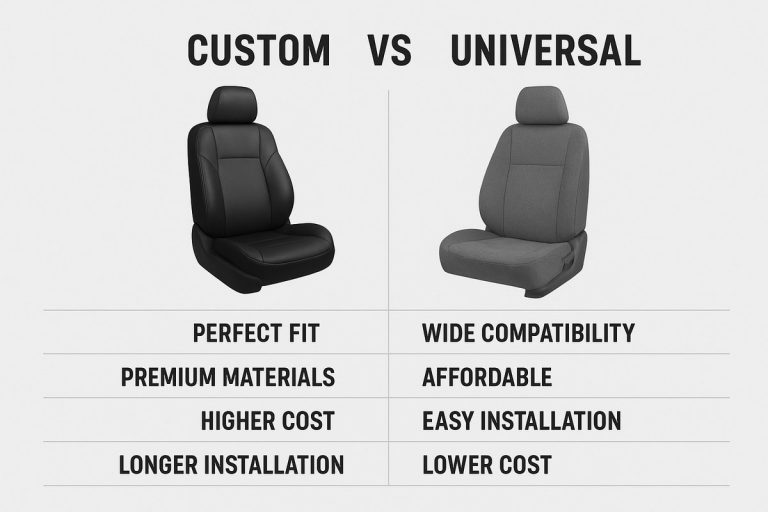
- Use vehicle-specific covers when possible
- Confirm compatibility with seat-mounted side airbags
- Keep passenger occupancy sensors in mind
- Do not route straps through power-seat tracks
- Keep hooks away from wiring and electrical connectors
- Choose perforated covers for ventilated seats
- Confirm compatibility with factory seat heaters
- Leave seat belt buckles and anchors fully accessible
- Recheck the fit after several days of driving
Car seat covers can protect either upholstery type from dirt and wear. However, the cover must fit the seat and its safety equipment correctly. You can learn more about common protection benefits in Car and Driver’s seat cover guide.
The upholstery surface does not make one seat automatically safer than another. Crash protection depends more on the seat structure, head restraint, seat belt, airbags, sensors, and the occupant’s seating position. Heated, ventilated, memory, and massage features also depend on the vehicle’s trim and seat design rather than leather or cloth alone.
Never install a loose cover over a seat-mounted side-airbag seam unless the cover is designed for that exact application. Do not block seat belt hardware or disturb wiring under a powered seat. Review NHTSA’s airbag safety information and follow your vehicle owner’s manual.
For heated seats, power controls, USB accessories, and other cabin systems, visit our car tech guide.
Leather vs Cloth for Safety, Allergies, and Electronics
Is Leather Safer Than Cloth?
Neither material has a clear safety advantage by itself. The seat frame, belt system, airbags, head restraint, and driving position do the important safety work.
Cloth may provide more surface grip during a sharp turn. Leather may be easier to keep free from liquid and debris. These are comfort and maintenance differences, not substitutes for proper restraint systems.
Which Is Better for Allergies?
Smooth leather and synthetic leather are easier to wipe. Cloth can hold more dust, pollen, crumbs, and pet hair within its fibers.
That does not make leather allergen-free. Dust still collects in seams, under the seat, and inside the ventilation system. Regular vacuuming and cabin air filter replacement remain important.
Which Works Better With Heated Seats?
Both materials can work well with factory seat heaters. Leather may feel colder at first, so the heater can seem more valuable. Cloth feels warmer before the heater starts working.
Performance depends on the heating element, control system, padding, and seat construction. The top material is only one part of the system.
Which Works Better With Ventilated Seats?
Leather or synthetic leather is common on ventilated seats because the surface can be perforated in a controlled pattern. Some cloth seats also use ventilation, but they are less common.
A seat cover can reduce airflow. Use only a compatible perforated cover when the seat has fans or cooling channels.
Many modern seats marketed as leather use several materials. Genuine leather may cover the center panels, while synthetic material covers the sides and rear. Reading the trim specifications is the best way to know what you are buying.
Which Seat Material Holds Its Value Better?
Leather may make a used vehicle look more desirable, especially in luxury cars, large SUVs, premium trucks, and convertibles. However, badly cracked or peeling leather can hurt the cabin’s appeal.
Clean cloth can also hold up well. A stain-free cloth interior may impress a buyer more than neglected leather with split bolsters and poor repairs.
Vehicle condition, mileage, service history, trim level, accident history, and local demand usually matter more than seat material alone.
How to Maintain Leather and Cloth Seats
Leather Seat Care
- Vacuum crumbs before wiping the surface
- Use a cleaner made for automotive leather
- Test products on a hidden area first
- Use a soft microfiber cloth
- Remove excess moisture quickly
- Apply conditioner only when recommended for the material
- Protect the cabin from long periods of direct sunlight
Modern automotive leather often has a protective coating. More conditioner is not always better. Follow the seat maker and product instructions.
Cloth Seat Care
- Vacuum the fabric and seams regularly
- Blot fresh spills instead of rubbing them
- Use a fabric-safe upholstery cleaner
- Avoid soaking the seat foam
- Extract dirty water when deep cleaning
- Leave windows open in a secure area while the seats dry
- Do not sit on the upholstery until it is fully dry
Moisture trapped inside cloth seats can create stains and odors. Use less cleaning solution than you think you need, then allow plenty of drying time.
- Clean spills as soon as possible
- Use products made for the correct material
- Vacuum before wet cleaning
- Test cleaners in a hidden area
- Protect high-wear areas from pets and cargo
- Inspect seams and bolsters during regular cleaning
- Do not use strong household cleaners on leather
- Do not soak cloth seat padding
- Do not scrub either material with a stiff brush
- Do not ignore small tears or split seams
- Do not place wet towels on seats for long periods
- Do not use an airbag-blocking seat cover
- Choose leather for fast cleanup and a premium cabin feel
- Choose cloth for lower cost, better grip, and balanced temperature comfort
- Consider synthetic leather when you want easy care without genuine leather pricing
- Check the complete trim price before paying extra for upholstery
- Test the seats during a long drive, not only in the showroom
- Keep seat covers clear of airbags, sensors, wiring, and controls
- Remember that good maintenance matters more than material alone
Leather is the better choice when you value easy cleaning, premium appearance, and available heating or ventilation features. Cloth is better when you want lower cost, good grip, and more natural comfort in changing weather. I would choose based on daily use and seat design, not status. A comfortable, well-maintained cloth seat is better than expensive leather that does not suit your life.
Leather Seats vs Cloth Seats Comparison
| Feature | Leather Seats | Cloth Seats |
|---|---|---|
| Purchase Price | Usually higher | Usually lower |
| Fresh Spill Cleanup | Easier to wipe | Liquid can soak into fibers |
| Hot-Weather Feel | Can become very warm | Usually less harsh |
| Cold-Weather Feel | Feels colder at first | Feels warmer at first |
| Grip During Turns | May feel slippery | Usually provides more grip |
| Pet Hair Removal | Often easier | Hair can stick in fibers |
| Scratch Resistance | Scratches may show clearly | Light marks may be less visible |
| Odor Resistance | Absorbs less when cleaned quickly | Can hold moisture and odors |
| Routine Care | Gentle cleaning and material-specific care | Vacuuming and stain treatment |
| Premium Appearance | Usually stronger | Depends on fabric quality and design |
Best Seat Material by Driver Type
| Driver or Use Case | Best Starting Choice | Why |
|---|---|---|
| Budget-focused commuter | Cloth | Lower purchase cost and good daily comfort |
| Family with young children | Leather or synthetic leather | Fresh spills are easier to wipe |
| Dog owner | Durable easy-clean material with a protector | Helps manage hair, mud, moisture, and claws |
| Hot-climate driver | Cloth or ventilated leather | Better temperature comfort |
| Cold-climate driver | Cloth or heated leather | Cloth feels warmer, while heat improves leather comfort |
| Luxury-car buyer | Leather or premium synthetic leather | Matches cabin design and trim expectations |
| Rideshare driver | Synthetic leather | Easy cleanup and lower upkeep |
| Spirited driver | Grippy cloth or suede-like inserts | Helps keep the body planted |
| Long-distance traveler | Whichever seat has better support | Shape and foam matter more than surface material |
| Used-car shopper | The material in better condition | Damage and odors can outweigh the original specification |
Common Seat Problems and Solutions
| Problem | Common Cause | Practical Solution |
|---|---|---|
| Cracked leather | Age, heat, friction, or poor maintenance | Clean gently and seek repair before the crack grows |
| Peeling synthetic leather | Surface-layer failure | Repair the panel or replace the upholstery section |
| Cloth water stain | Uneven moisture or soap residue | Clean the complete panel and extract the dirty water |
| Pet hair in cloth | Hair trapped in woven fibers | Use a vacuum, rubber brush, and fitted protector |
| Leather feels sticky | Product buildup or unsuitable cleaner | Remove residue with a material-safe cleaning method |
| Cloth smells musty | Moisture trapped in foam | Dry fully and inspect for a leak or mold |
| Seat cover slides | Poor fit or loose straps | Refit it or use a vehicle-specific cover |
| Airbag warning after cover installation | Possible sensor or wiring interference | Remove the cover and have the system inspected |
FAQ
Leather is better for easy cleanup and a premium look. Cloth is better for lower cost, grip, and temperature comfort. The best choice depends on your climate, passengers, and maintenance habits.
Either material can last many years with proper care. Leather may crack or peel, while cloth may stain, fade, or wear thin. Quality and maintenance matter more than the material name alone.
Yes, fresh spills and pet hair are usually easier to remove from leather or synthetic leather. Cloth absorbs liquid faster and may require extraction for deep stains.
Cloth normally feels less hot after a car sits in the sun. Ventilated leather can also be comfortable, but standard dark leather may become very warm.
Leather may attract buyers in premium vehicles, but it does not guarantee a higher resale price. Clean, undamaged upholstery and the vehicle’s overall condition matter more.
Leather and synthetic leather are easier to wipe and collect less embedded hair, but claws can scratch them. Use a fitted pet protector with either seat material.
Both can have heating. Ventilation is more common with perforated leather or synthetic leather, though some cloth seats also offer it. Availability depends on the vehicle and trim.
Synthetic leather often costs less and is easy to maintain. Genuine leather may feel more natural and premium. Product quality, climate, and long-term care determine which performs better.
Conclusion
The leather seats vs cloth seats debate comes down to how you use your car. Leather is easier to wipe, looks upscale, and works well for busy families or drivers who carry passengers often. Cloth costs less, grips better, and feels more balanced in hot and cold weather.
I recommend testing both materials in the exact vehicle you plan to buy. Check the seat shape, foam, lumbar support, heating, ventilation, controls, and complete trim price. A better-designed seat will usually matter more than the upholstery label.
For used cars, choose the interior in better condition. Clean cloth is a smarter purchase than cracked leather, while well-kept leather may be worth paying extra for when it matches your needs.
Whichever material you choose, clean spills quickly and use the correct products. Install protectors only when they fit the vehicle’s airbags, sensors, belts, heaters, and power-seat parts. That practical approach will keep your cabin comfortable, safe, and easier to enjoy for years.
2 Comments