Custom Fit vs Universal Seat Covers: Fit & Finish Compared

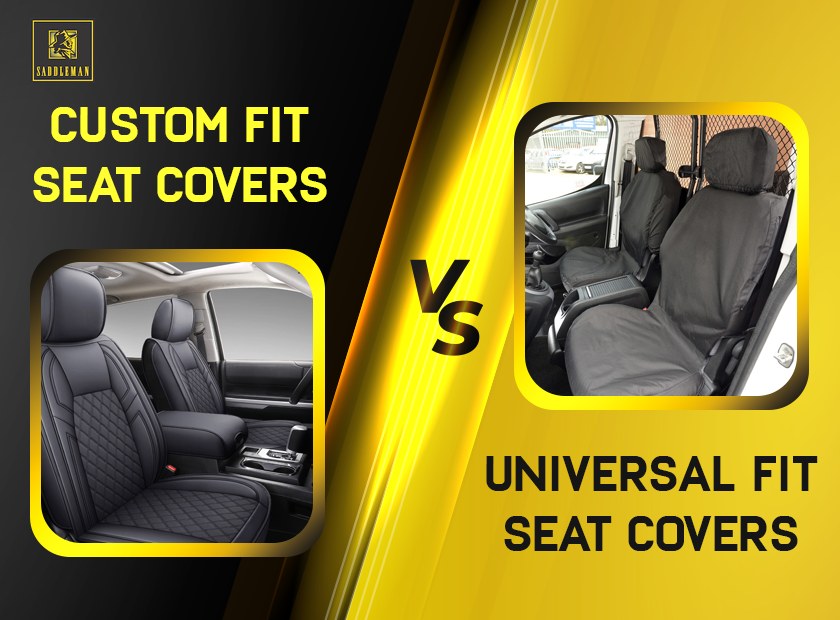
Custom fit seat covers provide a secure, OEM-like fit with proper airbag and control compatibility, while universal covers are cheaper but prone to shifting and sagging. Choose custom for daily drivers and safety-critical use; choose universal for temporary protection on a tight budget.
Choosing between custom fit vs universal seat covers comes down to how much you value safety, comfort, and long-term appearance over the money you save at checkout. Universal covers win on price and convenience; custom covers win on nearly everything else.
- Fit: Custom covers match your exact seat pattern; universal covers rely on stretch fabric and.
- Safety: Universal covers can interfere with side airbag deployment and seat controls; custom covers are.
- Comfort: Custom covers preserve factory contour and lumbar support; universal covers can create a loose.
- Value: Custom covers cost more upfront but typically last longer; universal covers are cheaper but.
- Care: Universal covers are easier to remove and wash; custom covers usually require spot cleaning.
The Short Answer: Fitment Determines Safety, Comfort, and Value
Fitment is not a cosmetic detail. A seat cover that shifts, bunches, or blocks a side airbag changes how your seat performs in a crash, how your back feels on a long drive, and how quickly the cover wears out. That makes this decision more consequential than most interior accessories.
| Criteria | Custom Fit | Universal |
|---|---|---|
| Fit accuracy | Vehicle-specific pattern | One-size-fits-all stretch |
| Airbag compatibility | Designed around factory seams | Often unverified |
| Installation time | Typically 30 minutes or more per seat | Under 15 minutes per seat |
| Retention | Clips, tethers, anti-slip backing | Elastic and straps |
| Appearance | OEM-like | Generic drape |
| Lifespan | Longer with proper care | Shorter, varies by material |
Universal Seat Covers: Cheaper Upfront, Costly in Compromise
Universal covers use elastic edges, straps, and buckles to stretch over a wide range of seat shapes. They cost less and install in minutes, but the loose fit means constant adjustment. Over time, sagging fabric, wrinkled material, and poor coverage around bolsters become the norm. They work as a temporary fix, but the compromises add up with daily use.
- Low upfront cost
- Fast, tool-free installation
- Easy to remove and replace
- Frequent shifting and sagging
- Limited airbag and control compatibility
- Generic appearance that rarely matches factory trim
Custom Fit Seat Covers: Built Around Your Factory Interior
Custom fit covers are patterned to a specific make, model, year, and trim level. They follow factory contours, cover bolsters completely, and integrate with seat controls, airbag seams, and heating elements. They cost more and take longer to install, but the result looks and feels closer to an OEM upholstery upgrade than a protective afterthought.
What “Custom Fit” and “Universal” Actually Mean in 2026

The terminology has blurred as more brands sell “semi-custom” options. Knowing what each label really means helps you avoid buying something that promises more than it delivers.
Vehicle-Specific Patterns vs. One-Size-Fits-All Dimensions
A true custom fit cover is cut from a digital or physical pattern of your exact seat. That means dedicated openings for seat controls, precise airbag seam placement, and coverage that matches factory stitching lines. Universal covers, by contrast, are sized by general categories like “bucket seat” or “bench seat” and rely on stretch fabric to bridge the gap between different vehicles. The difference shows on uneven contours and high-wear areas.
Semi-Custom and Bench-Specific Covers: The Middle Ground
Semi-custom covers use a vehicle-specific pattern for the main body but simplify details like headrests, armrests, and seatback pockets. They cost less than full custom options and install faster, but they may not accommodate every trim-specific feature. If your truck has a fold-down center console or your SUV has integrated seatbelts, a semi-custom cover may need modifications. For a closer look at this middle tier, our comparison of custom fit vs semi-custom seat covers breaks down where the savings come from and what you give up.
Fit and Compatibility: Airbags, Heated Seats, and Seat Controls
Modern seats are packed with systems that a cover can interfere with. Before you buy, know exactly where your side airbags deploy, how your seat heaters work, and which controls sit on the seat itself.
Side Airbag Deployment: Why Universal Covers Are a Safety Risk
Side airbags deploy through a designated seam in the seat upholstery. A universal cover that stretches over that seam can delay deployment, redirect the airbag, or send it into the cover material instead of toward the occupant. Custom fit covers are designed with breakaway stitching or open seams that align with the factory airbag path. Check the manufacturer’s airbag compatibility statement before ordering. Our guide to airbag compatible seat covers explains what to look for and why generic “airbag-friendly” claims are not enough.
Never install a seat cover that blocks, covers, or restricts a side airbag seam. Confirm the cover’s airbag compatibility with your exact make, model, and year before purchase, and follow the manufacturer’s installation instructions precisely.
Heated and Ventilated Seats: Breathability and Heat Transfer Differences
Heated seats generate warmth through resistive elements in the seat cushion and backrest. A thick universal cover can slow heat transfer, making the seat feel lukewarm even at the highest setting. Ventilated seats pull air through perforated upholstery; a non-breathable cover can block that airflow completely. Custom covers designed for heated seats use thinner, breathable materials in the right zones. If you drive a vehicle with heated or ventilated seats, your options narrow considerably. The best custom fit seat covers for heated seats prioritize material thickness and breathability over pure durability.
Seat Controls and Bolster Clearance: Interference You Can’t Ignore
Power seat buttons, memory presets, lumbar switches, and seatback release levers all sit on the seat itself. Universal covers frequently cover these controls or make them hard to reach. Custom covers include cutouts or flaps that keep every switch accessible. Bolster clearance matters too: a cover that does not match the seat’s side bolsters will stretch tightly over them, creating pressure points and premature wear at the seams.
Material and Construction: What Holds Up in Real Use
Material choice affects appearance, comfort, cleaning, and lifespan. The right material depends on your climate, your passengers, and how the vehicle is used.
Leather and Leatherette: OEM Appearance vs. Peeling Risk
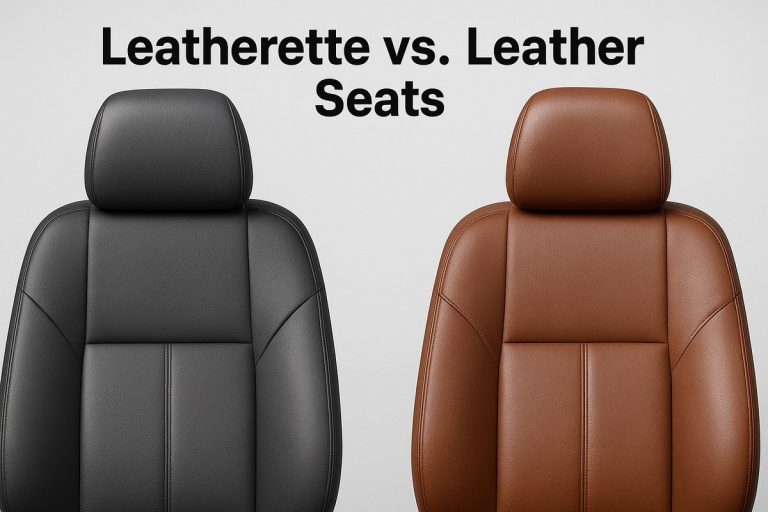
Leather and leatherette covers offer the most factory-like appearance, especially in custom fit form. Quality leatherette can closely match OEM grain and color, but low-grade versions are prone to peeling, cracking, and stiffness in extreme temperatures. Genuine leather looks and feels premium but requires regular conditioning and costs significantly more. On a custom cover, the stitching and panel layout matter as much as the material itself; a poorly aligned seam ruins the illusion of an OEM interior.
Neoprene and Canvas: Toughness, Sweat, and Odor Retention
Neoprene is a go-to for outdoor and water-related use because it is thick, waterproof, and resistant to abrasion. The trade-off is heat retention: neoprene traps warmth and sweat, which can make summer drives uncomfortable and lead to odor buildup. Canvas and ballistic nylon offer toughness with better breathability, but they collect dust, pet hair, and spills in their weave. Both materials excel in work trucks and family SUVs, but neither looks at home in a luxury sedan.
Installation and Retention: Slipping, Buckles, and Hooks
How a cover stays in place determines how often you will think about it. A cover that shifts every time you get in and out becomes a constant annoyance.
Universal Covers: The Sagging and Shifting Problem
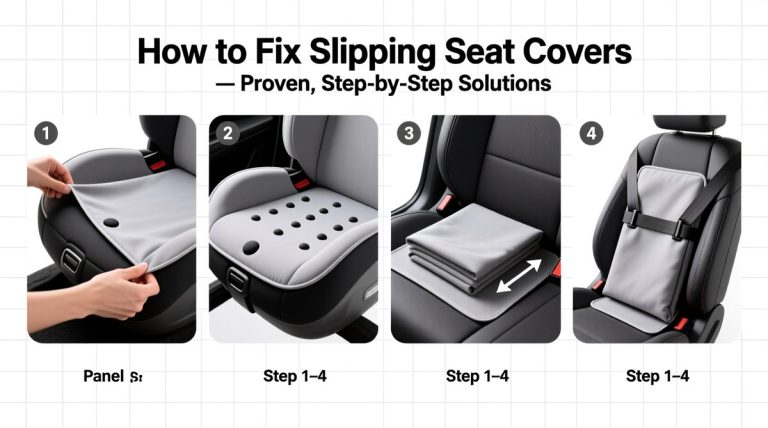
Universal covers depend on elastic, straps, and hooks that attach to the seat frame. These anchors work reasonably well at first, but elastic stretches, hooks pop off, and the cover gradually migrates. The result is sagging fabric on the seat base, wrinkled material on the backrest, and exposed factory upholstery at the bolsters. Re-tightening helps temporarily, but the cycle repeats.
Custom Covers: Clips, Tethers, and Anti-Slip Backing
Custom covers use sewn-in clips, tethers, hook-and-loop strips, and anti-slip backing to lock the cover to the seat. Because the pattern matches the seat shape, there is less slack to manage in the first place. Installation takes longer — often 30 to 60 minutes per seat — and may require removing the headrest and reaching under the seat base to secure the tethers. The payoff is a cover that stays put through daily use, entry and exit, and rear-seat folding.
When installing a custom cover, start with the seatback, then move to the seat base, and secure all tethers before smoothing the material. Test every seat control and the seatbelt buckle before you consider the job finished.
Comfort and Appearance: OEM Look vs. Generic Drape
Comfort and appearance are subjective, but the gap between custom and universal is consistent. A cover that follows the seat’s shape preserves the original comfort; one that drapes over it changes the feel.
Seat Contour, Lumbar Support, and Cushion Feel
Factory seats are shaped to support your body over long drives. A universal cover adds a layer of loose material that can reduce lumbar support, flatten cushion contours, and create a “hammock” effect where the fabric sags between anchor points. Custom covers are cut to match the seat’s contour, so the original support structure remains intact. Material thickness still affects cushion feel — a thick neoprene cover will firm up a soft seat — but the geometry stays true to the factory design.
Color Matching, Stitching, and Interior Aesthetics
Custom covers offer color options, stitching styles, and panel layouts that can match or complement the factory interior. Universal covers come in generic colors and patterns that rarely align with the dashboard, door panels, or carpet. If the interior aesthetic matters to you, custom is the only option that can genuinely blend in. A close color match on a universal cover still looks like a cover; a custom cover can look like a factory option.
Cleaning and Care: What Each Type Demands
Seat covers collect spills, dirt, sweat, and pet hair. How you clean them depends on the material and whether the cover can be removed without a fight.
Spot Cleaning vs. Full Removal and Machine Washing
Universal covers are easy to remove, so machine washing is practical — assuming the material allows it. Custom covers are harder to remove because of the clips and tethers, so most owners spot clean them in place. Some custom covers are machine washable, but repeated washing can shrink or distort the pattern, and reinstallation takes time. Check the care label before you assume a cover can go in the washer.
Moisture, Spills, and All-Weather Odor Management
Neoprene and waterproof-backed covers handle spills well, but trapped moisture between the cover and the factory upholstery can lead to mildew and odor. Breathable fabrics dry faster but absorb spills. If you frequently haul kids, pets, or outdoor gear, choose a material with a waterproof backing and plan to remove and dry the cover periodically. Odor management is easier with a cover you can remove and air out, which favors universal options in vehicles where the cover is a working tool rather than a permanent upgrade.
Durability, Ownership Cost, and Value Over Time
Upfront price is only part of the cost. A cheap cover that wears out quickly costs more than a quality cover that lasts.
Price Per Year of Service: The Real Math
A low-cost universal cover that starts fraying after a year costs more per year of service than a quality custom cover that lasts several years, even though the custom cover costs more upfront. The math shifts in a low-wear setting, like a rarely driven second car, where a universal cover may last longer. For a daily driver, the custom cover’s longer service life and better protection usually win on cost per year. Our breakdown of how long custom seat covers usually last covers the variables that matter.
Warranty, Support, and Replacement Differences
Custom covers from established manufacturers typically include a warranty covering material defects, stitching, and sometimes zippers and hardware. Universal covers rarely carry more than a basic return policy. Replacement is also a factor: if a universal cover fails, you replace the whole thing. If a custom cover fails, some manufacturers sell individual seat covers or components, which lowers the replacement cost. Always read the warranty terms before buying, and keep your order details in case you need support later.
The Verdict: Which Seat Cover Should You Buy?
The right choice depends less on the product category and more on your vehicle, your routine, and your tolerance for compromise. Here is how the decision breaks down by use case.
Best for Daily Drivers, Families, and Leased Vehicles
Daily drivers and family haulers benefit most from custom fit covers. The secure fit survives constant entry and exit, the material protects against spills and crumbs, and the OEM-like appearance keeps the cabin presentable. For leased vehicles, custom covers protect the factory upholstery so the return inspection goes smoothly — as long as the cover is installed correctly and does not damage the original seat fabric.
Best for Trucks, Work Vehicles, and Pet Owners
Trucks and work vehicles need tough, waterproof materials more than they need a perfect fit. A heavy-duty universal cover can handle mud, tools, and dog claws, and it is cheap enough to replace when it gets trashed. That said, truck seats with integrated airbags and seat heaters still need a compatible cover. If you want durability plus a proper fit, look for custom fit seat covers built for trucks rather than settling for a generic stretch cover.
Best for Budget Builds and Temporary Protection
If you just bought a used car and want to hide worn upholstery for a year or two, a universal cover is a reasonable stopgap. It is also fine for a project vehicle that rarely leaves the garage. Just keep expectations realistic: the cover will shift, it will not match the interior, and it may not be compatible with airbags or seat controls. Treat it as a temporary solution, not a permanent one.
- Confirm fit for your exact make, model, year, and trim
- Verify side airbag compatibility and seat control access
- Check heated or ventilated seat compatibility and material breathability
- Review cleaning instructions, warranty terms, and return policy
- Measure your seat configuration: bucket, bench, split folding, or integrated seatbelts
- Best use case: Custom fit covers for daily drivers, families, and anyone who prioritizes safety and appearance; universal covers for temporary protection or low-wear vehicles
- Main strength: Custom covers deliver secure fit, airbag compatibility, control access, and OEM-like looks; universal covers deliver low cost and fast installation
- Main limitation: Custom covers cost more and take longer to install; universal covers shift, sag, and may interfere with safety systems
- Next verification step: Check the manufacturer’s fitment and airbag compatibility statement for your exact vehicle before ordering