Where to Place a Dash Cam Legally for a Clean Interior

where to place a dash cam legally is easiest to judge by fit, material, installation or application needs, care requirements, compatibility, and value for your vehicle.
Knowing where to place a dash cam legally is the first step toward a clean, uncluttered cabin that won’t attract a ticket. The short answer: mount it behind the rearview mirror, keep it out of the driver’s line of sight, and route the cable so it never interferes with airbags, wipers, or the windshield defroster.
Beyond that, state laws vary, and the difference between a legal install and a fix-it ticket often comes down to a few inches. This guide walks through the legal rules, the best mounting spots, and the installation habits that keep your interior looking factory-clean.
- Confirm fit: Check vehicle, trim, dimensions, surfaces, and safety-system compatibility.
- Check materials: Match construction or chemicals to the intended seat, floor, trim, paint, glass, or device.
- Plan setup: Follow manufacturer instructions and keep airbags, controls, sensors, vents, pedals, and moving parts clear.
- Plan upkeep: Compare cleaning, maintenance, durability, warranty, and replacement needs.
The Legal Answer Up Front: Where to Place a Dash Cam Without Risking a Ticket
Most states allow dash cams, but they regulate where you can put them. The core legal principle is simple: the camera must not obstruct your view of the road, and it must not distract you while driving.
The Two Rules That Decide Everything: Windshield Obstruction and Driver Distraction
Windshield obstruction laws control what can sit on your glass. Driver distraction laws control anything that takes your attention off the road. A dash cam can violate either one, even if it’s small.
In practice, this means the camera should sit in a spot that doesn’t block the area your eyes actually scan while driving. That’s why the top-center of the windshield, behind the rearview mirror, is the safest legal bet in almost every state.
Why a “Clean Interior” Is a Legal Standard, Not Just a Style Preference
When officers see a clean, factory-looking dash cam install, they’re far less likely to question it. A messy cable draped across the windshield or a camera hanging below the wiper sweep line looks like an obstruction, even if it technically isn’t.
A tidy install also signals that you’re a careful owner. That matters during traffic stops, where the appearance of your cabin can influence whether an officer decides to write a warning or a citation.
In many states, the legal “obstruction zone” is measured from the top of the windshield down to a specific height, usually around 5 inches. Anything below that line, in front of the driver, is far more likely to be cited.
Windshield Obstruction Laws by State: The 5-Inch Rule and the Rearview Mirror Exemption
Federal law doesn’t ban dash cams, but it does restrict what can be attached to the windshield. Many states follow similar logic, allowing small devices in a specific zone.
States With Strict Obstruction Statutes vs. States That Allow the Rearview Mirror Zone
Some states, like California, explicitly allow dash cams and GPS units in a 7-inch square in the lower corner of the passenger side or in the 5-inch square behind the rearview mirror. Others, like New York, require that no sticker or device obstruct the driver’s view, with a specific exemption for the mirror area.
In states with strict obstruction statutes, even a well-placed camera can earn a ticket if it blocks the windshield wiper path or the defroster vents. The safest approach is to keep the camera small, mount it high, and never let it extend below the AS1 line (the shaded band at the top of the windshield).
How Law Enforcement Measures Compliance: The Driver’s Line of Sight
Officers don’t carry tape measures. They sit in the driver’s seat, look at the road, and check whether the camera blocks their view of the left mirror, the traffic light, or the oncoming lane. If they have to lean forward or shift to see around it, that’s an obstruction.
This is why mounting the camera behind the rearview mirror works so well. In most vehicles, the mirror itself already blocks that tiny slice of view, so the camera adds no meaningful obstruction.
The Best Legal Mounting Positions for a Clean, Uncluttered Cabin
Once you know the legal principle, choosing a spot becomes easy. Here are the three positions that keep your cabin clean and your camera legal.
Behind the Rearview Mirror: The Default Sweet Spot for Most Vehicles
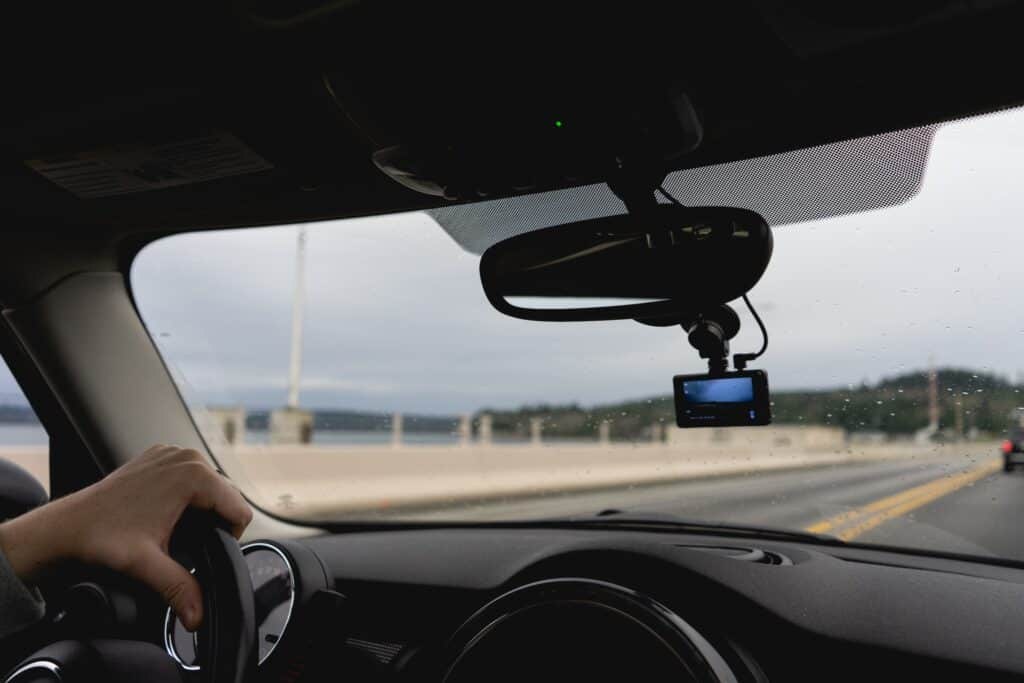
This is the single best location for a front-facing dash cam. It’s hidden from the driver’s view, sits in the wiper sweep zone, and keeps the cable short and easy to tuck into the headliner.
Place the camera so the lens is level with the center of the windshield and the body of the camera is completely hidden behind the mirror housing. You should not be able to see the camera from the driver’s seat without leaning forward.
Low Passenger-Side Mount: The Legal Alternative When the Mirror Zone Fails
Some vehicles have a large sensor housing behind the mirror, or a rain-sensing wiper module that blocks the camera’s view. In that case, mount the camera lower on the passenger side, near the dashboard defroster vent.
Keep the camera below the AS1 line but above the wiper sweep zone. Avoid placing it in front of the passenger airbag deployment path. The passenger airbag typically deploys from the dashboard, so the camera should sit on the glass, not on the dash.
Rear-Window and Rear-Facing Camera Placement: Legal Limits and Practical Fit
Rear-facing cameras have different rules. Most states don’t restrict rear-window obstructions as strictly, but the camera must not block your view of the road behind you through the rearview mirror.
Mount the rear camera high on the rear window, near the top edge, so it sits in the same zone as the factory brake light. Avoid the center of the glass where it blocks your rearview mirror sightline. If you have a rear wiper, make sure the camera doesn’t interfere with its travel.
- Mount the camera behind the rearview mirror whenever possible
- Route the cable along the headliner and A-pillar, away from airbags
- Test the camera’s view before tightening the mount
- Keep the lens below the AS1 line for a clear image
- Block the passenger airbag with the camera or cable
- Place the camera in the driver’s direct line of sight
- Let cables dangle near the steering column or pedals
- Mount the camera on top of a tinted strip that blocks the lens
Mount Types and Vehicle Fit: Suction Cup, Adhesive, and Mirror Mounts Compared
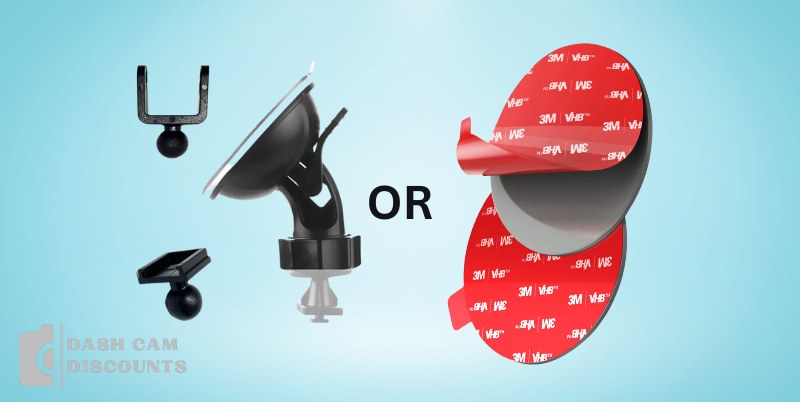
The mount type affects both the legal footprint and the cleanliness of the install. Suction cup mounts are the most common and easiest to move, while adhesive and mirror mounts trade that flexibility for a cleaner look. Here’s how they compare.
Adhesive Mounts: The Cleanest Look With a Permanent Commitment
Adhesive mounts use a sticky pad that bonds to the windshield. They’re the most discreet option, with no suction cup bulk and no visible arms. The trade-off is permanence: once the pad is on the glass, moving it usually ruins the adhesive.
If you plan to keep the camera in one spot for years, adhesive is the way to go. Just clean the glass with isopropyl alcohol before applying, and let the adhesive cure for at least 24 hours before hanging the camera.
Mirror Mounts: Maximum Discretion With Compatibility Trade-offs
Mirror mounts attach the camera to the rearview mirror stem. They keep the camera out of the windshield entirely, which is ideal for states with strict obstruction laws. The catch is compatibility: not every vehicle has a stem that accepts these mounts, and some cameras are too heavy for the bracket.
If you go this route, make sure the mount is designed for your vehicle’s mirror stem diameter. A loose mount can vibrate, causing blurry footage.
Suction cup mounts are the easiest to reposition, but they leave a visible ring on the glass and can pop loose in extreme heat. If you live in a hot climate, choose a mount with a locking lever or upgrade to an adhesive mount for reliability.
Cable Routing, Power, and Airbag Safety: The Installation Half of Legal Placement
Legal placement doesn’t end with the camera. The cable is part of the install, and a poorly routed wire can turn a legal camera into a hazard.
Hardwiring Into the Fuse Box: The Cleanest, Most Secure Power Solution
Hardwiring connects the dash cam to a fuse tap in your vehicle’s fuse box. This gives you always-on power for parking mode, eliminates the cigarette lighter cable, and keeps the interior completely clean. The trade-off is complexity: you’ll need a hardwire kit, a fuse tap, and some basic electrical knowledge.
Pick an ignition-switched fuse (like the cigarette lighter or accessory outlet) so the camera powers on and off with the car. Use a multimeter to confirm the slot is switched.
Tuck the wire along the headliner, down the A-pillar, and into the fuse box area. Keep it away from airbags and metal brackets that could chafe the wire.
Insert the fuse tap, ground the negative wire to a bare metal bolt, and test the camera. Confirm the parking mode (if supported) works and that the camera turns off when the ignition is off.
Cigarette Lighter Power: Cable Management Without Violating Obstruction Laws
If you don’t want to hardwire, the cigarette lighter is the simplest power source. The challenge is routing the cable so it doesn’t cross the driver’s line of sight or tangle the pedals.
Run the cable up from the outlet, tuck it under the dashboard trim, then up the A-pillar and across the headliner. Use small adhesive cable clips to hold the wire in place along the trim. Never route the cable across the steering column or in front of the airbag cover.
A-Pillar and Headliner Routing: Avoiding Curtain Airbags and Wiring Damage
The A-pillar is a common cable route, but it’s also where side curtain airbags deploy. Tucking a wire directly behind the airbag can interfere with deployment and turn the wire into a projectile.
Instead, route the cable along the headliner, then transition to the A-pillar trim behind the airbag’s mounting clips, or use a trim tool to tuck the wire just under the headliner without going deep into the pillar. If you’re unsure, have a professional installer run the cable.
Before you tuck a cable into the A-pillar, check your owner’s manual for the airbag deployment zone. Most curtain airbags inflate downward from the headliner, so tucking the wire along the very top edge of the trim is usually safe. When in doubt, route the cable down the passenger side instead.
Recording Laws and Privacy: Placement Alone Won’t Keep You Compliant
Even a perfectly placed camera can get you in legal trouble if you record where you shouldn’t. Placement solves the windshield obstruction problem, but privacy laws are a separate issue.
Audio Consent Laws: The Hidden Legal Trap in Two-Party Consent States
Federal law and most states allow recording a conversation if at least one party consents (that’s you). But about a dozen states, including California, Florida, and Pennsylvania, require all parties to consent to audio recording. If your dash cam records audio, you could be violating the law without realizing it.
Most dash cams have a microphone that’s on by default. Check your settings and disable audio recording if you live in or travel through a two-party consent state. When in doubt, leave the mic off.
Video Recording and Expectation of Privacy: What Your Dash Cam Can Legally Capture
Video recording in public spaces is generally legal because there’s no reasonable expectation of privacy on public roads. However, pointing a camera into a private residence, a locker room, or a neighbor’s bedroom window crosses the line.
Angle your dash cam so it captures the road, not the interior of other people’s homes or vehicles. If you use parking mode, make sure the camera doesn’t record areas where people have a reasonable expectation of privacy.
Cleaning and Maintaining a Legally Placed Dash Cam
A clean windshield is part of a legal install. Dirt, smudges, and adhesive residue can obscure the camera lens and make the mount more visible, which increases the chance of a ticket.
Cleaning the Windshield Mount Zone Without Damaging Tint or Coatings
Use a microfiber towel and an ammonia-free glass cleaner to wipe the mount area. Ammonia can damage window tint and some anti-glare coatings. For stubborn adhesive residue, use isopropyl alcohol or a plastic razor blade, but test on a small area first.
If your windshield has a ceramic coating, avoid harsh cleaners that can strip the hydrophobic layer. A pH-neutral glass cleaner is the safest choice. For more on caring for coated glass, check out our guide on how to remove ceramic coating from glass.
Heat, Adhesive Failure, and Re-Mounting: When Your Legal Placement Stops Working
Extreme heat is the enemy of adhesive mounts. Over time, the pad can soften, and the camera can slide down, blocking your view. If you notice the camera sagging, re-mount it immediately.
Clean the old adhesive off the glass, apply a fresh pad, and press firmly for 60 seconds. If the mount keeps failing, consider a mirror mount or a suction cup with a locking lever. If you need to strip old coatings before applying a new mount, see our guide on how to remove ceramic coating.
Ownership Cost and Value: What Legal Placement Really Costs vs. What It Saves You
Doing the job right the first time costs a little more, but it saves money and headaches down the road.
Hardwire Kits, Replacement Mounts, and Tint Repair: The Real Cost of Compliance
A quality hardwire kit runs between $15 and $40. Adhesive mount replacement pads cost about $5 to $10. If you damage your tint while removing an old mount, expect to pay $50 to $150 per window to replace it.
Compare that to the cost of a fix-it ticket for windshield obstruction, which can range from $30 to $200 depending on the state. In many cases, the ticket is dismissed if you show proof you fixed the issue.
The Value of Legal Placement: Admissible Evidence, Lower Insurance Risk, and Fewer Headaches
A legally placed dash cam captures the footage you need without giving an officer a reason to pull you over. That footage can be the difference in an insurance dispute or a police report.
It also keeps your cabin looking clean and professional, which protects your car’s resale value and makes every drive more pleasant. That’s the real value of doing it right.
Frequently Asked Questions
Is it legal to mount a dash cam behind the rearview mirror?
Yes, in most states. The rearview mirror zone is explicitly exempted in many windshield obstruction statutes. As long as the camera doesn’t block your view of the road, it’s generally legal.
Can I get a ticket for a dash cam on my windshield?
Yes, if the camera obstructs your view or violates a specific state statute. Mounting it behind the rearview mirror and keeping the cable tucked away minimizes the risk.
Do I need to tell passengers my dash cam is recording?
In two-party consent states, yes. If the camera records audio, you need consent from everyone in the car. Disabling the microphone avoids this issue entirely.
Can a dash cam block the passenger airbag?
It shouldn’t. Never mount a camera or route a cable over the passenger airbag deployment zone. Keep the camera on the windshield and the cable along the headliner.
Is it legal to use a dash cam in parking mode?
Parking mode is legal, but it depends on the camera’s field of view. Avoid pointing it at areas where people have a reasonable expectation of privacy, like a neighbor’s window.
Can a police officer make me remove my dash cam during a traffic stop?
No. A dash cam is a legal device, and you’re not required to remove it. However, you may be asked to turn it off or angle it away from the officer during the stop.