Leather vs Leatherette Seat Covers: Which Is Better for Your Car?

Genuine leather offers a premium feel, natural breathability, and long-term durability but costs more and needs regular conditioning. Leatherette is cheaper, easier to clean, and looks similar, but it can peel or crack after a few years.
When you’re shopping for new seat covers, the leather vs leatherette seat covers decision shapes your budget, your interior’s look, and how much upkeep you sign up for. Leather is a natural material that feels premium and can last for years with regular care, while leatherette mimics the look at a lower cost and is far easier to keep clean. This guide compares both options across fit, materials, installation, maintenance, safety, and value so you can choose with confidence.
- Fit first: Custom-fit covers beat universal regardless of material; verify make, model, year, trim, airbags, and.
- Material matters: Leather is graded from full-grain to bonded; leatherette is a PU or PVC coating.
- Care differs: Leather needs a pH-balanced cleaner and conditioner; leatherette cleans with mild soap and water.
- Safety check: Confirm airbag-compatible tear-away seams and heated-seat compatibility before buying.
- Value angle: Leather suits long-term owners; leatherette suits budgets, families, and shorter ownership periods.
Direct Answer: What to Know About leather vs leatherette seat covers
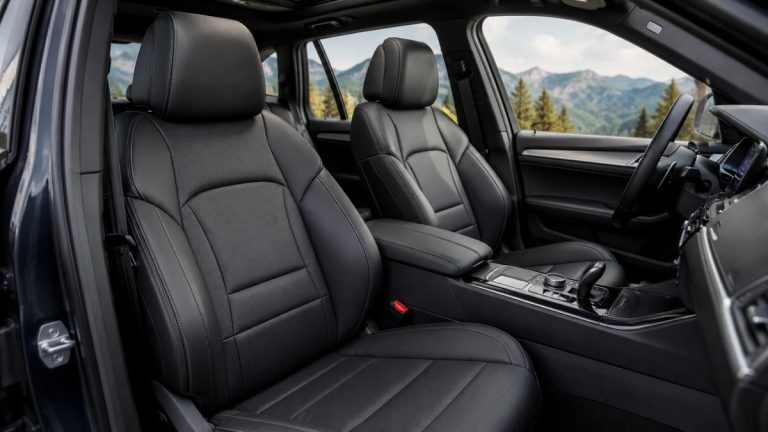
Genuine leather seat covers are made from animal hides, usually sold as full-grain, top-grain, or bonded leather. Full-grain is the most durable and expensive; top-grain is smoother but thinner; bonded leather is made from leather scraps and adhesive, so it looks like leather at first but is the least durable. The material breathes, softens over time, and develops a natural patina that many owners appreciate.
Leatherette, also called faux leather or PU leather, is a fabric backing coated with polyurethane or PVC to imitate leather’s texture. It is significantly more affordable, resists stains and spills better, and cleans up with mild soap and water. The main downside is longevity: lower-quality leatherette can crack or peel after a few years, especially in hot climates or on heavily used bolsters.
If you want the short version: genuine leather is the better long-term investment for owners who will maintain it, while leatherette is the practical choice for budget-conscious buyers, families, and anyone who prefers a low-maintenance interior. For a deeper look at how the materials compare, our guide on genuine leather vs leatherette seat covers covers the differences in more detail.
Fit, Compatibility, and Who It Suits
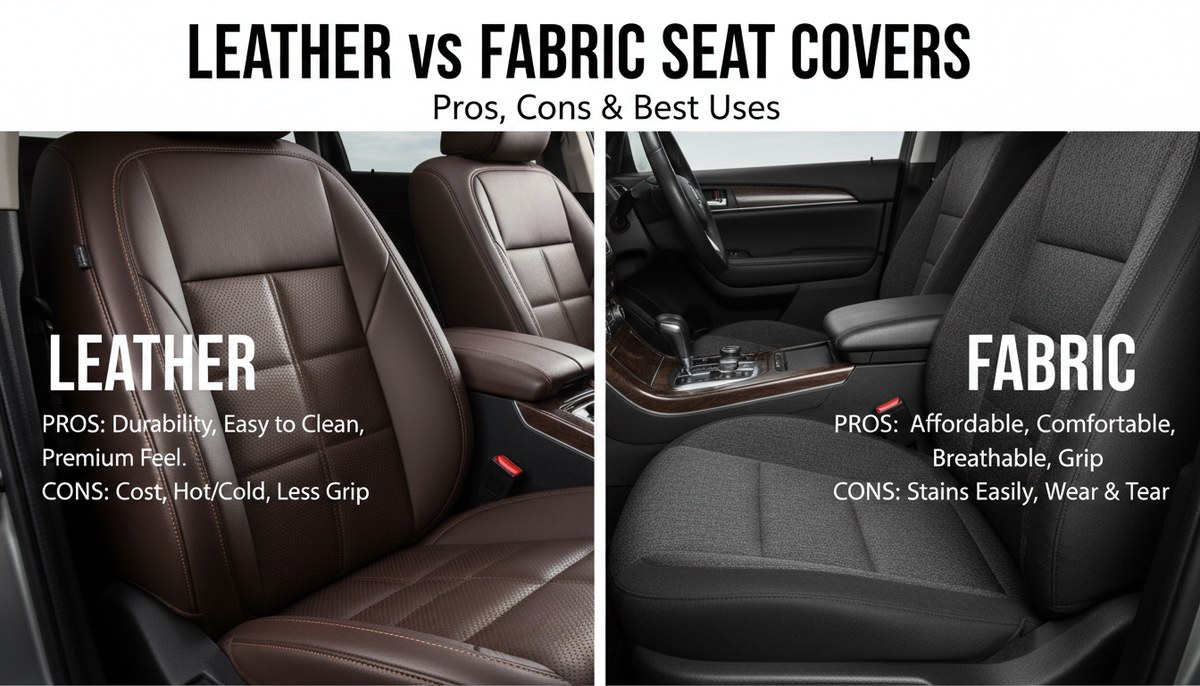
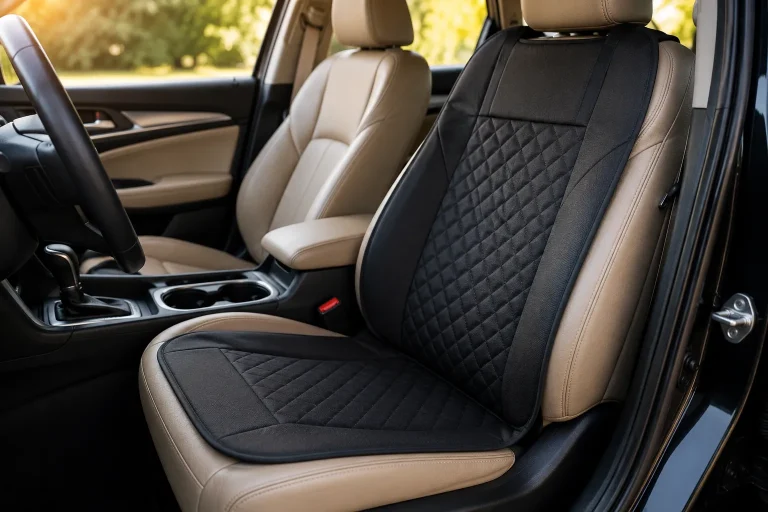
Fit matters more than the material itself. Both leather and leatherette covers come in custom-fit, semi-custom, and universal styles. Custom-fit covers are built around a specific vehicle’s seat shape, with openings for armrests, seat controls, and airbags. Universal covers are cheaper but tend to fit loosely, slide around, and sometimes block seat buttons or seat belt buckles.
Leatherette has a practical advantage during installation: it is more pliable than most genuine leather, so it stretches over contoured seats more easily. Genuine leather covers are usually built for a precise fit and leave little room for error, which is why they are most commonly sold as custom-fit sets.
Who should choose which? Leatherette suits daily commuters, families with children and pets, work trucks, and anyone who wants a leather look without the cost. Genuine leather suits owners who plan to keep the car for years, want a premium cabin feel, or care about resale appeal. If you’re not sure whether a custom or universal set is right for your vehicle, our comparison of custom-fit vs universal seat covers explains the trade-offs.
Verify your vehicle’s make, model, year, trim, and seat configuration before ordering. Check for side airbags, seat belt pretensioners, heated or ventilated seats, power adjustments, lumbar controls, memory buttons, and folding or split rear seats. Material alone does not guarantee fit.
Materials, Construction, and Key Features
Genuine leather is graded by hide quality. Full-grain leather keeps the natural surface and is the strongest and most expensive. Top-grain leather is sanded for a smoother finish but is slightly thinner. Bonded leather is made from leather scraps and adhesive; it looks convincing at first but can flake as the adhesive breaks down. When a product is labeled “genuine leather,” check which grade you’re actually getting.
Leatherette also varies in quality. Polyurethane (PU) leather is more flexible, breathable, and resistant to cracking than PVC vinyl, which is stiffer and can become brittle in extreme temperatures. The backing fabric and the thickness of the coating determine how long the material holds up. Cheap leatherette can look shiny and feel plasticky, while better grades use a soft-touch coating and an embossed grain that is hard to distinguish from real leather at a glance.
Comfort differences show up quickly. Leather breathes, so it feels less sticky on hot days and less cold in winter. Leatherette does not breathe as well, so it can feel warm and tacky against bare skin in summer and cold until the cabin warms up in winter. Stitching quality, padding thickness, and perforation also affect comfort and durability more than the surface material alone.
| Option | Best For | Key Consideration |
|---|---|---|
| Genuine leather | Long-term owners, luxury interiors, resale value | Costs more and needs regular conditioning to avoid cracking |
| Leatherette (PU/PVC) | Budget buyers, families, pets, low-maintenance routines | Easier to clean but can peel or crack after a few years |
| Bonded leather | Short ownership periods, occasional use | Looks like leather but flakes as the adhesive breaks down |
Installation, Application, and Everyday Use

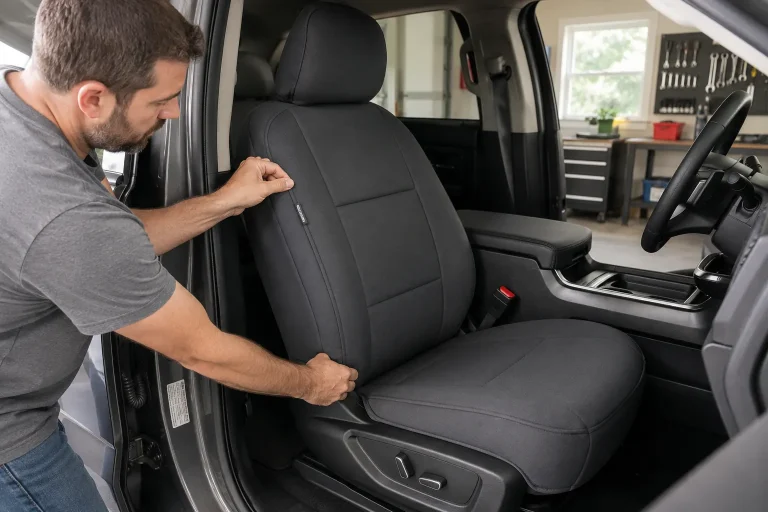
Installation difficulty is one of the biggest surprises for first-time buyers. Custom-fit genuine leather covers often require removing the seat or using hog rings, zip ties, and trim tools to pull the material tight. Professional installation is often recommended to get a factory-like result. Our guide on how to install leather seat covers walks through the general process and what to expect.
Leatherette covers are usually easier to work with because the material stretches. A well-made custom-fit set can still take an hour or more per seat, but the process is more forgiving for a DIY installer. Universal leatherette covers are the simplest to install, but they rarely look tailored and may shift over time.
Test the fit with the seat in several positions before tightening everything down. Move the seat forward and back, recline it, and confirm that controls, seat belt buckles, and side airbag seams are fully accessible. It is much easier to adjust a cover before you pull all the straps and hooks tight.
Everyday use also differs. Genuine leather softens and develops character over time, which many owners enjoy. Leatherette stays more consistent but can squeak against clothing and feels less supple. Neither material is waterproof in the way neoprene is, so heavy spills should be wiped up quickly regardless of which you choose.
Cleaning, Care, and Long-Term Maintenance
Genuine leather needs a routine. Vacuum the seats regularly to remove abrasive grit, wipe with a pH-balanced leather cleaner, and apply a conditioner every few months to keep the hide supple. Avoid harsh all-purpose cleaners, bleach, and abrasive brushes, which strip the finish. UV exposure is the main enemy, so parking in the shade or using a sunshade helps prevent fading and cracking.
Leatherette is much lower maintenance. Mild soap and warm water on a microfiber cloth handles most dirt, and a dedicated vinyl or PU cleaner works for tougher stains. Avoid alcohol-based wipes, acetone, and strong solvents, which can dissolve the coating. A vinyl protectant can slow UV damage, but it won’t stop wear at stress points like the bolsters and seat edges.
- Vacuum seats regularly to remove dust and grit
- Use pH-balanced leather cleaner and conditioner on genuine leather
- Wipe spills quickly on both materials
- Use alcohol-based wipes or harsh solvents on leatherette
- Skip conditioning on genuine leather for months at a time
- Use silicone-based dressings that leave a slippery, shiny residue
Important Limitations and Common Mistakes
The biggest safety issue with any seat cover is the side airbag. Many vehicles have airbags that deploy from the outer edge of the seat back. A cover that isn’t designed for airbag deployment can slow or redirect the airbag, or turn it into a projectile. Look for covers with tear-away seams and a stated airbag-compatible design. For more detail, read our guide to airbag compatible seat covers.
Never cover a seat with a non-airbag-compatible cover if the vehicle has side airbags in the seats. Also confirm that seat belt buckles, seat controls, lumbar buttons, and heated or ventilated seat switches remain fully accessible. If you’re using covers with heated seats, verify that the material is rated for heat transfer and follow the manufacturer’s guidance.
Other common mistakes include buying a universal cover for a car with complex seats, assuming “genuine leather” means full-grain, and ignoring the difference between PU and PVC. Leather covers can also feel stiff at first and need time and conditioning to soften. Leatherette covers should be checked periodically for loose straps and shifting, especially during the first few weeks of use.
Value, Alternatives, and What to Verify
Value depends on how long you’ll own the vehicle and how much you care about resale. Genuine leather covers cost substantially more than leatherette, but they can last for many years with care and add a premium feel that buyers notice. Leatherette delivers the look for a fraction of the cost, which makes it a smart choice for leased vehicles, trade-ins, or cars that see heavy daily use.
If you’re still deciding whether either material is worth the investment, our breakdown of whether leather seat covers are worth it compares the practical benefits against the cost.
Alternatives to both include neoprene covers for water resistance, fabric covers for softness, and OEM-style upholstery if you want a permanent factory look. Also consider the condition of your original seats: covers can hide existing damage, but they won’t fix worn foam or broken seat mechanisms.
- Confirm exact vehicle fit: make, model, year, trim, and seat type
- Check the material grade: full-grain, top-grain, bonded, PU, or PVC
- Verify airbag compatibility, heated-seat compatibility, and access to controls
- Review the warranty, return policy, and installation requirements
- Confirm the cleaning and conditioning routine you’re willing to maintain
Final Recommendation
Choose leatherette if you want the leather look without the price tag, need easy cleaning for kids or pets, or plan to sell or trade the vehicle within a few years. Choose genuine leather if you’re keeping the car long-term, want a truly premium interior, and will commit to a simple conditioning routine. Fit and safety should come before material — a well-fitted leatherette cover is a better purchase than a poorly fitted leather one.
- Best use case: leatherette for budget, families, and daily drivers; genuine leather for long-term ownership and luxury feel
- Main strength: leather offers authentic comfort and longevity; leatherette offers the look at a lower cost with easier care
- Main limitation: leather needs regular conditioning and costs more; leatherette can peel or crack after a few years
- Next verification step: confirm your vehicle’s seat configuration, airbag type, and heated-seat compatibility before ordering