How Long Does Ceramic Coating Last? Car Care & Lifespan
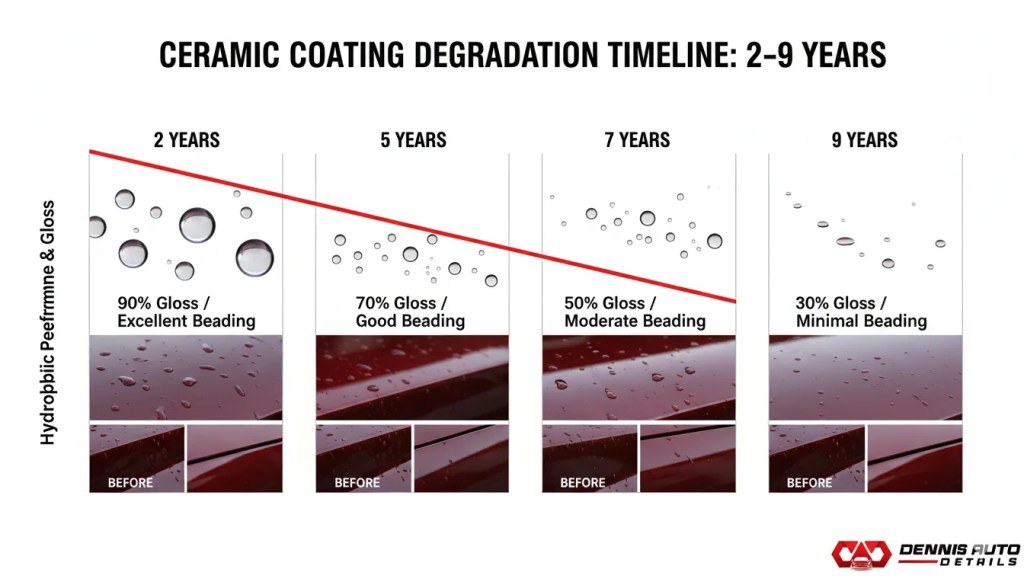
The direct answer: ceramic coating lasts roughly one to five years depending on product grade, paint prep, environment, and washing habits. Consumer DIY coatings typically fade faster than professionally applied multi-year systems.
If you’re searching for how long does ceramic coating last, the direct answer is that most ceramic paint coatings last between one and five years, with the final number depending on the coating grade, surface preparation, climate, and how consistently the car is washed. A consumer spray coating can lose noticeable behavior within a year, while a professionally applied multi-year coating often keeps its hydrophobic properties well past the three-year mark when maintained properly.
- Lifespan range: Most ceramic coatings last 1 to 5 years; pro systems lean longer than DIY.
- Prep is everything: Paint correction and decontamination before application determine real durability.
- Care extends life: pH-neutral washes and coating-safe toppers preserve the hydrophobic layer.
- Not scratch-proof: Coatings resist chemicals and UV, not rock chips or key scratches.
- Verify claims: Check SiO2 content, manufacturer durability claims, and warranty terms before buying.
Direct Answer: What to Know About How Long Ceramic Coating Lasts
Ceramic coating lifespan is not a fixed number, and any product that promises an exact year count deserves a closer look. In the detailing world, the honest range is roughly one to five years for paint coatings, and that spread comes down to four main variables:
- Product grade: Consumer DIY coatings typically contain lower solids and lower SiO2 concentrations than professional systems.
- Surface preparation: A coating bonds to the clear coat, so contamination, swirls, and old wax underneath will shorten its life.
- Environment: Cars parked outdoors in sun, heat, salt, or industrial fallout age faster than garage-kept vehicles.
- Maintenance: pH-neutral washing and coating-safe toppers extend the hydrophobic layer; harsh chemicals strip it.
The table below summarizes typical manufacturer-claimed ranges for the most common options. Your real-world result may differ, especially if prep or maintenance is skipped.
| Option | Typical Claimed Lifespan | Best For |
|---|---|---|
| Spray sealant or hybrid wax | Weeks to a few months | Quick weekend protection on a budget |
| Consumer DIY ceramic coating | 1 to 3 years | Owners willing to do full paint prep |
| Professional-grade ceramic coating | 3 to 5 years | Long-term durability with expert prep |
| Multi-year pro coating | 5 years or more (manufacturer claim) | Low-mileage and garage-kept vehicles |
Durability claims come from manufacturers, not from independent long-term testing. Owner-reported patterns in detailing communities generally line up with the ranges above, but a coating that faces winter road salt and uncovered parking will almost always fall on the shorter end of the range.
Fit, Compatibility, and Who It Suits

Ceramic coatings aren’t a one-size-fits-all upgrade. They suit drivers who want easier washing, strong water beading, chemical resistance, and a deeper gloss on factory or corrected clear coat. That includes daily commuters, weekend enthusiasts, new-car owners, and anyone planning to keep a vehicle for several years.
Coatings are less ideal for owners who expect physical protection from scratches, rock chips, or door dings — that’s not what a coating does. They’re also a poor fit for someone who won’t commit to proper washing, because a neglected coating can develop water spots and bonded contaminants that are harder to remove than on untreated paint.
On the compatibility side, ceramic coatings are designed for clear coat, but dedicated formulas exist for wheels, glass, headlights, and plastic trim. Painted surfaces must be free of wax, grease, and old sealants before application. If you’re considering a coating for a leased car or a vehicle with failing clear coat, verify the surface condition first, because a coating locks in the current paint state rather than fixing it.
Materials, Construction, and Key Features
Most ceramic coatings are liquid polymer solutions with silicon dioxide (SiO2) as the main film-forming ingredient. Higher SiO2 content generally means a harder, longer-lasting layer, which is why professional coatings often claim two to three times the durability of entry-level DIY sprays. Some coatings add titanium dioxide or other resins to improve gloss and chemical resistance.
Once cured, the coating creates a semi-permanent hydrophobic barrier. Water beads into tight droplets and rolls off, dirt has a harder time sticking, and UV exposure causes less clear-coat damage over time. These properties are real, but they’re measured in degrees: a fresh coating sheds water dramatically, while an aging coating still beads but requires more effort to keep clean.
When comparing products, look at the SiO2 percentage and the recommended number of layers rather than the marketing name. A coating labeled “10H” or “9H” refers to a pencil-hardness marketing claim, not a standardized scratch-resistance rating, so treat those numbers as promotional, not scientific.
Installation, Application, and Everyday Use
Application quality is the single biggest factor in how long a coating lasts. The process is the same in principle for DIY and professional work: wash, decontaminate, correct the paint, wipe with a panel prep, apply the coating in thin sections, and buff off the residue within the flash time. Skipping any of those steps shortens the lifespan.
Paint correction deserves special attention. A coating bonds to the clear coat, so any swirls, etching, or oxidation trapped underneath becomes permanent. That’s why paint correction before ceramic coating is considered standard practice — not optional polish.
After application, the coating needs to cure. Most manufacturers recommend keeping the car dry and untouched for a set period, and full cure can take longer than the initial flash time. For a clear breakdown of timing, see our guide on how long ceramic coating takes to cure.
Ceramic coating chemicals can irritate skin and eyes, and the solvents are flammable during application. Work in a ventilated area, wear nitrile gloves, and keep the product away from heat sources. Never apply a coating to a hot surface, and confirm the coating is compatible with the material you’re treating — glass, plastic trim, and wheels each have dedicated formulas.
Cleaning, Care, and Long-Term Maintenance
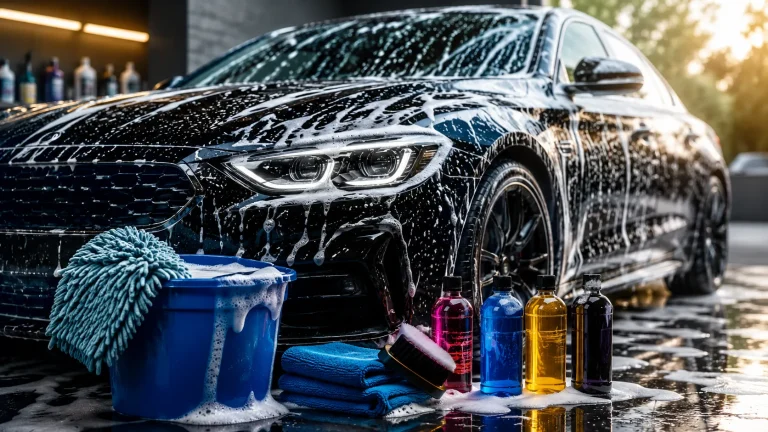
A coated car still needs regular washing; the coating just makes washing easier and less frequent. The safe routine is a touchless pre-rinse to lift loose dirt, followed by a pH-neutral shampoo and a two-bucket wash with a clean microfiber mitt. Drying with plush microfiber towels prevents water spots, which are the most common complaint on coated vehicles.
For the full routine, check our guide on how to wash a car with ceramic coating. The key is consistency: a coated car that goes months without washing will collect bonded contaminants just like any other paint.
- Use pH-neutral shampoo and coating-safe maintenance sprays
- Dry the car with clean, soft microfiber towels
- Reapply a maintenance topper every few months to extend the coating
- Use automatic brush washes, which can mar the coating over time
- Apply wax or polish on top unless the manufacturer allows it
- Use acidic wheel cleaners on coated wheels or alkaline degreasers on paint
Important Limitations and Common Mistakes
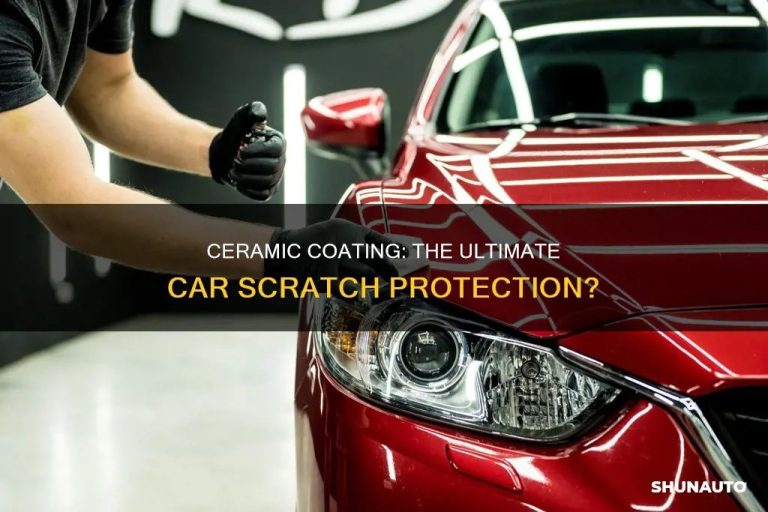
The biggest misconception is that ceramic coating makes paint immune to damage. It doesn’t. A coating adds chemical and UV resistance and makes the surface slicker, but it will not stop a key from scratching the door or a rock from chipping the hood. We cover this in more detail in our breakdown of whether ceramic coating protects against scratches, but the short version is that physical protection requires paint protection film, not a coating.
Common mistakes that shorten coating lifespan include:
- Applying over wax or old sealants: The coating can’t bond properly and delaminates in patches.
- Skipping decontamination: Iron fallout and tar left on the paint create weak spots under the coating.
- Coating in direct sunlight or high humidity: This changes flash times and can leave high spots or streaks.
- Washing too early: Water or shampoo during the cure window can interfere with the bond.
- Layering too thick: More product is not better; thick layers can trap solvent and cure unevenly.
Water spots deserve a special mention. Because a coating is hydrophobic, mineral deposits from hard water can bond to the surface and become visible once the water evaporates. If you live in a hard-water area, drying the car immediately after washing is not optional.
Value, Alternatives, and What to Verify
Ceramic coating is a value question, not just a performance question. A DIY kit costs far less than a professional installation, but the professional’s advantage is prep, environment control, and experience — all of which directly affect how long the coating lasts. If you’re deciding whether the expense makes sense, our guide on whether ceramic coating is worth it walks through the cost trade-offs.
Alternatives depend on your goals. A traditional carnauba wax or synthetic sealant costs less and can look great, but it lasts weeks or months instead of years. Paint protection film offers real rock-chip and scratch resistance, but at a much higher price and with a visible film edge on some panels. For many owners, the right answer is a coating for chemical protection and gloss, plus film only on high-impact areas like the front bumper.
- Confirm the coating is compatible with your paint, wheels, glass, or trim
- Check the SiO2 content and the manufacturer’s claimed lifespan
- Read the prep requirements — do you need paint correction?
- Review the warranty terms; many require professional installation to stay valid
- Ask the installer what maintenance products they recommend
Final Recommendation
If you’re ready to commit to proper washing and the prep work is done correctly, ceramic coating is a worthwhile upgrade that should last one to three years for a DIY kit and three to five years for a professional system. If you want rock-chip protection or you won’t change your washing habits, save the money and stick with a sealant or paint protection film instead.
Plan for one to five years of real-world performance, expect the shorter end on a daily driver parked outdoors, and treat prep and maintenance as the deciding factors. Verify the manufacturer’s durability claim and warranty terms before you pay, and choose the product grade that matches how long you plan to keep the car.