Can You Wax Over Ceramic Coating? Key Care Tips
Wax will sit on top of a ceramic coating but won’t bond to it, so it wears off quickly and can reduce water beading. For routine care, use a SiO2 spray sealant or ceramic booster instead of traditional wax.
If you’re asking can you wax over ceramic coating, the short answer is yes — you can physically apply wax on top of a cured ceramic layer. The better question is whether you should, and for most coated-car owners, the honest answer is usually no. Wax behaves differently on ceramic-coated paint than it does on bare clear coat, and understanding that difference is the key to keeping your coating performing at its best.
- The honest answer: You can apply wax over a cured ceramic coating, but it’s rarely recommended because.
- Main risk: Wax can reduce hydrophobic beading, leave streaks, and trap dirt on the ultra-smooth coated.
- When it helps: A light spray wax makes sense for temporary gloss before a show or sale.
- Better alternative: SiO2 spray sealants and ceramic boosters refresh the coating without masking its performance.
- Maintenance rule: Use pH-neutral soaps and proper wash techniques to keep the coating clean and functional.
Can You Wax Over Ceramic Coating? The Honest Answer
Ceramic coatings are marketed as a replacement for traditional wax, not a base layer for it. While a coating and a wax can coexist on the same panel, they don’t stack the way many owners expect. The wax ends up sitting on top of the coating, changing how the surface feels, sheds water, and collects dirt.
Why Wax and Ceramic Coating Are Different Protection Layers
A ceramic coating is a semi-permanent, glass-like layer that bonds chemically to your clear coat. Once cured, it forms a hard, slick surface that repels water, chemicals, and light contaminants for years when maintained correctly. Traditional wax — whether carnauba, synthetic, or a blend — is a soft, sacrificial product that sits on the surface and wears away in weeks.
That difference matters. Wax was designed to protect bare paint and enhance gloss. A ceramic coating already does both jobs, usually better and for much longer. Adding wax on top doesn’t double the protection; it simply covers the coating with a short-lived layer that needs its own maintenance.
What Happens Chemically When Wax Meets Ceramic
A cured ceramic coating is a cross-linked silica (SiO2) or polymer matrix that is chemically stable and very smooth. Wax, by contrast, is made up of oils, solvents, and film-forming ingredients such as carnauba or synthetic polymers. When you spread wax over a coating, those ingredients deposit on the surface rather than bonding to it.
The practical result: the wax layer sits loosely on top of the ceramic, which is why it wears off unevenly and can leave smears. The solvents in some waxes can also leave a temporary residue on the ultra-smooth coating. None of this chemically dissolves or “eats through” a properly cured ceramic layer, but it does create a surface that behaves more like waxed paint than coated paint.
The Risks of Waxing Over a Ceramic-Coated Surface
Waxing a coated car isn’t dangerous to the paint, but it can undermine the very reasons you paid for a coating. Here are the most common problems owners run into.
Reduced Hydrophobic Performance and Water Beading
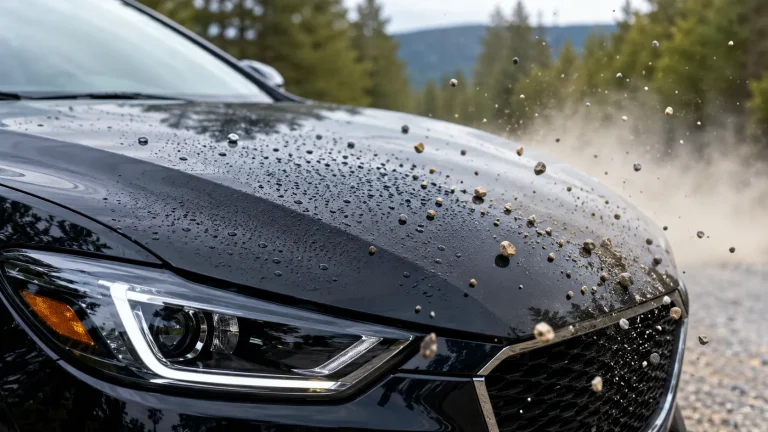
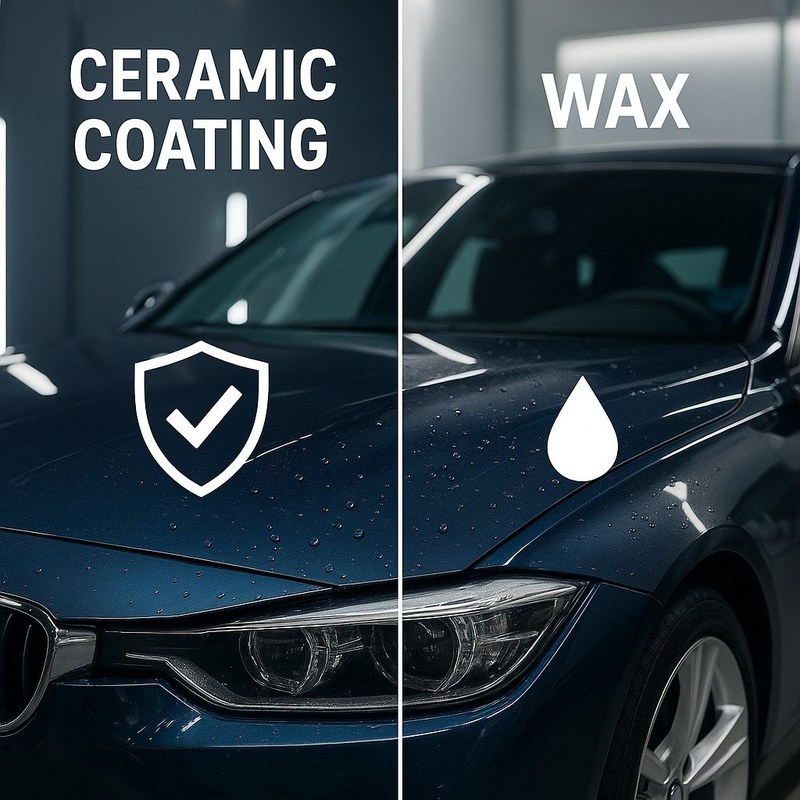
One of the main selling points of ceramic coating is its hydrophobic behavior — water beads tightly and rolls off, carrying dirt with it. Wax changes the surface energy of the panel, and most waxes produce a flatter, less active water behavior than a fresh coating. Owners often notice that beading looks “off” or that water sheets unevenly after a wax application.
Streaking, Residue, and Hard-to-Remove Haze
Ceramic-coated paint is extremely slick, which means wax doesn’t grab onto it the way it grabs bare clear coat. That slickness makes it easy to leave uneven films, streaks, and haze — especially if you apply too much product or work in direct sunlight. Removing that residue often requires another wash, which turns a quick wax job into a full detailing session.
Never apply wax to a hot panel, and avoid abrasive applicators or polishes on coated paint. Aggressive rubbing can mar the coating or the clear coat underneath. Always work in the shade, follow the wax manufacturer’s instructions, and test a small hidden area first.
Can Wax Actually Damage the Ceramic Layer?
In most cases, no. A fully cured ceramic coating is durable enough to resist the mild solvents found in consumer waxes. The real risk isn’t chemical — it’s the buildup of wax residue, which can trap dirt, dull gloss, and make the coating harder to clean over time. If you let multiple wax layers build up, you may eventually need to strip the surface and start fresh, which defeats the purpose of a low-maintenance coating.
When Waxing Over Ceramic Coating Makes Sense
Despite the downsides, there are a few situations where a light wax application is a reasonable choice.
Filling Light Marring and Water Spots
Wax can temporarily mask very light surface haze or faint water spots that haven’t etched into the clear coat. If you’re dealing with stubborn mineral deposits, check out our guide on water spots on ceramic coating before reaching for a wax — proper removal is usually a better fix than covering them up.
Adding Temporary Gloss for a Show or Resale
A thin layer of spray wax can add a bit of extra depth and slickness for a car show, photoshoot, or sale listing. Just keep in mind that the effect is temporary and will need to be removed or refreshed. For resale, a clean, well-maintained coating usually photographs better than a waxed one with streaks.
Using Wax as a Sacrificial Layer
Some owners apply a cheap wax over their coating during winter or heavy-salt months. The idea is that the wax takes the brunt of road grime and bird droppings, protecting the coating underneath. It can work, but only if you’re willing to reapply it frequently and fully strip it in the spring to restore the coating’s performance.
How to Properly Apply Wax Over Ceramic Coating
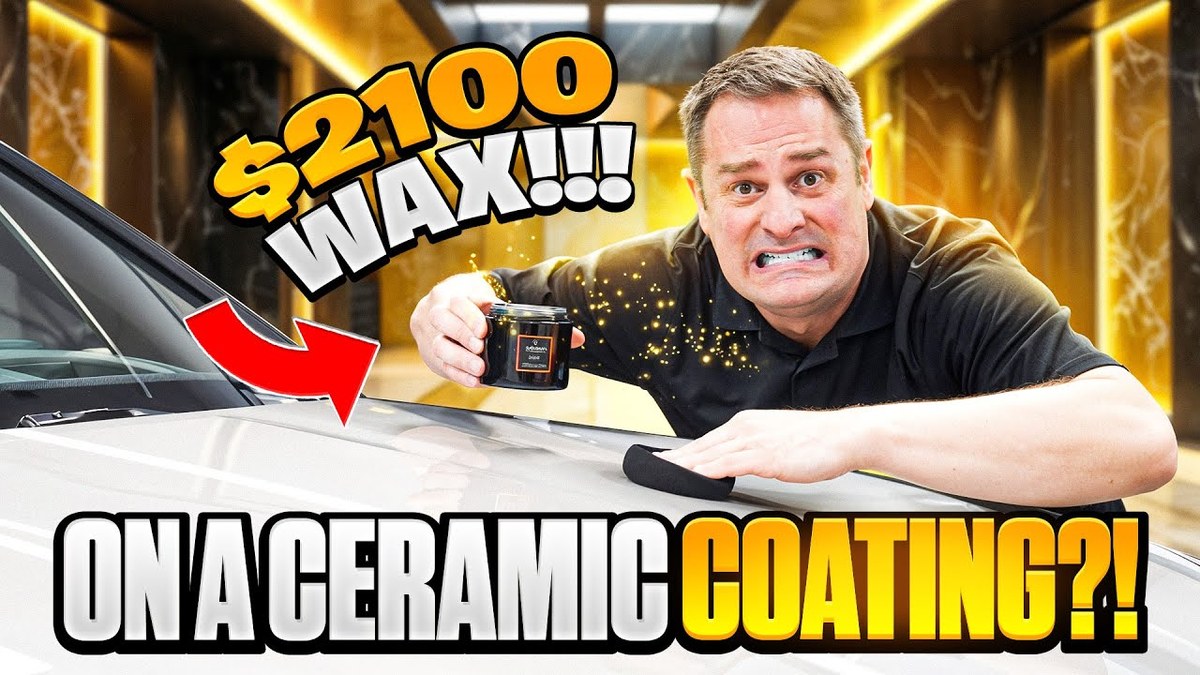
If you decide to wax a coated car, doing it correctly limits the downsides. The process is similar to waxing bare paint, but with extra attention to thin application and complete removal.
Preparing the Surface: Washing and Decontamination
Start with a thorough wash using a pH-neutral soap designed for coated paint. Any dirt, old wax, or contaminants left on the surface will get locked into the new wax layer. If the paint feels rough after washing, a gentle decontamination step may be needed before waxing.
Choosing the Right Wax and Application Method
Spray waxes and synthetic wipe-on products are easier to apply and remove on slick coated paint than thick paste waxes. Avoid any product labeled as a polish, compound, or cleaner wax — abrasive ingredients have no place on a coated surface. Use a clean foam applicator or microfiber pad and apply a thin, even layer.
Use a pH-neutral car wash soap and dry the paint completely before applying anything.
Work one small panel at a time in the shade, using light pressure and a clean applicator.
Remove the wax with a clean microfiber towel before it fully dries, and inspect for streaks under good lighting.
Dwell Time, Curing, and Ventilation Considerations
Dwell time — how long the wax sits before buffing — varies by product. Some spray waxes need only a minute or two; paste waxes may require longer. Always follow the label directions and work in a ventilated area, especially with solvent-based products. If the wax dries too long on a ceramic surface, it can become very difficult to remove.
Keep a spray bottle of quick detailer and a second clean microfiber towel nearby. If you notice streaks after buffing, a light mist of detailer will usually lift the residue without forcing you to rewash the whole car.
Better Alternatives: Ceramic Toppers vs. Traditional Wax
If your goal is to maintain or refresh a ceramic coating, there are better tools than traditional wax.
SiO2 Spray Sealants and Ceramic Boosters
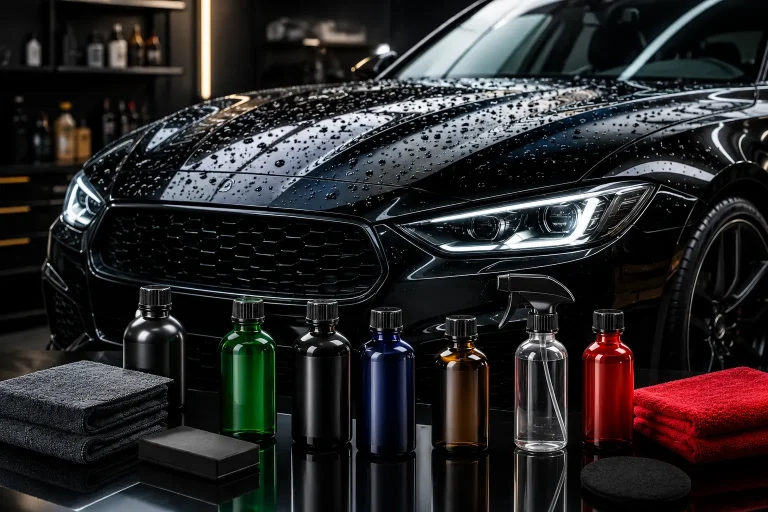
SiO2 spray sealants and ceramic boosters are designed specifically for coated paint. They deposit a thin silica layer that bonds with the existing coating, restoring slickness, gloss, and water behavior. They cost more per bottle than a basic car wax, but they last longer and don’t interfere with the coating’s performance.
pH-Neutral Maintenance Washes for Coated Paint
The single best thing you can do for a coated car is wash it correctly with a pH-neutral soap. Harsh detergents strip wax and can dull a coating over time. Our guide on how to wash a car with ceramic coating covers the right products and techniques in more detail.
- Inexpensive and easy to find
- Adds temporary gloss and slickness
- Wears off in weeks on coated paint
- Can reduce water beading and attract dirt
- Designed to bond with ceramic coatings
- Restores hydrophobic behavior
- Lasts longer between applications
- Costs more per bottle
When to Strip and Reapply the Coating Instead
If your coating has failed, faded, or become contaminated beyond what a topper can fix, waxing won’t help. The right move is to strip the old coating and reapply a fresh one. That’s a bigger job, and our guide on how to remove ceramic coating explains what’s involved before you start.
How Long Does Wax Last on Top of Ceramic Coating?
Realistic Lifespan vs. the Coating’s Durability
Because wax doesn’t bond to a ceramic coating, it tends to wear off faster than it would on bare paint. Under normal driving and washing, most traditional waxes last only a few weeks on a coated panel. The ceramic coating underneath, meanwhile, is designed to last years when maintained properly — our breakdown of how long ceramic coating lasts gives a clearer picture of that difference.
Signs Your Wax Layer Has Worn Off
You’ll know the wax is gone when water behavior changes again — beading becomes tighter and more active, the surface feels slicker, and dirt doesn’t cling as aggressively. That’s not the coating failing; it’s the wax layer finally wearing away and exposing the coating’s true performance.
Final Verdict: To Wax or Not to Wax?
For most owners, the answer is simple: skip the wax and use a ceramic topper instead. Waxing over a coating is possible, but it adds work, shortens the coating’s visual performance, and rarely provides any real benefit that a SiO2 spray sealant can’t do better.
Best Practices for Coated Car Owners
Stick to pH-neutral washes, dry the car properly, and refresh the coating with a dedicated ceramic booster every few months. If you absolutely want the look of wax for a show or sale, use a light spray wax, apply it thin, and buff it off completely.
Cost, Effort, and Value Compared to Toppers
A bottle of traditional wax is cheaper upfront, but you’ll use more of it and reapply more often. A ceramic topper costs more per bottle, yet a single application lasts longer and keeps your coating working as intended. Over a year, the topper usually wins on both effort and value.
- Use pH-neutral soap and ceramic-safe toppers on coated paint
- Work in the shade and buff wax off completely if you use it
- Strip built-up wax if water behavior becomes uneven
- Use abrasive polishes, compounds, or cleaner waxes on a coating
- Apply wax to hot panels or in direct sunlight
- Assume wax adds meaningful protection on top of a coating
- Best use case: temporary gloss for a show, sale, or winter sacrificial layer
- Main strength: wax is cheap, familiar, and easy to apply
- Main limitation: it masks the coating’s hydrophobic behavior and wears off in weeks
- Next step: use a SiO2 spray sealant or ceramic booster for routine maintenance instead