How to Wash a Car With Ceramic Coating: Step-by-Step Method
A ceramic coating makes your car easier to clean, but it does not make the paint maintenance-free. The wrong soap, dirty wash mitt, harsh automatic wash, or poor drying technique can still leave swirl marks, mineral spots, and a coating that seems to have lost its water-beading ability.
Learning how to wash car with ceramic coating comes down to a simple idea: remove dirt with as little friction as possible, use coating-safe products, and dry the surface before water spots form.
In this guide, I’ll walk you through the full wash process, explain what soap and tools to use, answer how often you should wash a coated vehicle, and cover whether a pressure washer is safe.
Quick Answer
To wash a car with ceramic coating, work on a cool surface in the shade, rinse away loose dirt, wash gently with a coating-safe car shampoo and clean microfiber mitt, rinse thoroughly, and dry with a soft microfiber towel or car dryer. Avoid harsh detergents, dirty brushes, and abrasive automatic car washes.
Why Ceramic-Coated Cars Still Need Regular Washing
Ceramic coating creates a protective, water-repellent layer over the vehicle’s finish. That protection can make dirt easier to remove and reduce how strongly some contaminants stick to the surface.
But the coating still gets dirty.
Road film, pollen, brake dust, hard-water minerals, bug residue, bird droppings, and oily traffic grime can build up on top of it. When that contamination accumulates, the coating may stop beading water as strongly even though the coating itself is still present.
That is why washing technique matters.
The goal is not to scrub the paint until it feels clean. The goal is to remove contamination while minimizing physical contact with the surface.
Manufacturer guidance also supports careful maintenance. For example, Gtechniq’s ceramic coating maintenance guidance recommends regular washing, a two-bucket method, a quality wash mitt, coating-compatible shampoo, and careful drying.
What You Need to Wash a Ceramic-Coated Car
You do not need a professional detailing shop in your garage. A basic setup can work well when the products are clean and used correctly.
| Item | What to Look For | Why It Matters |
|---|---|---|
| Car shampoo | Coating-safe and easy-rinsing | Cleans without leaving unwanted residue |
| Wash mitt | Soft microfiber or quality wool | Reduces harsh contact with the paint |
| Two buckets | One wash bucket and one rinse bucket | Helps keep removed dirt away from the paint |
| Grit guards | Correct size for the bottom of each bucket | Helps separate debris from the wash mitt |
| Hose or pressure washer | Controlled, even water flow | Removes loose dirt before contact washing |
| Drying towel | Large, clean microfiber towel | Helps prevent water spots and towel marks |
| Optional car dryer | Suitable clean-air drying tool | Helps dry mirrors, trim, badges, and tight spaces |
Do not use household dish soap as your normal maintenance wash. It is not designed as a routine automotive wash product, and a dedicated coating-safe shampoo gives you better lubrication and predictable rinsing.
Also keep wheel tools separate from paint tools. Brake dust and road grit collected from wheels have no business touching your doors, hood, or roof.
Best Soap for Ceramic Coated Cars: What Actually Matters?
The best soap for ceramic coated cars is one that cleans effectively, provides good lubrication, rinses cleanly, and is approved or suitable for coated finishes.
For normal maintenance, I look for these qualities:
- Good lubrication so the wash mitt moves smoothly
- Easy rinsing with minimal residue
- Clear dilution instructions
- Compatibility with ceramic coatings
- Enough cleaning power for normal road film
A basic pH-neutral shampoo is a safe starting point for routine maintenance. However, do not assume that every coating-safe shampoo must have exactly neutral pH. Some specialized coating-maintenance cleaners use stronger cleaning chemistry while still being designed for coated vehicles.
The important point is to use the product as directed.
For example, the official CARPRO Reset product information describes a concentrated coating-maintenance shampoo and provides specific dilution guidance.
My practical advice is simple: choose a reputable coating-safe shampoo and follow the label instead of adding extra soap because the car is dirty. Over-concentrating shampoo does not automatically produce a safer or better wash.
How to Wash Car With Ceramic Coating Step by Step
1. Let the Car Cool Down
Wash the car in shade whenever practical, and make sure the paint is cool enough that soap and water will not dry immediately.
A hot panel can cause:
- Shampoo to dry before rinsing
- Uneven residue
- Water spotting
- Extra work during drying
A cool surface gives you more time to work carefully.
2. Inspect the Car Before Washing
Walk around the vehicle before turning on the hose.
Look for:
- Bird droppings
- Bug buildup
- Tree sap
- Road tar
- Heavy mud
- Fresh paint damage
- Loose trim
- Peeling paint or clear coat
This matters because stubborn contamination may need a dedicated product rather than extra scrubbing.
Never attack dried bird droppings or bug residue with hard pressure from a dry towel. Soften the contamination first and remove it gently.
[IMAGE PLACEHOLDER 1]
Placement: After the pre-wash inspection section and before the rinsing step
Purpose: Show readers the correct preparation setup before touching the paint
Caption: A safe ceramic coating wash starts with clean tools and a thorough pre-rinse.
Alt Text: how to wash car with ceramic coating using proper wash tools
Image Prompt: Realistic professional automotive photography of a modern dark blue sedan with ceramic coating parked in a shaded residential driveway, two detailing buckets with grit guards, microfiber wash mitt, pH-neutral car shampoo, pressure washer with foam cannon, and clean drying towels arranged neatly beside the vehicle, natural daylight, realistic reflections, no visible brand logos, high detail
Recommended Size: 1200×675 px
Suggested File Name: how-to-wash-car-with-ceramic-coating-tools.jpg
Suggested Surrounding Text: Before making contact with the paint, make sure every tool that will touch the car is clean and free of trapped grit.
3. Pre-Rinse the Entire Vehicle
Start with a thorough rinse.
The purpose is to remove as much loose dirt as possible before your wash mitt touches the paint. Pay attention to:
- Lower doors
- Rocker panels
- Behind the wheels
- Rear bumper
- Trunk or hatch area
- Front bumper and grille
These areas usually collect heavier contamination than the roof or upper doors.
A foam cannon can be useful as a pre-wash tool, especially on a dusty or moderately dirty vehicle. But thick foam is not magic. Its job is to help loosen contamination and add dwell time before rinsing.
Do not let foam dry on the surface.
4. Wash the Wheels With Separate Tools
I prefer cleaning the wheels before washing the paint because wheels are normally the dirtiest part of the vehicle.
Use:
- A separate bucket when possible
- Dedicated wheel brushes
- A separate microfiber mitt or wash pad
- A wheel cleaner suitable for your wheel finish and any coating applied to it
Do not carry the same brush from the wheel barrel to the painted door panel.
5. Wash From the Cleanest Areas to the Dirtiest
Prepare one bucket with shampoo solution and another with clean rinse water.
Start with the roof and upper sections, then work downward.
A practical order is:
- Roof
- Glass
- Hood and trunk
- Upper doors and fenders
- Lower doors
- Front and rear bumpers
- Rocker panels
Wash one manageable section at a time.
Use light pressure. Let the shampoo and wash mitt do the work.
After each section, rinse the mitt in the rinse bucket before loading it with fresh shampoo again.
If you drop the wash mitt on the ground, stop using it until it has been thoroughly cleaned. One small piece of grit can create a trail of scratches across otherwise healthy paint.
6. Rinse Thoroughly
Once the contact wash is complete, rinse the vehicle thoroughly.
Do not forget:
- Door handles
- Mirror housings
- Grille openings
- Window trim
- Emblems
- Spoilers
- Fuel-door edges
Soap trapped in these areas can run out later while you are drying.
If your coating is performing normally, you may see water quickly pull together and leave parts of the panel. That behavior can help with drying, but remember that strong beading alone is not proof that every section of the coating is healthy.
7. Dry the Car Properly
Drying is one of the easiest places to create unnecessary marks.
Use a clean, soft drying towel and avoid aggressive rubbing. You can gently drag a suitable drying towel across the panel or blot sections, depending on the towel design and your preference.
A car dryer or appropriate air blower can be especially useful around:
- Side mirrors
- Door handles
- Grilles
- Badges
- Trim seams
- Fuel doors
The goal is to avoid leaving mineral-rich water on the surface long enough to form spots.
Do not take the car for a fast drive and assume airflow will dry it properly. Water can remain trapped in trim and may leave streaks and spots after the rest of the car is already dry.
Expert Tip:
My rule is simple: treat the lower half of the car as a separate dirt zone. Save it for last, rinse your mitt more often, and never take a wash mitt from a dirty rocker panel straight back to the hood.
Can You Use a Pressure Washer on Ceramic Coating?
Yes, you can use a pressure washer on ceramic coating when the equipment is used responsibly.
A properly used pressure washer is helpful because it removes loose contamination before the contact-wash stage. The water pressure itself does not automatically strip a properly cured coating.
The bigger risks come from poor technique.
Avoid:
- Holding the nozzle extremely close to the paint
- Using a concentrated rotary or pinpoint jet on the body
- Aiming aggressively at damaged paint
- Blasting loose emblems or lifting trim edges
- Concentrating pressure around existing stone chips
- Spraying directly into sensitive openings for long periods
Use a broad fan pattern and maintain a reasonable working distance. Your machine’s manual and nozzle instructions should take priority because pressure, flow, and spray pattern vary by equipment.
Official Kärcher car-washing guidance recommends using an appropriate spray pattern and maintaining distance from vehicle surfaces rather than holding the nozzle directly against them.
For a non-professional car owner, the safest approach is straightforward: start farther away, use a wide spray pattern, and move closer only when needed.
How Often Should You Wash a Ceramic Coated Car?
For most daily-driven vehicles, washing about every one to two weeks is a practical starting point.
The real answer depends on how the vehicle is used and stored.
| Driving Situation | Practical Wash Frequency |
|---|---|
| Garage-kept weekend car | Every 2–4 weeks or when dirty |
| Normal daily driver | About every 1–2 weeks |
| Heavy highway commuting | Weekly or as contamination builds |
| Winter road-salt exposure | More frequently as conditions require |
| Heavy pollen or coastal exposure | As needed to prevent buildup |
| Bird droppings or bug contamination | Remove safely as soon as practical |
There is no single perfect wash schedule for every car. A garage-kept vehicle driven on dry weekends has different needs from a daily commuter parked outside under trees.
The better question is: how quickly is contamination building up on your car?
What If the Ceramic Coating Stops Beading Water?
Reduced beading does not automatically mean the coating has failed.
Sometimes the coating is simply contaminated.
Road film, mineral deposits, iron particles, and other contamination can mask hydrophobic behavior. A proper maintenance wash may improve performance. More stubborn contamination may require a coating-safe decontamination process.
Look for these warning signs:
- Water behavior is uneven across different panels
- Paint feels rough after washing
- Lower panels remain dull or greasy
- Water spots remain after normal washing
- Beading improves after cleaning one area but not another
- The coating seems weak around repaired or repainted sections
Coating manufacturers also recognize the need for periodic decontamination. CARPRO’s ceramic coating maintenance guidance explains regular washing and periodic decontamination for suitable coated finishes.
Do not jump straight to polishing. Abrasive polishing can remove or reduce a ceramic coating and should not be the first response to poor water behavior.
Should You Use Ceramic Boosters After Every Wash?
Usually, no.
A ceramic booster or topper can improve slickness, gloss, and water behavior, but more product is not always better.
Applying a booster after every wash may:
- Waste product
- Create streaking if overapplied
- Make it harder to judge the base coating’s actual behavior
- Add unnecessary cost to routine maintenance
Use a compatible booster according to its instructions and your coating manufacturer’s maintenance recommendations.
For the average owner, a proper wash routine is more important than constantly layering products.
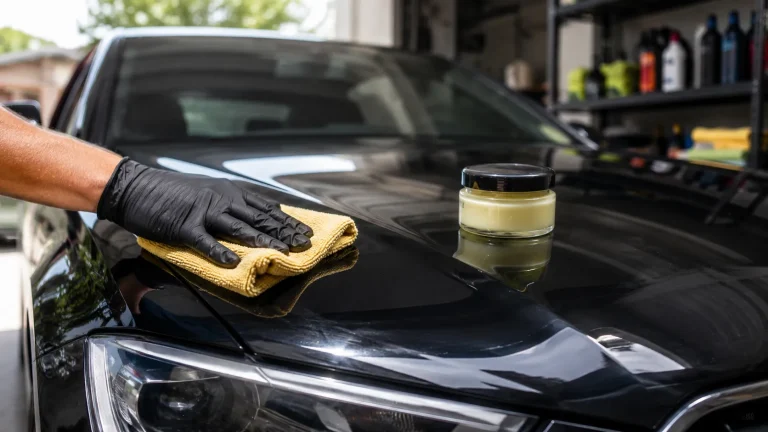
[IMAGE PLACEHOLDER 2]
Placement: After the ceramic booster section and before the common mistakes section
Purpose: Show the safe contact-wash technique on a coated paint surface
Caption: Use light pressure and straight, controlled passes with a clean wash mitt.
Alt Text: best washing technique for a ceramic coated car
Image Prompt: Ultra-realistic close-up automotive detailing photograph showing a clean microfiber wash mitt gently moving across the glossy hood of a ceramic-coated black car covered in lubricating shampoo, visible water beads and realistic reflections, shaded outdoor setting, careful hand-wash technique, premium but natural appearance, no logos or text
Recommended Size: 900×600 px
Suggested File Name: ceramic-coated-car-wash-technique.jpg
Suggested Surrounding Text: The safest wash is not the one with the most foam—it is the one that removes dirt with the least unnecessary friction.
Common Mistakes Car Owners Should Avoid
- Using an automatic brush wash. Rotating brushes may carry dirt from other vehicles and can create visible wash marks.
- Washing in direct sun on hot paint. Soap and water can dry too quickly and leave residue or mineral spots.
- Scrubbing stubborn contamination harder. Use the correct chemical process instead of increasing pressure with the wash mitt.
- Using the same tools for wheels and paint. Brake dust and gritty wheel contamination can damage paint.
- Letting the car air-dry. Minerals remain behind when water evaporates.
- Using too much shampoo. Follow the manufacturer’s dilution instructions.
- Assuming ceramic coating prevents scratches. A coating can improve protection and ease of maintenance, but careless washing can still mark the finish.
- Applying random chemicals without checking compatibility. Strong acidic or alkaline products may be useful in specific situations, but they should not be used carelessly.
- Polishing a coated vehicle without understanding the result. Machine polishing can reduce or remove the coating.
Cost, Quality, and Tool Decisions: Where Should You Spend Your Money?
You can build a safe home wash setup without buying every detailing tool available.
Spend first on the items that physically touch the paint:
- A high-quality wash mitt
- Clean microfiber drying towels
- Proper car shampoo
- Clean buckets
- Good towel storage and washing habits
A pressure washer and foam cannon are convenient, but they are not mandatory.
A careful owner with a hose, clean buckets, good shampoo, and safe wash technique can get excellent results. Meanwhile, a person with expensive equipment can still scratch paint by using dirty towels.
Technique usually matters more than the price of the setup.
Durability also matters when buying wash tools. A cheap towel that becomes rough, sheds heavily, or holds trapped debris is not a bargain if it touches expensive paintwork.
When to Call a Professional (Mechanic or Detailer)
Most routine ceramic coating washing can be done safely at home. However, some problems are better handled by a professional detailer.
Call a detailer when:
- Water spots remain after safe washing
- The paint feels heavily contaminated
- You see widespread swirl marks or scratches
- The coating’s behavior remains poor after proper cleaning
- You suspect chemical staining or coating failure
- The vehicle needs machine polishing
- You are unsure whether a strong decontamination chemical is compatible with the coating
- A warranty requires inspection or maintenance by an approved installer
A mechanic is generally not needed for coating maintenance. However, washing may reveal unrelated vehicle problems.
Seek appropriate repair help if you notice:
- Water entering the cabin
- Moisture inside lights
- Damaged electrical connectors
- Loose exterior components
- Failed seals
- Parking sensors, cameras, or electronic features behaving abnormally after water exposure
Do not continue spraying a suspected leak or electrical fault just to “test” it.
For expensive coatings, a professional maintenance detail can also make sense when you do not have a shaded wash area, cannot safely remove heavy contamination, or simply want the coating inspected before trying stronger DIY chemicals.
A Simple Ceramic Coating Wash Routine to Remember
You do not need to memorize a complicated detailing system.
Think of the process in six parts:
- Cool — Work on cool paint in the shade.
- Rinse — Remove loose contamination first.
- Wash — Use clean tools and coating-safe shampoo.
- Rinse again — Remove all shampoo and loosened dirt.
- Dry — Use clean microfiber or appropriate air drying.
- Inspect — Look for water spots, roughness, or weak areas.
That basic routine is enough for most car owners.
FAQs
Can I wash a ceramic coated car with regular car shampoo?
Yes, provided the shampoo is suitable for coated vehicles and rinses cleanly. For routine maintenance, a reputable coating-safe wash soap is the easiest choice. Check your coating manufacturer’s care instructions when possible.
How long after ceramic coating can I wash the car?
Follow the installer or coating manufacturer’s curing instructions. Waiting periods vary by product and conditions. Some coating systems require several days before a normal soap wash, while other systems may specify different early-care restrictions.
Can I take a ceramic coated car through an automatic car wash?
A touchless wash may be less mechanically aggressive than a brush wash, but chemicals and wash quality vary. Brush-style automatic washes are a poor choice when minimizing swirl marks is the priority. Careful hand washing gives you more control.
Does a pressure washer remove ceramic coating?
Normal, responsible pressure washing should not automatically remove a properly cured coating. Use a broad spray pattern, keep a sensible distance, and avoid aggressively spraying damaged paint, chips, loose trim, or vulnerable edges.
How often should you wash a ceramic coated car?
For a normal daily driver, every one to two weeks is a useful starting point. Wash more often when the car faces road salt, heavy bugs, bird droppings, coastal contamination, mud, or heavy traffic film.
Why is my ceramic coating not beading after a wash?
The surface may still have road film, mineral deposits, or other contamination masking the coating’s water behavior. Try a proper maintenance wash first. If the problem remains, consider professional inspection or coating-safe decontamination before assuming the coating has failed.
Should I wax a ceramic coated car?
Traditional wax is usually unnecessary on top of a ceramic coating. When extra gloss or water behavior is desired, use a compatible coating topper or maintenance product recommended for the coating system.
Conclusion
Knowing how to wash car with ceramic coating is less about complicated detailing tricks and more about consistent, careful habits.
Wash on a cool surface, remove loose dirt before touching the paint, use clean tools and suitable shampoo, keep wheel equipment separate, rinse thoroughly, and dry the car before water spots form.
For most daily drivers, a wash every one to two weeks is a sensible routine, adjusted for weather, mileage, parking conditions, and contamination. A pressure washer can be a useful tool when used with a broad spray pattern and sensible distance.
The big takeaway is this: ceramic coating makes maintenance easier, but good washing technique is what keeps the finish looking its best.
Build a simple wash kit, follow the coating manufacturer’s care instructions, and focus on safe technique before spending money on extra products your car may not need.