Is Ceramic Coating Worth It? The Honest Answer for Car Owners
Yes — ceramic coating is worth it for most drivers who want long-lasting paint protection, a deep gloss finish, and fewer trips to the car wash. DIY kits cost $50–$150 and can protect your paint for 2–5 years. Professional installs cost more but deliver superior durability. If you care about keeping your car looking good and holding its resale value, ceramic coating is one of the smartest investments you can make.
Ceramic coating creates a hard, semi-permanent protective layer on your car’s paint that repels water, dirt, UV rays, and minor scratches — all while giving your vehicle a showroom-level shine that lasts for years, not weeks.
I’ve been detailing my own cars for over a decade. I’ve used wax, paint sealants, and now ceramic coatings — and the difference is night and day. But I get it: with prices ranging from $50 for a DIY kit to $2,000 for a professional job, you want to know if it’s actually worth spending that money.
Let me break it all down for you — no fluff, no sales pitch. Just what I’ve learned from applying ceramic coating myself and watching how it performs over time on real vehicles.
What Is Ceramic Coating and How Does It Work?
Ceramic coating — also called nano-ceramic coating — is a liquid polymer that bonds chemically to your car’s factory paint. Unlike wax, which sits on top of the paint and wears off in weeks, ceramic coating actually fuses with the clear coat at a molecular level.
Once cured, it forms a hard, transparent shell over your paint. That shell is hydrophobic (water-repelling), UV-resistant, and highly resistant to chemical etching from bird droppings, tree sap, and road grime.
The active ingredient in most ceramic coatings is Silicon Dioxide (SiO2) — sometimes combined with Titanium Dioxide (TiO2). The higher the SiO2 concentration, the more durable the coating. You’ll see percentages like 70%, 82%, or even 93% SiO2 on product labels. Higher is generally better, but proper application matters just as much as formula.
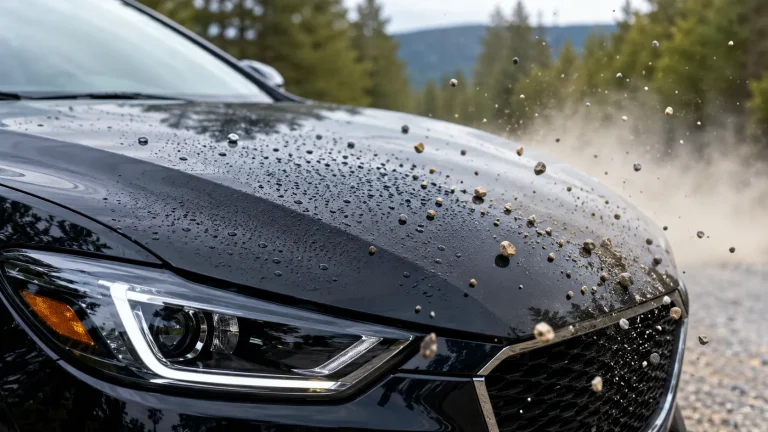
Ceramic coating is NOT a scratch-proof shield. It resists light surface scratches and swirl marks, but it won’t protect against key scratches, rock chips, or deep paint damage. For full scratch protection, consider adding a paint protection film (PPF) layer underneath the ceramic coating.
Is Ceramic Coating Worth It? Here’s How to Think About It
The honest answer depends on three things: how much you care about your car’s appearance, how long you plan to keep it, and whether you’re willing to do a proper prep job before applying.
If you’re the kind of person who waxes their car every season, obsesses over swirl marks in parking lots, or just wants their paint to look great for the next five years — ceramic coating is absolutely worth it.
If you park under trees, don’t wash your car regularly, and aren’t willing to clay bar and polish before applying — you’ll get mediocre results no matter how good the product is.
Ceramic Coating vs Wax vs Paint Sealant: What’s the Difference?
| Protection Type | Durability | Hydrophobic Effect | Cost | Application Difficulty |
|---|---|---|---|---|
| Carnauba Wax | 4–8 weeks | Moderate | $10–$40 | Easy |
| Paint Sealant | 3–6 months | Good | $20–$60 | Easy |
| DIY Ceramic Coating | 1–3 years | Excellent | $50–$150 | Moderate |
| Pro Ceramic Coating | 3–7 years | Superior | $500–$2,000+ | Professional only |
| Paint Protection Film (PPF) | 7–10 years | Good (with coating) | $1,500–$6,000+ | Professional only |
Wax is cheap and easy, but you’ll reapply it every month or two. Ceramic coating costs more upfront but protects for years. When you do the math, ceramic coating often works out cheaper over a 3-year period — especially if you’re paying for professional detailing regularly.
For a deeper look at exterior protection options, check out our exterior accessories guide — we cover everything from car covers to paint protection in one place.
I applied a DIY ceramic coating to my 2018 Toyota Tacoma about two years ago. Before that, I was waxing it every 6–8 weeks. Now I hand wash it every couple of weeks and the water still sheets off like it did on day one. Bird droppings wipe off clean with zero paint damage. I’m genuinely impressed by how well it’s held up — especially through two New England winters with road salt and sand.
Pros and Cons of Ceramic Coating
- Long-lasting protection (2–7 years depending on product and prep)
- Hydrophobic surface makes washing faster and easier
- Deep, glossy shine that looks better than wax
- Resists UV fading, oxidation, and chemical etching
- Reduces swirl marks and minor surface scratches
- Protects resale value by preserving paint condition
- Cost-effective over time compared to regular waxing
- Requires thorough paint prep before application — no shortcuts
- DIY application can go wrong if rushed or done in wrong conditions
- Does NOT prevent rock chips or deep scratches
- Professional installs are expensive ($500–$2,000+)
- Mistakes during application (high spots) are difficult to remove
- Not suitable for heavily oxidized or damaged paint without paint correction first
How to Apply Ceramic Coating: Step-by-Step
Applying ceramic coating yourself is absolutely doable if you’re patient and methodical. The prep work is 80% of the job. Don’t skip it.
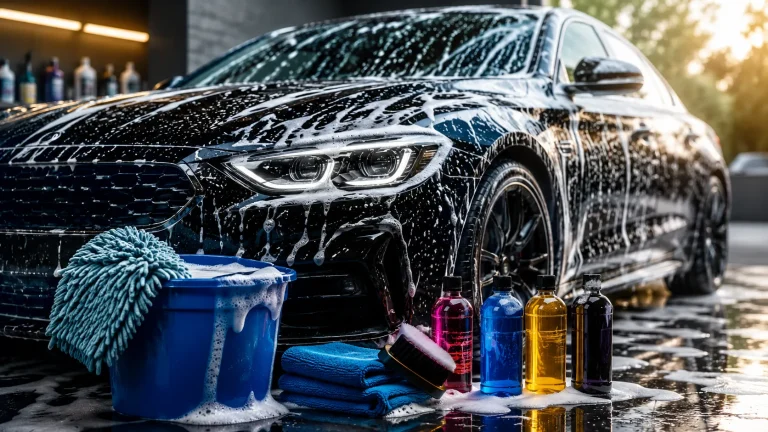
Use the two-bucket method to wash every panel. Remove all dirt, tar spots, and grime. Dry completely with a clean microfiber towel or blower. Work in a shaded area — never in direct sunlight.
Use an iron remover spray and a clay bar to strip embedded contaminants from the paint surface. This step is non-negotiable. Ceramic coating will lock in any contamination underneath it if you skip this.
If your paint has swirl marks, light scratches, or oxidation, address them now with a dual-action polisher. Ceramic coating is a protector, not a fixer — it will seal in any defects it finds.
Spray a 70% isopropyl alcohol solution across all panels and wipe clean with a fresh microfiber cloth. This removes any polish oils or residue, giving the ceramic coating a clean surface to bond to.
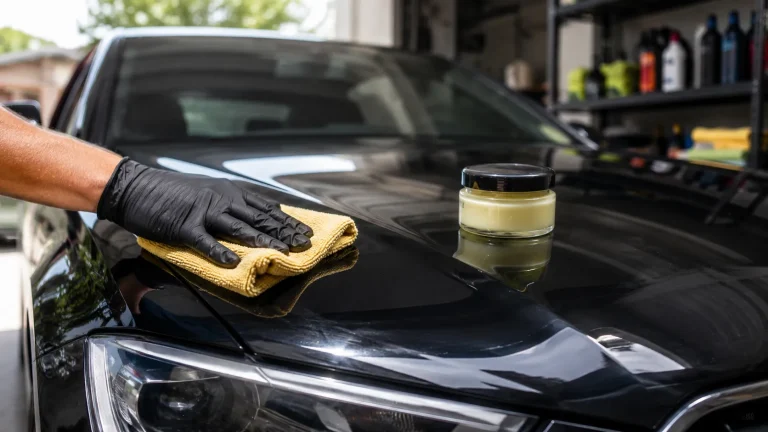
Apply a few drops of coating to the suede applicator block. Work panel by panel in overlapping crosshatch strokes. Apply thin, even layers — don’t glob it on. Work quickly and consistently.
After 1–3 minutes (check your product’s flash time), use a clean, folded microfiber towel to gently level the coating. Turn the towel frequently. This removes high spots before they harden.
Keep the car dry for at least 24–48 hours. Avoid washing or rain exposure. Full cure typically takes 2–4 weeks, during which the coating reaches its maximum hardness and hydrophobic performance.
Never apply ceramic coating in direct sunlight, high humidity, or temperatures below 50°F (10°C) or above 85°F (29°C). Incorrect conditions cause the coating to flash too fast, leaving streaks, high spots, and an uneven finish that’s extremely difficult to remove. Always work in a shaded, temperature-controlled space like a garage.
DIY vs Professional Ceramic Coating: Which Should You Choose?
This comes down to your budget, your skill level, and how long you want the protection to last.
DIY kits have improved enormously in the last few years. Brands like Gtechniq, Adam’s, Chemical Guys, and Torque Detail make consumer-grade ceramic coatings that deliver real results. According to Car and Driver, consumer ceramic coatings have closed the gap significantly with pro-grade products — especially for drivers who do thorough prep work.
Professional installers use higher-concentration, more viscous formulas that bond deeper and last longer. They also work in climate-controlled environments with specialized equipment. If you’re coating a new car, a daily driver you plan to keep for 5+ years, or a high-value vehicle, paying a professional makes a lot of sense.
| Factor | DIY Ceramic Coating | Professional Install |
|---|---|---|
| Cost | $50–$150 | $500–$2,000+ |
| Durability | 1–3 years | 3–7 years |
| Skill Required | Moderate | None (from you) |
| Paint Correction Included | No (DIY) | Often yes |
| Warranty | Limited/none | Often 2–5 years |
| Best For | Budget-conscious enthusiasts | New cars, high-value vehicles |
Does Ceramic Coating Help Resale Value?
Yes — and this is one of the most underrated reasons to coat your car. A well-maintained paint surface with no oxidation, fading, or etching commands a noticeably higher resale price. Buyers notice paint condition immediately, and ceramic-coated cars that have been properly maintained look years younger than their age.
According to Edmunds, paint condition is one of the top factors buyers use to judge a used car’s overall condition — often before they even open the door. Protecting that paint from day one with ceramic coating is one of the cheapest long-term investments you can make in your vehicle’s value.
The nanotechnology behind ceramic coatings was originally developed for aerospace and military applications. Those same SiO2 nano-particles that protect aircraft components from extreme heat and chemical exposure are now inside that $79 bottle you can buy on Amazon.
How Long Does Ceramic Coating Last?
With a proper DIY application on a clean, corrected paint surface, most consumer ceramic coatings last between 1 and 3 years. Some premium DIY products like Gtechniq Crystal Serum Light claim up to 5 years. Professional-grade coatings applied by a certified installer can last 5–7 years or more.
Longevity depends on a few key factors:
- Surface prep quality — The single biggest factor. Poor prep means shorter life.
- Application conditions — Temperature, humidity, and UV exposure during application matter.
- Maintenance habits — Regular pH-neutral washes extend coating life significantly.
- Climate and environment — Harsh winters, heavy UV exposure, and industrial fallout reduce lifespan.
Boost your ceramic coating’s lifespan by topping it every 6–12 months with a ceramic spray booster (also called a “SiO2 spray detailer”). These $15–$30 products add a fresh hydrophobic layer on top of your base coating with minimal effort — just spray on after a wash and wipe off. It’s the easiest maintenance step most people skip.
Dos and Don’ts of Ceramic Coating
- Do full paint decontamination before applying — clay bar, iron remover, IPA wipe
- Do work in a temperature-controlled, shaded environment
- Do apply panel by panel in thin, even coats
- Do use the correct flash time for your specific product
- Do wash with pH-neutral car shampoo after application
- Do apply a ceramic spray booster every 6–12 months
- Do allow 24–48 hours before exposing the car to water
- Don’t apply in direct sunlight or extreme temperatures
- Don’t skip paint correction if your paint has visible swirls or scratches
- Don’t use automatic car washes with brushes — they cause micro-scratches
- Don’t use wax or wax-based products on top of ceramic coating
- Don’t wash the car within 24–48 hours of application
- Don’t apply too thick — less is more with ceramic coatings
Ceramic Coating Spec Sheet
Vehicle Compatibility
Ceramic coating is compatible with virtually all vehicle types — sedans, trucks, SUVs, motorcycles, and even boats. It bonds to factory clear coat, single-stage paint, and painted aftermarket finishes. It also works on glass (windshields), wheels, and headlights. However, it is NOT recommended for flat or matte paint finishes unless you specifically use a matte-formulated ceramic coating designed for that surface type. Always check your product label for surface compatibility before applying.
How Much Does Ceramic Coating Cost?
Want to explore more ways to protect and upgrade your vehicle? Our car care guide covers detailing kits, paint correction tools, and the best wash supplies for every budget.
Install Tips for Ceramic Coating
- Work on one panel at a time — never try to coat the whole car in one pass
- Use a folded microfiber towel to level, not a flat pad — folding gives you a fresh surface quickly
- Apply 4–6 drops of coating per panel — you need less than you think
- Watch for rainbow or high spots as you work — these need to be leveled immediately before they cure
- Keep two microfibers handy: one to level, one to finish-wipe. Never reuse a saturated towel
- Tape off rubber trim, plastic moldings, and emblems — ceramic coating can stain porous surfaces
- If it’s your first time, start on a small, hidden panel like the door jamb to get a feel for the product
Not all ceramic coatings are the same. “SiO2 spray detailers” sold at gas stations and discount stores are NOT the same as true ceramic coatings. Spray detailers add a thin SiO2 layer that lasts a few weeks — more like a sealant than a true coating. Real ceramic coatings require curing time, proper application technique, and thorough prep. Look for products with 70%+ SiO2 concentration and a stated cure time of at least 24 hours.
If you’re combining ceramic coating with other exterior upgrades, the tools and garage gear guide covers polishers, clay bar kits, and paint prep equipment worth having in your arsenal.
Top Ceramic Coating Products to Consider
Is Ceramic Coating Worth It for a Daily Driver?
Absolutely — daily drivers actually benefit the most from ceramic coating. Think about it: your car sits in parking lots, gets pelted with road debris, endures bird droppings, tree sap, and UV exposure every single day. A ceramic coating turns your car’s surface into a self-cleaning, UV-resistant shield that makes all of that easier to deal with.
Your weekend wash goes faster because water beads off and takes most of the light dirt with it. Bird droppings don’t etch into the clear coat before you notice them. And your paint stays looking newer, longer — which matters when you eventually go to sell.
According to Consumer Reports, protecting your car’s exterior from UV degradation and chemical damage is one of the most reliable ways to maintain resale value over time. Ceramic coating addresses both.
- Is your paint in good condition, or does it need polish/correction first?
- Do you have a shaded, temperature-controlled space to apply it?
- Are you prepared to spend 4–8 hours on proper prep and application?
- Do you own (or can you borrow) a clay bar kit and IPA spray?
- Are you committed to pH-neutral washes and no brush car washes going forward?
- Have you decided between DIY or professional install?
- Ceramic coating is worth it for any driver who wants long-lasting paint protection and a better-looking car
- DIY kits ($50–$150) deliver real results when prep work is done correctly
- Professional installs are the best option for new cars or high-value vehicles
- The hydrophobic effect makes washing faster and keeps paint cleaner between washes
- Ceramic coating won’t prevent rock chips or deep scratches — that’s what PPF is for
- Longevity depends almost entirely on surface prep quality — don’t skip the clay bar
- A $20 SiO2 spray booster applied every 6–12 months significantly extends coating life
Ceramic coating is one of the best long-term investments you can make in your car’s appearance and paint health. Whether you go DIY or hire a professional, the protection, gloss, and time saved at the car wash make it worth every dollar — as long as you do the prep work properly. Don’t cut corners on surface prep, don’t apply in direct sunlight, and follow your product’s cure time exactly. Do all of that, and your paint will thank you for years to come.
Frequently Asked Questions
Yes, but only if you do proper paint correction first. Ceramic coating will lock in whatever condition the paint is in when you apply it. If your paint has heavy oxidation, swirl marks, or scratches, address those with a polish or paint correction service before coating. Once corrected and coated, even older paint can look dramatically better and stay protected for years.
Consumer DIY ceramic coatings typically last 1–3 years with proper maintenance. Premium DIY products can stretch to 5 years. Professional-grade coatings applied by a certified installer often last 5–7 years. The biggest factor in longevity is the quality of the surface prep before application and whether you maintain the coating with regular pH-neutral washes and a periodic SiO2 spray booster.
Yes. DIY ceramic coating kits are widely available and can deliver excellent results if you follow the prep and application steps carefully. The key is thorough surface decontamination (washing, clay barring, IPA wipe-down), working in a shaded environment between 50°F–85°F, and applying in thin, even coats panel by panel. Budget a full day for prep and application on a standard-size vehicle.
Ceramic coating resists light surface scratches and swirl marks better than bare paint or wax. However, it will NOT prevent key scratches, rock chips, or deep paint damage. For scratch and chip protection, paint protection film (PPF) is the right product. Many enthusiasts use both: PPF on high-impact areas (hood, front bumper, mirrors) and ceramic coating over the entire vehicle for hydrophobic protection and gloss.
Wax sits on top of the paint as a sacrificial layer and wears off in 4–8 weeks. Ceramic coating chemically bonds to the clear coat at a molecular level and lasts 1–7 years. Ceramic coatings are harder, more hydrophobic, more UV-resistant, and more chemically resistant than any wax. They cost more upfront but work out cheaper over time because you’re not reapplying every few weeks.
No — you should not apply traditional carnauba wax over ceramic coating. Wax can actually fill the microscopic pores of the ceramic layer and reduce its hydrophobic performance. Instead, use a ceramic spray booster or SiO2 spray detailer every 6–12 months to maintain and top up the coating’s hydrophobic properties. These products are specifically formulated to bond with and refresh existing ceramic coatings.
Professional ceramic coating installation typically costs between $500 and $2,000 or more, depending on the shop, the product used, whether paint correction is included, and the size of your vehicle. Entry-level professional packages start around $500 for a single-stage coating without paint correction. Premium packages that include multi-stage paint correction, multiple coating layers, and a warranty can run $1,500–$2,500+.
Yes. Ceramic coating helps preserve your paint’s condition — preventing UV fading, chemical etching, and oxidation that reduce a car’s visual appeal and perceived value. Buyers notice paint quality immediately, and a well-maintained paint surface typically justifies a higher asking price on the private market. Combined with a clean interior and service history, ceramic-protected paint makes a strong case for premium resale pricing.
Conclusion: Should You Get Ceramic Coating?
After years of using everything from paste wax to professional-grade ceramic coatings, my honest answer is yes — ceramic coating is worth it for the vast majority of car owners.
It lasts longer than any wax or sealant. It makes your car easier to clean. It protects against UV fading, chemical damage, and minor swirl marks. And when it comes time to sell, a well-protected paint surface is one of the clearest signals to buyers that this car was taken care of.
If you’re on a budget, start with a solid DIY kit around $50–$100. Do your prep work properly — that’s the whole game. If you’re coating a new car or a vehicle you plan to keep long-term, consider investing in a professional install for maximum durability and peace of mind.
Either way, once you coat your car and feel water sheeting off the hood after a wash, you’ll never go back to wax. That much I can promise you.
For more ways to protect your investment inside and out, check out our detailing and care section — it’s packed with hands-on gear reviews and practical advice for keeping your car in top shape.
Got questions about ceramic coating or want to share your own experience? Drop a comment below — I read every one.