Does Ceramic Coating Prevent Scratches? Facts for US Car Owners
A ceramic coating reduces wash-induced swirls and light marring but cannot stop rock chips, keying, or deep scratches. For real impact protection, you need paint protection film, not a coating.
If you’re wondering does ceramic coating prevent scratches, the honest answer is that it prevents light surface marring but not impact damage, deep scratches, or deliberate abuse — and knowing that difference before you pay for installation is what separates a satisfied owner from a disappointed one. Ceramic coatings are marketed with impressive hardness claims, but their real value depends on how you drive, wash, and store your vehicle.
- Scratch protection: Coatings prevent light marring, not impact damage or deep scratches.
- 9H hardness: A marketing label from a pencil test, not proof of scratch immunity.
- Prep matters: Paint correction before application determines the final finish quality.
- Maintenance: Proper two-bucket washing is essential to avoid introducing swirls.
- Value: PPF, not ceramic coating, is the real solution for rock chip protection.
What Is a Ceramic Coating? Setting the Right Expectation
A ceramic coating is a liquid polymer that bonds to your vehicle’s clear coat and cures into a semi-permanent protective layer. Unlike wax or sealants, it doesn’t sit on top of the paint as a thick, removable layer; it chemically bonds at a microscopic level.
The Science: SiO2/SiO3 Resins and How They Bond
Most ceramic coatings use silicon dioxide (SiO2) or silicon trioxide (SiO3) resins suspended in a solvent carrier. When applied, the carrier evaporates and the resin reacts with moisture in the air to form a glass-like network on the paint. That bond is why a properly applied coating lasts for years rather than months.
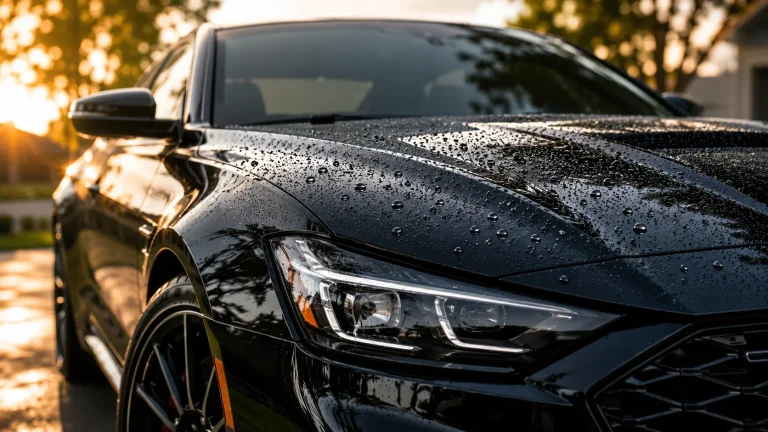
This chemical bond is also what makes the coating hydrophobic. Water beads up and rolls off, carrying loose dirt with it. That self-cleaning effect reduces how often you need to touch the paint — and less touching means fewer opportunities for scratches. If you want a deeper breakdown of how these products work, our guide on what does ceramic coating do covers the chemistry in plain English.
The Real Layer Thickness: Why a Coating Is Not Armor
Here’s the part most marketing glosses over: a cured ceramic coating is only a few microns thick. For context, a human hair is roughly 70 to 100 microns in diameter. Your coating is thinner than that hair, and it’s softer than the sand and gravel that regularly hits your paint at highway speed.
Think of it as a sacrificial surface, not armor. It absorbs light abrasion and makes the paint easier to clean, but it cannot physically stop a sharp object from cutting through to the clear coat.
Does Ceramic Coating Prevent Scratches? The Honest Answer for US Drivers
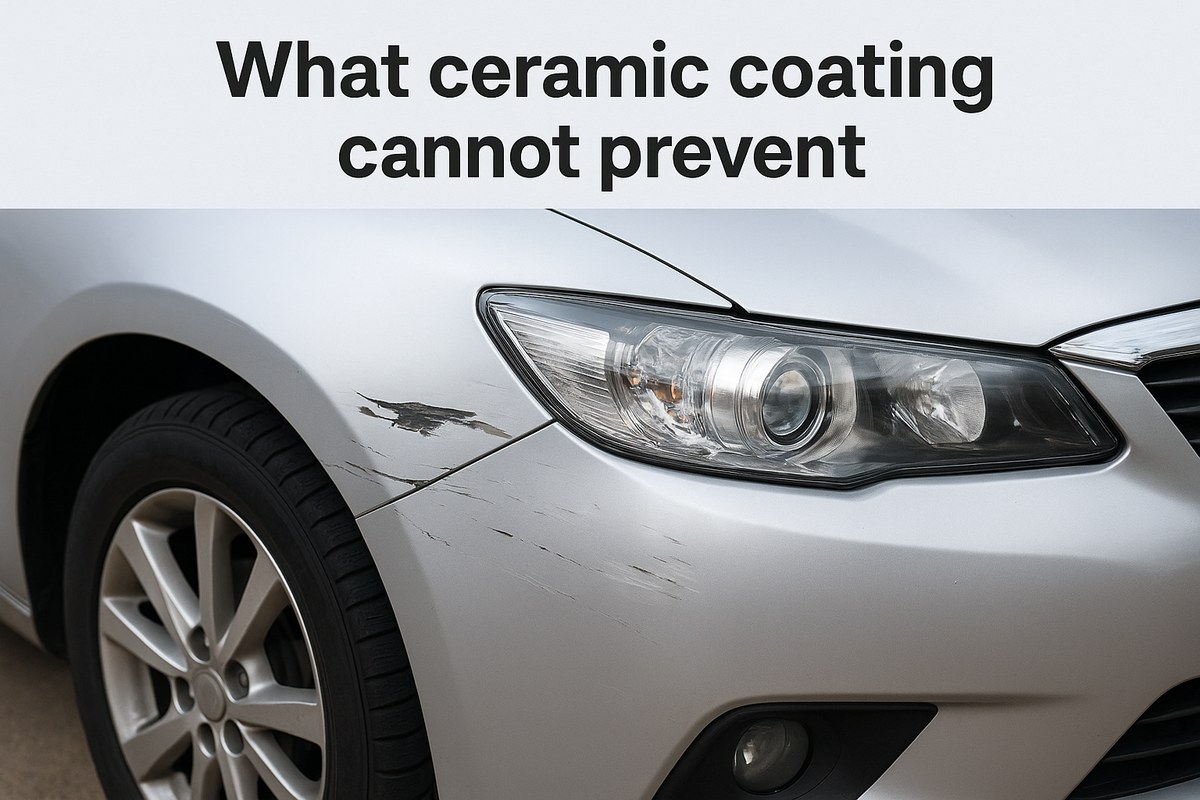
The most useful way to answer this question is to separate scratches into two categories: surface marring and physical damage.
What It Can Actually Prevent: Wash-Induced Swirls and Light Marring
Ceramic coatings shine at preventing wash-induced swirls and light marring. Because the coating creates a harder, slicker surface than bare clear coat, dirt and grit have a harder time biting in when you wipe the paint. Microfiber towels glide more easily, and the coating’s hydrophobic properties mean you can often rinse away light dust without touching the panel at all.
This is the real, measurable benefit. Owners who wash correctly and maintain their coating tend to see far fewer fine spider-web swirls over time compared to unprotected paint washed the same way.
What It Cannot Prevent: Rock Chips, Keying, and Deep Contact Scratches
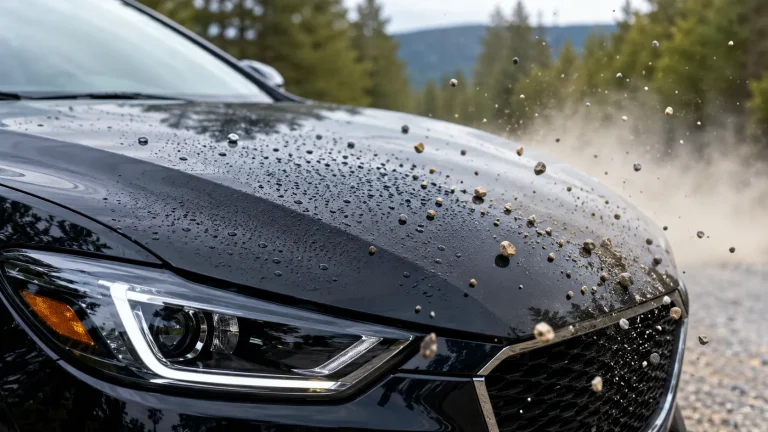
A ceramic coating will not stop a rock kicked up by a semi-truck, a shopping cart bump, a key dragged across a door, or a branch scraping along a fender. These events involve enough force to exceed the coating’s hardness, and the coating is far too thin to absorb that energy. In most cases, the coating and the clear coat will both be damaged.
If you’re concerned about impact damage specifically, our detailed breakdown of whether ceramic coating protects against rock chips explains the physics and what alternatives actually work.
- Reduces wash-induced swirls and light marring
- Makes paint easier to clean and maintain
- Provides hydrophobic and UV-resistant properties
- Cannot prevent rock chips, keying, or deep scratches
- Requires proper wash technique to avoid introducing scratches
- Thin layer offers limited physical impact protection
Ceramic Coating vs. Paint Protection Film vs. Wax: A Scratch-Fighting Comparison
Ceramic coatings are often compared to paint protection film (PPF) and traditional wax, but these three products work in fundamentally different ways.
The Protection Scale: Sacrificial Layers vs. Impact Barriers
Wax is a sacrificial layer that sits on top of the paint and takes light abrasion before the clear coat does — but it wears off in weeks or months. A ceramic coating is harder and longer-lasting, but it’s still a thin, hard surface rather than a shock absorber. PPF, by contrast, is a thick, elastic polyurethane film that can stretch and absorb impact energy, which is why it’s the only one of the three that meaningfully reduces rock chip damage.
Choosing Protection Based on Your Driving Environment, Climate, and Budget
Your choice should depend on how your car is used. Highway commuters dealing with gravel and road debris benefit most from PPF on high-impact areas like the front bumper and hood. City drivers who park on the street may prioritize a ceramic coating for its ease of cleaning and environmental resistance. Weekend-show owners often combine both: PPF for impact zones and a ceramic coating on top for gloss and easier maintenance.
| Option | Best For | Key Consideration |
|---|---|---|
| Ceramic Coating | Long-term gloss, hydrophobic behavior, easier washing | Thin layer; no impact protection against rock chips |
| Paint Protection Film (PPF) | Impact protection on front bumpers, hoods, and mirrors | Higher upfront cost; visible edge lines on some installs |
| Wax or Sealant | Budget-friendly short-term gloss and beading | Lasts weeks to months; requires frequent reapplication |
Understanding the 9H Hardness Myth: How Scratch Resistance Is Really Measured
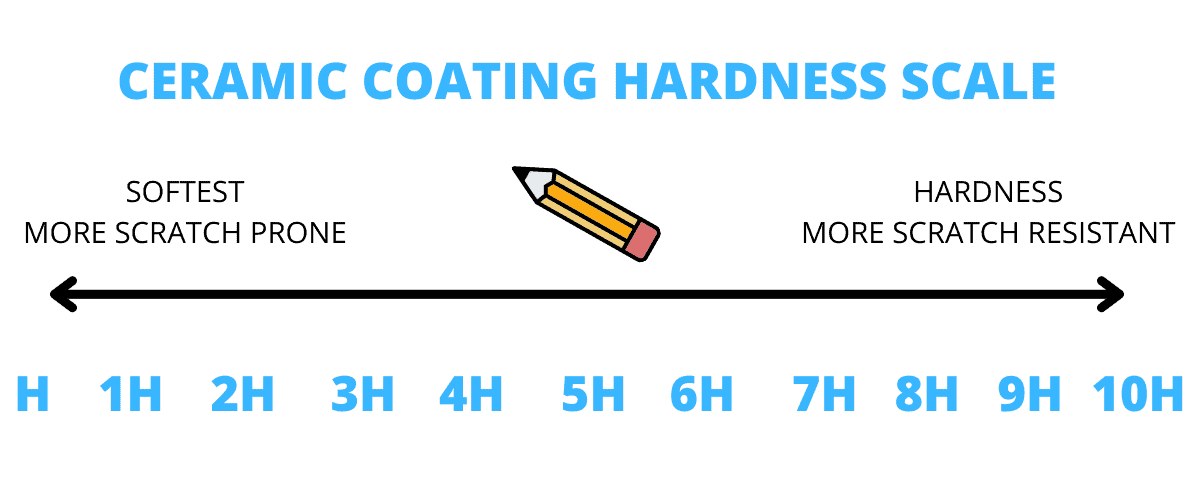
Many ceramic coating brands advertise a “9H” hardness rating, which sounds impressive but is widely misunderstood.
The Pencil Hardness Test: What It Does and Doesn’t Prove
The 9H rating comes from a pencil hardness test, where pencils of increasing hardness are dragged across the coating to find the point where they leave a mark. A 9H rating means the coating survived the hardest pencil in that standard test set. That tells you something about the coating’s resistance to a specific kind of abrasion, but it does not mean the coating is as hard as a diamond or immune to scratches. Sand particles, which are often harder than any pencil lead, can still scratch a 9H-rated coating.
Hardness vs. Slipperiness: Why Friction Reduction Matters More
For everyday scratch prevention, a coating’s slipperiness matters more than its pencil hardness. A slick surface lets dirt and wash mitts glide across without digging in. That lower friction is what actually reduces swirl marks in real-world use. When comparing coatings, look for documented water-beading angles and lubricity feedback from detailers rather than focusing only on the 9H label.
Surface Prep and Application: Why Scratch Prevention Happens Before the Coating Cures
Here’s a counterintuitive fact: most of the scratch prevention benefit of a ceramic coating is determined before the coating is ever applied. The preparation work is where the real magic happens.
Paint Decontamination and Correction: The Critical Pre-Coating Steps
A professional installation typically starts with a thorough wash, chemical decontamination, and clay bar treatment to remove embedded contaminants. Then comes paint correction — polishing out existing swirls, scratches, and oxidation. If this step is skipped, the coating simply locks in those imperfections beneath a glossy layer. The quality of the paint correction before application matters more than the coating itself — our guide to paint correction and ceramic coating explains why this step is non-negotiable.
DIY Kits vs. Professional Installation: Application Risk and Success Rates
DIY ceramic coating kits are more accessible than ever, but they carry real risk. Applying a coating in dusty conditions, uneven strokes, or letting it flash too long can leave high spots, streaks, or a patchy finish that’s difficult to remove. Professional installers control the environment, use proper lighting to catch defects, and have the experience to apply the coating evenly. The trade-off is cost: professional installation includes labor and prep work that DIY kits don’t.
Curing Time, Ventilation, and Safe Application Conditions for Home Detailers
If you do apply a coating yourself, follow the manufacturer’s instructions on cure time and ventilation. Most coatings need a dry, dust-free environment and a specific temperature range to bond properly. Some products emit solvents during application and curing, so work in a well-ventilated garage or outdoors, and wear the recommended gloves. Check the manufacturer’s guidance before driving the car or exposing it to water after application.
Always read the coating manufacturer’s safety data sheet before application. Work in a well-ventilated area, wear nitrile gloves, and avoid skin contact with uncured coating. Never apply a coating to a hot surface or in direct sunlight unless the manufacturer explicitly allows it, as this can cause uneven curing and permanent streaks.
Maintaining Your Ceramic Coating: How to Avoid Introducing Scratches Yourself
The most common way ceramic coatings get scratched is not from road debris — it’s from improper washing by the owner. A coating changes how you should wash your car, and following the old routine is the fastest way to add swirls.
The Two-Bucket Wash Method and pH-Neutral Soaps: A Non-Negotiable Routine
The two-bucket method — one bucket for soapy water, one for rinsing your mitt — is the standard for coated cars. It keeps grit out of your wash solution. You should also use a pH-neutral car shampoo, because aggressive soaps or household cleaners can strip the coating’s hydrophobic properties over time. Our full guide on how to wash a car with ceramic coating covers the routine in detail.
- Use the two-bucket wash method with grit guards
- Use pH-neutral car shampoo designed for coated paint
- Dry with a clean, high-quality microfiber towel or blower
- Use automatic car washes with abrasive brushes
- Wipe dry dust off with a dry towel
- Use dish soap, degreasers, or household cleaners on the coating
Drying Technique, Towel Quality, and Grit Guard Use
How you dry matters as much as how you wash. Pat or blot the surface with a plush microfiber drying towel rather than dragging it across the paint. Better yet, use a leaf blower or dedicated drying blower to push water off without any contact at all. Grit guards in both wash buckets trap dirt at the bottom, keeping it away from your mitt.
Maintenance Sprays and Boosters: Do They Restore Scratch Resistance?
Maintenance sprays and booster products can refresh the coating’s hydrophobic behavior and add a layer of slickness, which helps with future washing. However, they do not repair scratches or restore the original coating’s thickness. If your coating is already scratched, a booster will mask it temporarily at best. The honest fix is polishing the affected area and, in severe cases, re-applying the coating.
If you notice water beading starting to flatten out on your coated car, that’s a sign the coating’s top layer is degrading. A maintenance spray can restore slickness temporarily, but a professional inspection will tell you whether the coating still has enough thickness to be worth keeping or whether it needs to be stripped and reapplied.
Ownership Cost and Value: Is Ceramic Coating Worth It for Scratch Protection Alone?
If scratch prevention is your only goal, a ceramic coating alone is probably not worth the money. But if you value easier cleaning, lasting gloss, and reduced wash-induced marring, the value equation changes.
Breaking Down the Upfront Cost: DIY Kits vs. Professional Packages
DIY kits cost significantly less than professional packages, but they require your time, skill, and a controlled environment. Professional packages include paint correction, decontamination, and application — and that labor is the bulk of the cost. For current market pricing across the US, our ceramic coating price guide breaks down what you can expect to pay at different service levels.
Longevity, Layer Stacking, and Annual Maintenance Costs
Most quality coatings last two to five years with proper maintenance, depending on the product and how the car is stored. Some owners add an extra layer of coating during annual maintenance to extend longevity, though this is not always necessary. Budget for maintenance washes, occasional detailing products, and the possibility of a professional inspection to keep the coating performing.
Value Comparison: Ceramic Coating vs. PPF for High-Mileage and Daily Drivers
For a daily driver that accumulates highway miles, PPF on high-impact areas delivers more scratch protection per dollar than a ceramic coating alone. For a garage-kept weekend car that rarely sees road debris, a ceramic coating offers excellent value because its strengths — gloss, hydrophobicity, and easy cleaning — match how the car is actually used. Many owners combine the two, which is the most effective but also the most expensive approach. Our article on whether ceramic coating is worth it digs deeper into this trade-off for different ownership scenarios.
- Best for gloss, hydrophobicity, and easy maintenance
- Lower upfront cost than full PPF coverage
- Protects against UV, contaminants, and light marring
- Best for impact protection against rock chips
- Higher upfront cost, especially for full-front coverage
- Self-healing films can recover from light scratches
Safety Limitations and Warranty Exclusions Every US Car Owner Should Know
Ceramic coating warranties are not blanket guarantees, and many US owners discover exclusions only after filing a claim.
Environmental Hazards: Road Salt, Gravel, and Abrasive Contaminants
Road salt, gravel, and abrasive contaminants are among the most common causes of coating damage, and they are typically excluded from warranty coverage. Environmental factors like bird droppings, tree sap, and industrial fallout can also etch the coating if left on the surface too long. These are considered maintenance issues rather than manufacturing defects, which means the responsibility falls on the owner.
What Manufacturer Warranties Typically Exclude and How to Verify Coverage
Warranty terms vary significantly between brands and installers. Most warranties cover defects like peeling, flaking, or loss of hydrophobic behavior under normal use — but they typically exclude physical damage, chemical damage, improper maintenance, and environmental contamination. Before you pay for installation, ask the installer for the exact warranty document and read the exclusions yourself. Don’t rely on a verbal summary from a salesperson.
Realistic Expectations: When a Ceramic Coating Finishes Its Job
A ceramic coating’s job is to make your paint easier to clean, protect against UV damage and mild chemical exposure, and reduce the frequency of fine scratches from normal washing. It finishes its job the moment it faces an impact it can’t absorb — a rock chip, a key, a bumper tap. That’s not a product failure; it’s a physical limitation. Understanding that boundary before you buy is the single most important step in being satisfied with your investment.
Ceramic coating is a smart investment for reducing wash-induced swirls, simplifying maintenance, and preserving gloss — but it is not scratch armor. If you want impact protection, you need paint protection film. For most owners, the ideal approach is matching the protection type to the actual risks your car faces, and confirming warranty terms and maintenance requirements before you commit.