Are All-Weather Floor Mats Worth It? Compare Pros & Cons

The direct answer is yes for most daily drivers, especially in wet, snowy, or muddy climates. Choose a vehicle-specific tray-style mat in TPE or quality rubber, verify fitment and pedal clearance, and the upgrade pays off over years of use.
The short answer to “are all-weather floor mats worth it” is usually yes for daily drivers, but the right choice depends on your climate, vehicle type, and how much you value a clean interior. For most owners, a well-fitted set protects carpet that would otherwise absorb water, mud, salt, and everyday spills, which makes the upgrade easier to justify than almost any other interior accessory.
- Fitment first: Vehicle-specific tray-style mats cover more carpet than flat or universal mats and use factory.
- Material matters: TPE is lighter, flexible in cold weather, and low-odor; traditional rubber is tougher and.
- Safety check: Verify pedal clearance and retention before driving; never stack mats or let one slide.
- Cleaning is simple: Rinse with water and mild soap, dry completely, and avoid harsh solvents that dull.
- Value over time: A quality set protects the original carpet and can outlast several sets of carpet.
Are All-Weather Floor Mats Worth It? The Short Answer
Many drivers who switch to all-weather mats never go back to plain carpet. Carpet traps everything it touches — melted snow, coffee, gravel, grass, and the occasional dropped snack — and once that material soaks in, it stays there for years. All-weather mats create a waterproof barrier you can lift out, rinse off, and put back in minutes.
The value is not automatic, though. A cheap universal mat that slides around or a tray that crowds the pedals can be worse than the carpet it replaces. The verdict comes down to three factors, and once you understand them, the decision becomes straightforward.
The Three Factors That Decide the Verdict
Your climate and driving environment. Frequent rain, snow, mud, pets, kids, or outdoor hobbies make the case much stronger. A dry-climate commuter with a garage-kept car gets far less benefit.
Your vehicle and how long you plan to keep it. Owners who want to protect resale value or avoid a stained, smelly cabin over several years of ownership get more value from a set that keeps the original carpet looking new.
Your willingness to clean. All-weather mats only help if you occasionally pull them out, rinse them, and let them dry. If that sounds like a chore you will skip, some of the value disappears.
Who Should Buy Them vs. Who Should Skip Them
If you drive in wet winters, haul gear, carry kids or dogs, or plan to sell the vehicle later, all-weather mats are one of the most sensible interior purchases you can make. If your car lives in a garage, sees only dry pavement, and never carries anything messier than a briefcase, you can skip them without guilt.
- Protect the factory carpet from water, mud, salt, and spills
- Quick to remove, rinse, and reinstall
- Help preserve interior resale value better than worn carpet
- Available in vehicle-specific tray styles that cover more area
- Higher upfront cost than basic carpet or universal mats
- Some rubber formulas have a strong new-mat odor
- Cheap universal sets can slide, curl, or leave gaps
- Poor fitment can interfere with pedals or retention points
If you are already thinking about protecting the cabin, the same logic that makes leather seat covers worth it applies here: prevention is almost always cheaper than restoration.
What All-Weather Floor Mats Actually Protect
Water, Mud, and Debris Containment Explained
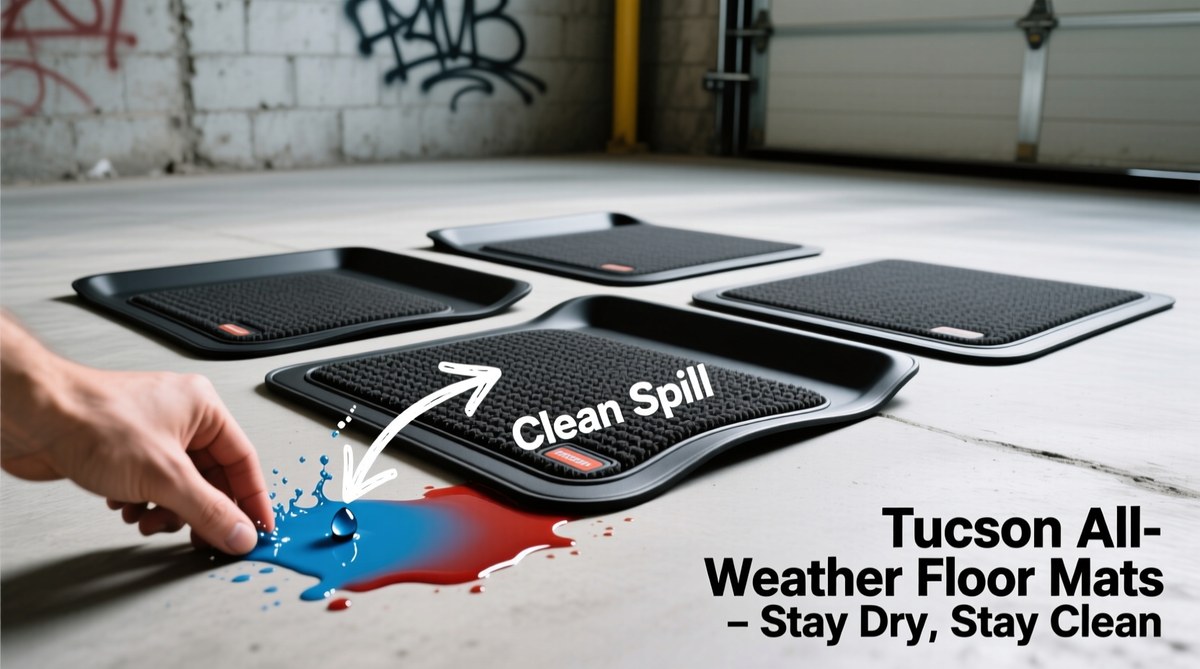
All-weather mats protect the carpet pile and the padding underneath it. That matters because carpet does not dry quickly on its own. A wet floor holds moisture against the padding, which can lead to stains, odor, and in extreme cases, mildew. A mat with raised edges contains water and mud inside the tray so the carpet never gets touched.
That containment only works when the mat is actually shaped like a tray. Flat rubber mats catch dirt, but liquid can run right over the edge and onto the carpet below. If your main concern is snow and rain, the raised lip is the feature that matters most.
For the same reason, drivers who protect their seats often pair mats with waterproof leather seat covers so water, mud, and pet hair stay off the upholstery too.
Coverage Gaps: Why “Tray-Style” Mats Outperform Flat Mats
Coverage is the difference between a mat that looks like it belongs and one that simply sits in the footwell. Tray-style mats are molded to follow the contours of the floor, including the transmission tunnel, the edges under the seat, and the area around the door sill. Flat mats, even well-cut ones, leave gaps where dirt and water can reach the carpet.
Check the second row too. Many vehicles have a rear transmission hump, and some mats stop short of it. A proper tray set covers that hump, the rear footwells, and sometimes the cargo area in trucks and SUVs. The more coverage, the less carpet is exposed to whatever you track in.
Material Breakdown: TPE vs. Rubber vs. Carpet
The material determines weight, odor, flexibility, and how easy the mat is to clean. Here is how the three main options compare.
| Material | Best For | Key Consideration |
|---|---|---|
| TPE (thermoplastic | Daily drivers in wet or cold climates | Lightweight, flexible in cold weather, low odor, easy to rinse clean |
| Rubber / vinyl | Budget buyers and heavy-duty work use | Durable and affordable, but heavier and often has a stronger smell |
| Carpet / hybrid | Owners who want a factory look | Looks premium but absorbs liquid unless it has a waterproof backing or tray |
Thermoplastic (TPE) – The Modern Standard for 2026
TPE has become the default material for most vehicle-specific all-weather mats in recent years. It is lighter than traditional rubber, stays flexible in cold weather, and does not carry the strong new-mat odor that older rubber formulas are known for. It also rinses clean with plain water and mild soap, which is why most premium options use it.
TPE is not indestructible. Very aggressive cleaners and prolonged UV exposure can dull or discolor it, and cheap TPE blends can be softer and less durable than quality rubber. But for the average driver, it offers the best balance of comfort, cleanliness, and protection.
Traditional Rubber and Vinyl – Pros, Cons, and Odor Issues
Traditional rubber mats are heavy, tough, and usually cheaper. They take a beating from boots, tools, and cargo, which makes them popular in trucks and work vehicles. The trade-offs are weight, a stronger smell when new, and a tendency to curl or harden in extreme temperatures over time.
Vinyl mats are the budget end of the spectrum. They are easy to wipe down but thinner, less durable, and more prone to cracking. If you need maximum durability for heavy use, a quality rubber mat is the safer bet. If you want a cleaner daily-driver experience, TPE is usually the better choice.
Carpet and Hybrid Options – When Looks Matter More
Some drivers simply do not like the look of rubber or TPE. Carpet mats look factory-fresh, but they absorb water and stains just like the original carpet. Hybrid mats try to split the difference, using a carpet top layer bonded to a waterproof rubber or TPE base with a raised edge.
Hybrids are a reasonable middle ground for people who want a premium appearance with extra protection. They still need more careful cleaning than solid TPE, and they cannot be rinsed as aggressively without risking the carpet layer. If appearance is your priority, a hybrid is worth considering. If protection is the priority, a solid tray mat is more effective.
Exact Fit vs. Universal Fit: Which One Makes Sense for Your Vehicle?

Laser-Measured, Vehicle-Specific Mats and Their Fitment Guarantee
Vehicle-specific mats are designed from laser scans or detailed measurements of a particular model. They use the factory retention points, follow the floor contours, and cover the areas where water and dirt actually collect. Most brands offer a fitment guarantee or a fit guide where you enter your make, model, year, and trim to confirm compatibility.
The catch is price. Exact-fit sets cost more than generic mats, and you need to verify your exact configuration. Some vehicles have different floor shapes depending on trim level, seat type, or whether the vehicle has a center console or bench seat. Always confirm before ordering.
Universal Cut-to-Fit Mats – Cost Savings vs. Coverage Risk
Universal mats are cheaper and work in almost any vehicle, but they make compromises. They are flat or lightly ribbed, they do not follow the contours of the floor, and they often leave the edges of the carpet exposed. Cut-to-fit versions let you trim the mat to size, but cutting away the edges can also remove the raised lip that keeps water contained.
Universal mats make sense for budget buyers, older vehicles, or people who just want basic dirt protection. If your goal is serious water and mud containment, the coverage gaps usually make universal mats a false economy.
Retention, Pedal Clearance, and Safety Limitations
Anti-Slip Backing and Factory Retention Clips
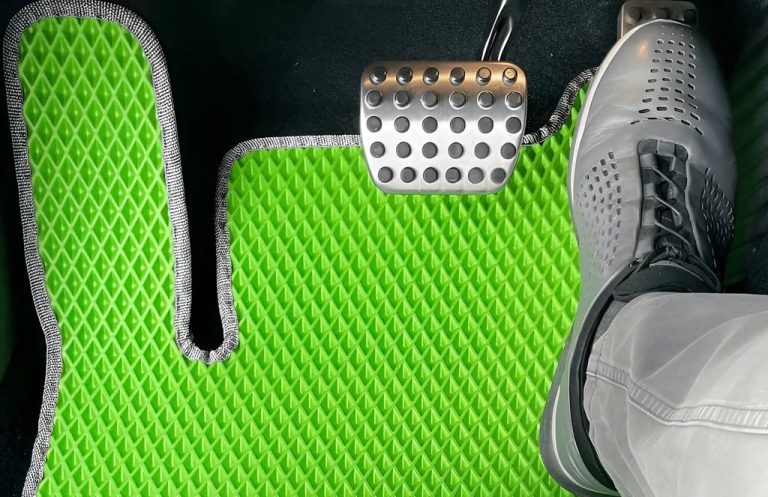
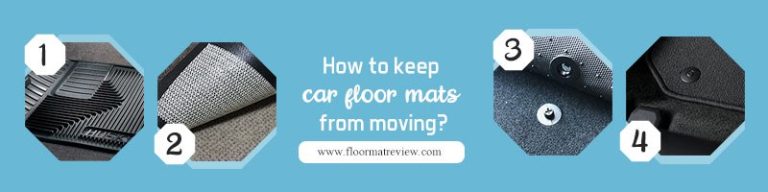
All-weather mats only work if they stay in place. Look for anti-slip backing, nibs, or hooks on the underside, and use the factory retention clips or posts that came with your vehicle. Many vehicle-specific mats have molded holes that line up with those factory points, which is one of the biggest advantages of exact-fit sets.
If your vehicle does not have factory retention points, or the mat does not line up with them, the risk of sliding increases. A mat that slides forward can bunch up under the pedals, which is a serious safety problem, not just an annoyance.
Never install a floor mat that can interfere with the accelerator, brake, or clutch pedals, and never stack multiple mats on top of one another. Confirm that the mat uses the factory retention points and that the pedal area remains fully clear before driving. If a mat slides, curls, or blocks your feet, remove it immediately.
Pedal Interference: How Much Clearance Is Safe?
Manufacturer instructions for floor mats are clear: the mat must not touch or interfere with the pedals, and the driver’s foot must have full range of motion. A thick universal mat or a misaligned tray can sit too close to the pedal arm, even if it looks fine from the driver’s seat.
Before you buy, check the thickness of the mat and the depth of the footwell. Some vehicles have very little clearance, and a thick mat can reduce pedal travel. When in doubt, choose a thinner, vehicle-specific mat and test the full pedal stroke before you drive.
Cleaning, Odor, and Long-Term Maintenance
How to Clean All-Weather Mats Without Damaging Them
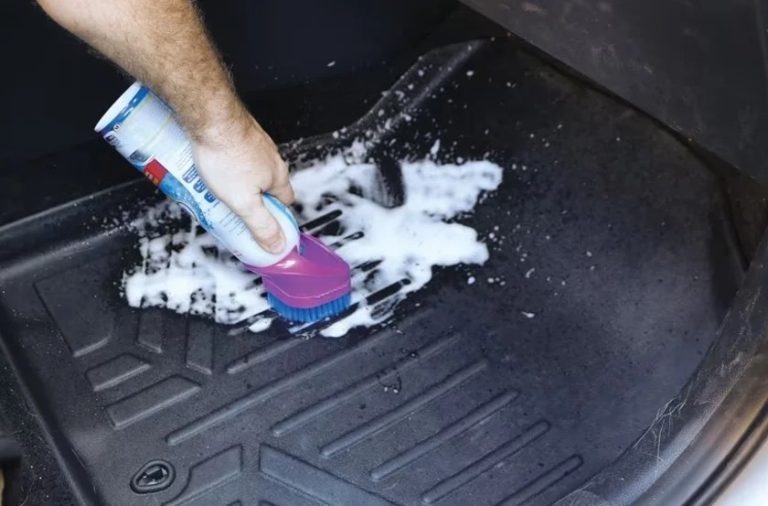
Cleaning is simple but worth doing correctly. Remove the mats, shake or vacuum off loose dirt, then rinse with a hose or pressure washer. Use mild soap and a soft brush for stuck-in mud, then rinse thoroughly. Let the mats dry completely before reinstalling them, ideally in the sun or a well-ventilated area.
Do not use harsh solvents, bleach, or abrasive pads on TPE or rubber mats. These can dull the surface, break down the material, and make the mat hold onto dirt and odor. Warm water, mild soap, and a soft brush are enough for almost any mess.
Odor Traps, Mildew, and How to Prevent Them
All-weather mats can develop odors, but usually from improper drying rather than the material itself. If you rinse a mat and put it back wet, moisture can sit between the mat and the carpet, which is a recipe for mildew. The fix is simple: dry the mat outside or lean it against a wall until no water remains.
Rubber mats can also absorb odor from mud, pet accidents, or spilled liquids over time. A regular rinse and a mild soap wash keeps them fresh. If a smell persists, a dedicated rubber or plastic cleaner may help, but follow the manufacturer’s instructions and test on a small area first.
- Verify fitment for your exact make, model, year, and trim
- Use factory retention points and check pedal clearance
- Rinse with water and mild soap, then dry completely
- Stack mats or use mats that slide under the pedals
- Use harsh solvents or abrasive brushes
- Reinstall mats while they are still wet
Durability and Ownership Cost Over Five Years
Wear Patterns and Realistic Replacement Timelines
No floor mat lasts forever. The most common wear patterns are cracking at the edges, fading from sun exposure, and flattening of the anti-slip nibs. Quality TPE and rubber mats generally hold up for several years of daily use, while cheap universal mats can crack, curl, or lose their shape within a much shorter window.
How long a mat lasts depends on the material, the climate, and how often it is cleaned. Extreme cold makes rubber stiffer and more prone to cracking. UV exposure fades and dries out the surface. Regular cleaning removes the grit that acts like sandpaper on the mat and the carpet underneath.
Cost Comparison: All-Weather vs. Replacing Carpet Mats
The upfront cost of a quality set of all-weather mats is higher than a basic set of carpet mats, but the comparison changes over time. Carpet mats wear out, stain, and absorb odor, and replacing them repeatedly adds up. A single set of all-weather mats can outlast several sets of carpet mats, which makes the long-term cost lower for many drivers.
There is also the resale angle. A vehicle with clean, original carpet under a set of all-weather mats presents better to a buyer than one with stained, worn floorboards. The same logic that makes ceramic coating worth it for paint applies inside the cabin: protecting the original surface preserves value better than waiting for damage to happen.
When All-Weather Floor Mats Are NOT Worth It
Driving Habits, Climates, and Vehicles That Don’t Benefit
If you live in a dry, warm climate, park in a garage, and rarely carry anything messier than a laptop bag, all-weather mats are a solution to a problem you do not have. The same goes for weekend cars that see a few thousand miles a year on clean pavement.
Leased vehicles are another edge case. If you are returning the car in a year or two, the factory carpet mats may be perfectly adequate, and the extra cost of a premium set may not pay off. And in some work trucks with rubberized floors, there is no carpet to protect in the first place.
Budget Considerations and Cheaper Alternatives
If budget is the main concern, there are cheaper ways to keep a floor clean. A basic universal rubber mat catches dirt and can be hosed off, even if it does not contain water as well as a tray style. Regular vacuuming and prompt spot-cleaning of spills can also keep factory carpet presentable for a long time.
The question is whether a cheaper option actually solves your problem. If you only need dust and gravel protection, a basic mat is fine. If you deal with snow, rain, mud, or pets, the coverage and containment of a proper vehicle-specific tray mat are worth the extra cost.
Final Verdict: Who Should Buy All-Weather Floor Mats in 2026
Recommendations by Vehicle Type and Lifestyle
Families with kids and pets, daily commuters in snowy or rainy regions, outdoor enthusiasts, and anyone who wants to preserve resale value should strongly consider a vehicle-specific TPE tray set. Truck and work-vehicle owners who need maximum toughness may prefer a quality rubber mat, accepting the extra weight and odor. Owners of garage-kept weekend cars in mild climates can skip them without much risk.
- Confirm fitment for your exact make, model, year, and trim
- Check material, coverage, and whether the set includes the rear footwells
- Verify that the mats use factory retention points and keep pedals clear
- Review cleaning instructions, warranty, and return policy before ordering
Bottom Line: Value Assessment and Buying Guidance
All-weather floor mats are worth it for most drivers who actually use their vehicles. The value comes from protecting the original carpet, simplifying cleanup, and avoiding the slow deterioration that makes a cabin feel old. Choose a vehicle-specific tray style in TPE if you want the best daily-driver experience, choose quality rubber for heavy-duty use, and skip the upgrade only if your car never sees mess.
- Best use case: daily drivers in wet, snowy, or muddy climates
- Main strength: protects the factory carpet and makes cleanup fast
- Main limitation: poor fitment or cheap universal mats can slide and leave gaps
- Next verification step: confirm exact fitment, retention points, and pedal clearance for your vehicle