Can Floor Mats Interfere with Pedals? Choose the Right Fit

Yes, floor mats can interfere with pedals when they shift, curl, or are the wrong size. Choose mats designed for your exact vehicle, secure them with the factory anchors, and recheck pedal travel after installation.
The short answer to whether can floor mats interfere with pedals is yes, they can — and it usually comes down to fit, retention, and how the mat sits in the driver’s footwell. A mat that slides forward, bunches under the brake or accelerator, or curls at the edges can reduce pedal travel and create a real safety risk, so choosing the right fit matters more than color, brand, or price.
- Fit matters most: Vehicle-specific mats are safer than oversized universal mats that can slide under the pedals.
- Retention is essential: Use the car’s factory hooks or clips and never stack two mats on the.
- Thickness affects clearance: Heavy all-weather mats can crowd tight footwells and change pedal angle.
- Check after cleaning: Reinstall mats correctly and press each pedal through its full range before driving.
- Replace when worn: Curled edges, lost backing grip, or broken anchors mean it’s time for a new.
Direct Answer: What to Know About can floor mats interfere with pedals
Floor mats interfere with pedals in a few predictable ways. The most common is a mat that shifts forward during driving and slides beneath the brake or accelerator, which can leave the pedal partially pressed or reduce the distance you need for full travel. Oversized universal mats, missing or broken anchor hooks, and stacking two mats on top of each other all make this more likely.
Another issue is thickness. Some heavy-duty all-weather mats are thick enough to crowd a tight footwell, especially in smaller cars, sports cars, or vehicles with a low-mounted pedal set. A thick mat can also lift the driver’s heel and change the angle of pedal operation, which feels awkward and can contribute to fatigue on long drives.
Worn mats cause problems of their own. When the backing loses its grip or the edges start to curl, the mat can catch on a pedal or slide beneath it even if it was correctly installed at first. That’s why the answer isn’t just about the mat you buy — it’s also about how you maintain it over time.
Always confirm that the driver-side mat is secured by the vehicle’s factory anchors and that no part of the mat overlaps or touches the accelerator, brake, or clutch. Press each pedal through its full range before driving, and recheck after any cleaning or removal.
Fit, Compatibility, and Who It Suits
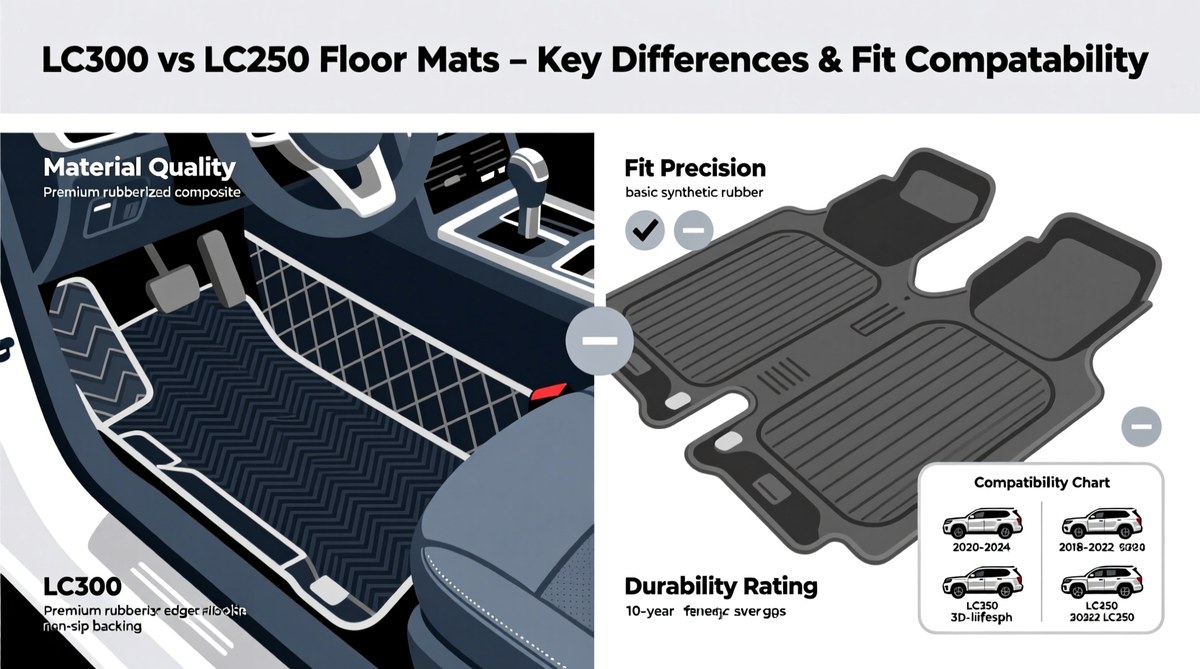
The single most important decision is whether the mat is designed for your exact vehicle. Vehicle-specific mats are molded to the footwell, with cutouts for anchor hooks and contours that keep the mat clear of the pedals. Universal mats, by contrast, are made to cover a wide range of cars and often need trimming to fit — and an untrimmed universal mat is one of the most common causes of pedal interference.
Fit also depends on your specific trim and configuration. The same model can have different footwells depending on whether it has a manual or automatic transmission, power-adjustable pedals, or a different interior package. Before ordering, verify the make, model, year, and trim, and check whether the mat is listed as driver-side specific.
This verify-before-buying discipline applies to other interior accessories too. For example, seat covers need to work around heated seats and side airbags, just as a floor mat needs to work around pedals and anchors. If you’re considering interior upgrades, a guide to using leather seat covers with heated seats explains what to check before you commit.
Verify your vehicle’s make, model, year, and trim, plus the transmission type and whether the car has factory floor-mat anchors. Confirm the mat is driver-side specific and does not block pedals, seat tracks, vents, or sensors.
Materials, Construction, and Key Features
Floor mats come in a few main material families, and each changes how the mat behaves around the pedals. Carpeted mats offer a factory look and softer feel underfoot, but they rely heavily on their backing and anchors to stay put. Rubber and TPE all-weather mats are durable, easy to clean, and grip the carpet well, but some are thick enough to reduce clearance in tight footwells.
The features that matter most for pedal safety are the retention system, anti-slip backing, raised edges, and the driver-side contour. A mat with a positive anchor connection — hooks, clips, or a twist-in lock — is far less likely to slide than one that just lies on the carpet. Raised edges are great for containing water and debris, but they also need to stay clear of the pedals.
| Mat Type | Best For | Key Consideration |
|---|---|---|
| Carpeted OEM-style mats | Factory look and softer feel | Need strong backing and anchors to stay put |
| Rubber / TPE all-weather mats | Winter weather, mud, and spills | Check thickness and pedal clearance in tight footwells |
| Universal mats | Budget or temporary use | Must be trimmed and anchored carefully to avoid pedal contact |
Installation, Application, and Everyday Use
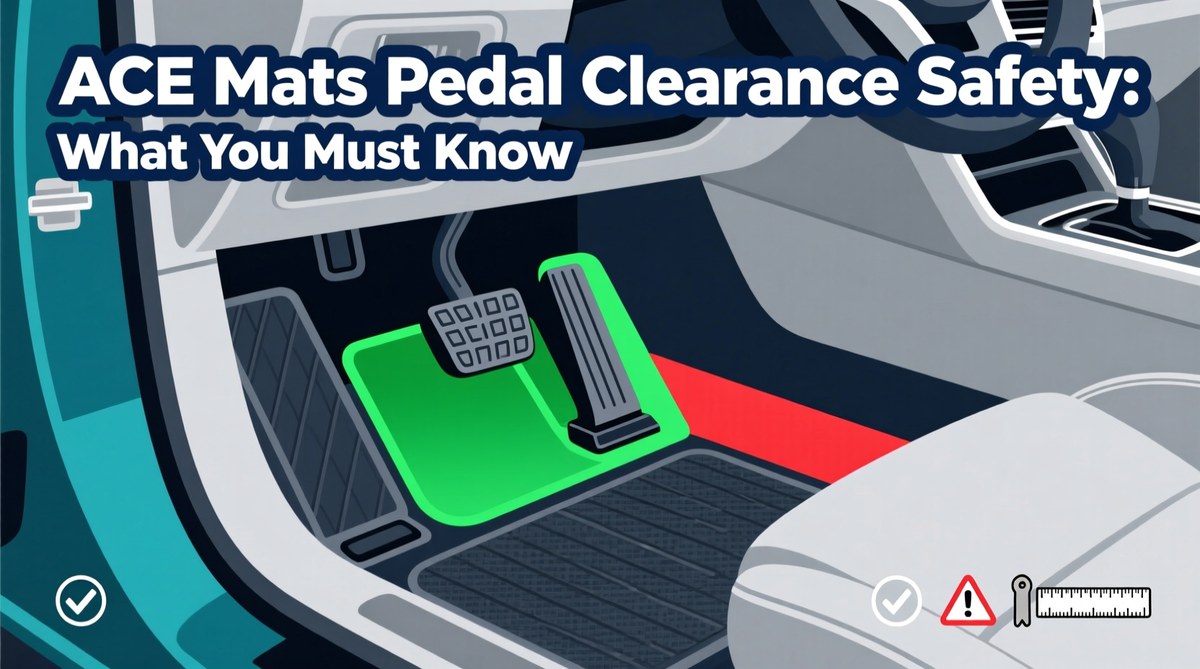
Installation is where most pedal-interference problems are either solved or created. Start by removing any old mats and cleaning the footwell so the new mat sits flat. Place the mat in position, align it with the factory anchor hooks, and secure every anchor point. Then sit in the driver’s seat and press each pedal through its full range of motion while watching the mat. It should not move, bunch, or touch the pedals at any point.
In everyday use, the habits that keep mats safe are simple: never stack a second mat on top of the driver-side mat, tuck edges under the seat rails if the mat is designed for that, and recheck the mat’s position after anyone else drives the car. If the mat shifts during normal driving, the anchor or the mat itself needs attention.
Verify the mat matches your vehicle and read the installation instructions before placing it.
Remove old mats, clean the carpet, and make sure the anchor hooks are accessible and undamaged.
Secure all anchors, then press each pedal through full travel to confirm the mat stays clear and stationary.
Cleaning, Care, and Long-Term Maintenance
Cleaning floor mats regularly does more than keep the interior looking good — it also preserves the features that prevent pedal interference. Rubber and TPE mats can be removed, rinsed, and wiped down, then fully dried before reinstalling. Carpeted mats should be vacuumed often and spot-cleaned with a cleaner that matches the fiber; soaking them can break down the backing and cause slipping.
After any cleaning, take a moment to reinstall the mat properly and recheck the anchors. Hooks and clips can loosen over time, and a mat that was lifted for cleaning might not go back in exactly the same position. Drying mats completely before reinstalling also prevents moisture from weakening the backing or causing odors.
The same material-specific care applies to other interior textiles. If you have fabric or leather seat covers, the cleaning method depends on what they’re made of — a guide to washing leather seat covers explains why the fiber and finish determine the safe approach.
After every wash or deep clean, dry the mat fully and reinstall it with the anchors secured. Then press each pedal to the floor once before you drive — it takes five seconds and catches most reinstalled-mat problems.
Important Limitations and Common Mistakes
No floor mat is a substitute for checking the driver’s footwell, and “vehicle-specific” doesn’t mean “guaranteed perfect.” Footwells vary by generation, trim, and options, so even a correctly listed mat deserves a physical check after installation.
Common mistakes include buying a universal mat that’s too large and leaving it untrimmed, ignoring broken anchor hooks instead of replacing them, stacking mats for extra protection, and keeping a mat that has curled edges or lost its anti-slip backing. All of these can turn a simple accessory into a pedal hazard.
- Verify fitment for your exact vehicle and trim
- Use factory anchors and recheck them regularly
- Press pedals through full travel after installation and cleaning
- Replace mats with curled edges, torn backing, or broken anchors
- Stack two mats on the driver side
- Drive with an untrimmed universal mat that overlaps the pedals
- Ignore a mat that shifts during braking or acceleration
Value, Alternatives, and What to Verify
A properly fitted floor mat is one of the lowest-cost safety upgrades you can make. It protects the carpet from wear, water, and dirt, and it prevents the kind of pedal interference that can cause unintended acceleration or difficulty braking. Compared with the cost of interior repairs — or the risk of a pedal-related incident — a quality mat is a bargain.
If a vehicle-specific mat isn’t available, the alternatives are a carefully trimmed universal mat, an OEM mat from the dealer, or a custom-cut mat from a specialty retailer. Each has trade-offs: universal mats require the most attention, OEM mats are usually reliable but pricey, and custom-cut mats need accurate ordering and verification.
Before buying, verify the make, model, year, and trim, check that the mat has a driver-side-specific design, confirm it uses the vehicle’s anchor system, and look at the thickness and raised-edge height. If you also care for the exterior, remember that interior and exterior protection are separate jobs — a mat protects the carpet, while paint protection like ceramic coating needs its own maintenance routine, so it’s worth reviewing how to wash a car with ceramic coating if you’ve applied one.
- Confirm the mat fits your exact make, model, year, and trim
- Check for a driver-side-specific design and anchor compatibility
- Review thickness, raised edges, and material for your climate and footwell
- Plan to recheck pedal clearance after installation and after each cleaning
Final Recommendation
The safest choice is a vehicle-specific mat designed for your exact model, made from a material that suits your climate, and secured by the factory anchor system. Skip the oversized universal mat that “should fit” and avoid stacking mats for extra coverage. Install it once, check the pedals, and recheck after every cleaning — that routine removes almost all of the risk.
- Best use case: Daily drivers who want a secure, low-maintenance mat that stays clear of the pedals
- Main strength: A correct fit with factory anchors eliminates the most common cause of pedal interference
- Main limitation: Even a good mat needs periodic rechecking and replacement when worn
- Next verification step: Confirm your vehicle’s trim and anchor type before ordering