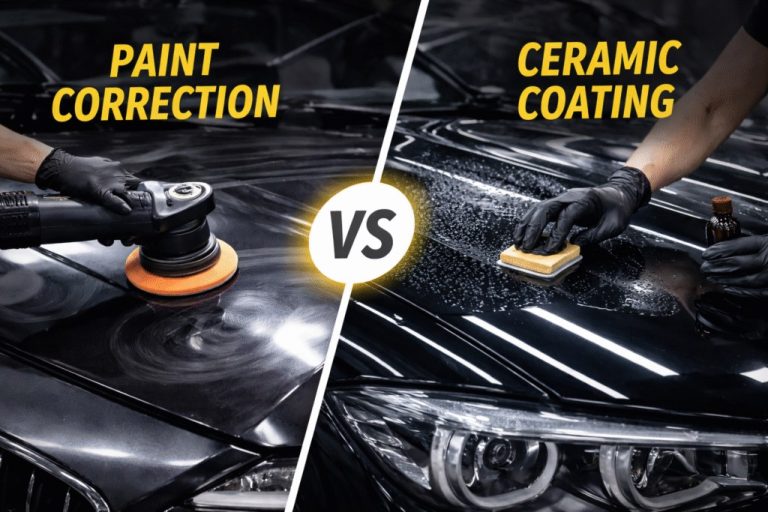
Does Ceramic Coating Protect Against Rock Chips? No, PPF Does
Ceramic coating does not protect against rock chips — it’s only 1 to 3 microns thick. Paint protection film (PPF) is the only reliable defense against rock chip damage.
Does ceramic coating protect against rock chips? No — not in any meaningful way. Ceramic coating is a thin, hard liquid layer that excels at chemical resistance and ease of cleaning, but it cannot absorb the kinetic energy of a stone striking your paint at highway speed. If rock chips are your concern, paint protection film (PPF) is the only product that delivers measurable impact defense.
- Ceramic coating: 1–3 microns thick with zero impact resistance against rocks.
- PPF: 150–250 microns thick and absorbs impact energy to prevent chips.
- Best setup: PPF on high-impact areas with ceramic coating applied over it.
- Driving habits matter: Highway commuters need PPF; city drivers may get by with ceramic alone.
- Maintenance: Use pH-neutral soap and avoid harsh brushes on both coatings and film.
Does Ceramic Coating Stop Rock Chips? The Honest Answer
What Ceramic Coating Actually Protects Against
Ceramic coating is a liquid polymer that bonds to your factory clear coat and forms a semi-permanent, hydrophobic layer. Its real strengths are chemical resistance — bird droppings, bug splatter, tree sap — plus UV protection and a noticeable improvement in gloss. It also reduces the chance of light surface marring from routine washing.
But those benefits are all about chemistry, not physics. Ceramic coating does not add meaningful structural strength to your paint. If you’re still unsure what ceramic coating actually does, our guide on what does ceramic coating do breaks down the real benefits in detail.
Why a Thin Liquid Layer Can’t Absorb Impact
A rock chip happens when a stone hits your paint with enough force to fracture the clear coat and expose the base coat or bare metal. That force is measured in joules — the same kind of energy that cracks windshields. Ceramic coating is applied at roughly 1 to 3 microns thick, about one-tenth the thickness of a human hair.
No liquid-applied product at that thickness can meaningfully absorb or dissipate impact energy. When a rock strikes a ceramic-coated panel, the coating fractures along with the clear coat underneath it. The coating doesn’t make the paint stronger; it just makes it easier to clean and more resistant to chemicals.
The Physics of a Rock Chip: Why Thickness Matters
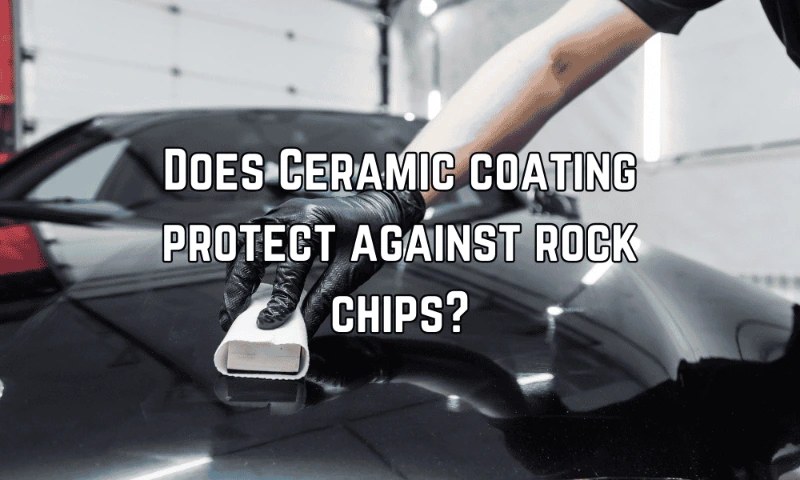
Comparing Thickness: Ceramic Coating vs. Factory Clear Coat vs. PPF
| Layer | Typical Thickness | Impact Protection |
|---|---|---|
| Ceramic Coating | 1–3 microns | Essentially none |
| Factory Clear Coat | 30–50 microns | Minimal |
| Paint Protection Film | 150–250 microns | High |
A ceramic coating is a fraction of the thickness of the clear coat it sits on. PPF is 5 to 8 times thicker than the clear coat itself. That thickness is what allows PPF to absorb impact energy and prevent it from reaching the paint.
How Speed, Gravel Size, and Impact Angle Affect Damage
The damage from a rock chip depends on three variables: speed, size, and angle. At 30 mph, a small pebble might bounce off without damage. At 70 mph, the same pebble can leave a star-shaped crack in the clear coat. Larger gravel carries more kinetic energy, and a direct 90-degree impact does more damage than a glancing blow.
PPF’s thickness and elasticity let it deform and absorb that energy. Ceramic coating’s thin, brittle layer has no such capacity. It’s not a flaw in the product — it’s a fundamental limitation of what a liquid coating can do.
Ceramic Coating vs. Paint Protection Film: Side-by-Side Protection Comparison
Impact Resistance: What Each Layer Can Withstand
Ceramic coating offers essentially zero impact resistance. PPF is designed specifically for impact resistance and can prevent or significantly reduce rock chip damage. This is the single most important difference between the two products.
- Superior chemical resistance
- Strong hydrophobic behavior
- Enhances gloss and depth
- Lower upfront cost
- No rock chip protection
- Thin layer — 1 to 3 microns
- Requires careful maintenance
- Doesn’t hide existing imperfections
Chemical, UV, and Environmental Resistance
Here, ceramic coating shines. It’s superior to PPF for chemical resistance and hydrophobic behavior. PPF offers good UV protection but doesn’t repel water as well as a coating. That’s why many owners choose to combine both products rather than pick one.
Cost and Value at Different Budget Levels
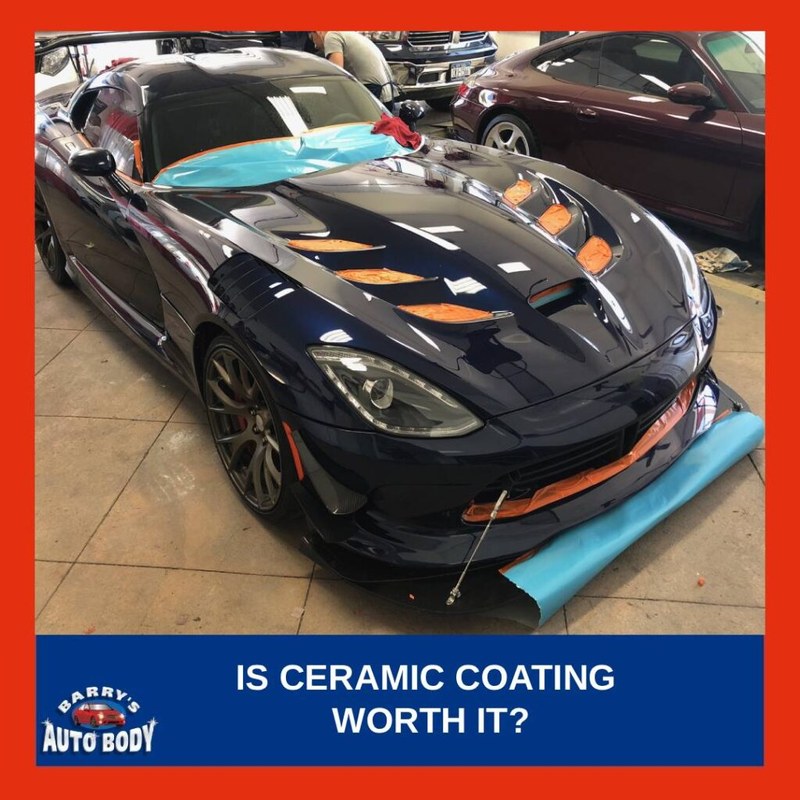
Ceramic coating is significantly cheaper upfront than PPF. But when you factor in what each product actually delivers, the value picture changes. If rock chips are a real risk for your driving routine, PPF provides protection that ceramic coating simply cannot. For a deeper look at whether the investment makes sense for your situation, our breakdown of is ceramic coating worth it covers the trade-offs in detail.
What Ceramic Coating Does Well: Realistic Benefits After Application
Surface Compatibility and Paint Preparation Before Application
Before application, the paint must be decontaminated, polished, and wiped with a prep solution. The coating bonds to clean, bare clear coat. If applied over existing rock chips, it won’t fill or hide them. Paint that hasn’t been properly corrected will show every imperfection more clearly once the coating is applied.
Application, Dwell Time, and Cure Time: What to Expect
Ceramic coating is applied in small sections, allowed to flash (dwell), then leveled with a microfiber towel. Cure time varies by product — some are ready for light rain in hours, others need 24 to 48 hours before washing. The environment matters too: high humidity or extreme heat can affect how the coating cures.
Hydrophobic Behavior, Gloss, and Ease of Washing
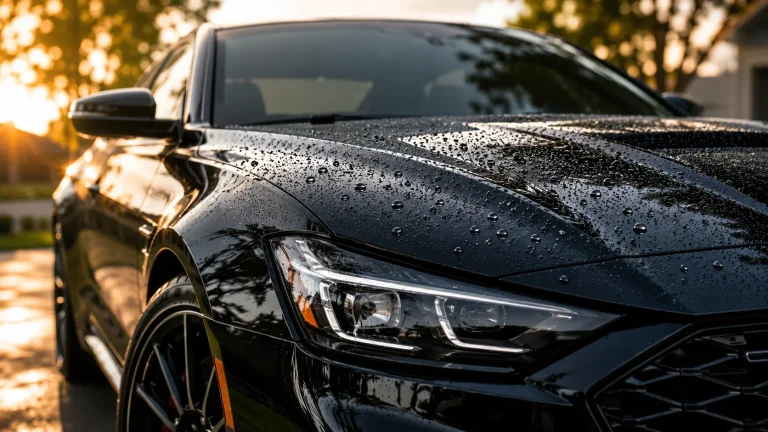
The hydrophobic behavior of ceramic coating means water beads and rolls off, carrying dirt with it. The gloss enhancement is noticeable, and washing is significantly easier. These are the real reasons people choose ceramic coating — not impact protection, but everyday cleanliness and appearance.
Paint Protection Film: The Only True Rock Chip Defense
How PPF Absorbs and Dissipates Impact Energy
PPF is a thermoplastic urethane film that’s thick enough to deform under impact. When a rock strikes it, the film absorbs the energy and distributes it across a wider area, preventing the clear coat from fracturing. This is why PPF is the only reliable defense against rock chips.
Self-Healing Properties: Heat-Activated Scratch Recovery
Many PPF products have self-healing properties — heat-activated recovery. Light scratches and swirl marks disappear when exposed to heat, whether from the sun or hot water poured over the surface. This is a unique benefit that ceramic coating cannot offer.
When choosing PPF coverage, think about where debris actually hits your car. The front bumper and leading edge of the hood take most of the impact, but mirrors, fenders, and the A-pillars are also vulnerable. Full front coverage costs more but protects the areas that matter most.
Full Front vs. Partial Coverage: Matching PPF to Your Driving Routine
Full front PPF covers the bumper, hood, fenders, and mirrors. Partial coverage typically covers just the bumper and the leading edge of the hood. Your driving routine matters — frequent highway driving warrants full front coverage, while city-only drivers may get by with partial.
Combining Ceramic Coating and PPF: The Best of Both Worlds
Application Order: Why PPF Goes On First
PPF goes on bare, corrected paint. Ceramic coating is applied over the PPF after it’s cured. This order ensures the film bonds directly to the clear coat and the coating bonds to the film. Reversing the order would trap the coating under the film and compromise both layers.
Ceramic Over PPF: Gloss, Hydrophobics, and Maintenance Benefits
Applying ceramic coating over PPF adds gloss, improves hydrophobic behavior, and makes the film easier to clean. It also protects the PPF from chemical contaminants like bird droppings and bug splatter. This combination is the best of both worlds: impact protection from the film and easy maintenance from the coating.
Not all ceramic coatings are compatible with all PPF brands. Check with your installer or the product manufacturer before applying coating over film. Some coatings can cause the film to yellow or degrade over time if they aren’t formulated for use over PPF.
Cleaning and Maintenance: Caring for Coated and Filmed Paint
Safe Wash Techniques for Ceramic-Coated Panels
Use pH-neutral soap, the two-bucket method, and a clean microfiber mitt. Avoid automatic car washes with harsh brushes, which can dull the coating over time. Our guide on how to wash car with ceramic coating walks through the full process step by step.
PPF Care: pH-Neutral Soaps, Pressure Washer Tips, and Products to Avoid
PPF needs pH-neutral soaps too. Avoid solvent-based cleaners, waxes with abrasives, and pressure washers set too high. Never use a clay bar on PPF — it can leave marring that’s difficult to remove. Keep the pressure washer at a safe distance and use a wide spray pattern.
Common Cleaning Mistakes That Shorten Protection Lifespan
Using dish soap strips both ceramic coating and PPF protection. Washing in direct sunlight causes soap to dry before you can rinse it. Using a dirty mitt grinds grit into the surface. And applying wax over ceramic coating without checking compatibility can create a hazy residue that’s hard to remove.
Ownership Cost and Durability: Budgeting for 2026
Ceramic Coating Pricing, Lifespan, and Reapplication Timelines
Ceramic coating pricing varies widely depending on paint condition, panel count, and installer reputation. Professional-grade coatings typically last 2 to 5 years, with maintenance products extending the life. DIY kits are cheaper but require careful preparation and application. For current market expectations, check our ceramic coating price guide.
PPF Pricing, Lifespan, and Repair/Replacement Costs
PPF costs more upfront but can last 5 to 10 years with proper care. Damaged sections can be replaced individually, though color matching can be an issue if the film has yellowed over time. The longevity of PPF often makes it a better long-term investment for drivers who want impact protection.
Cost Per Year: Which Protection Offers Better Long-Term Value?
When you divide the cost by the lifespan, PPF often delivers better long-term value for drivers who want impact protection. Ceramic coating is cheaper per year but doesn’t protect against chips. If your goal is preserving the paint from road debris, PPF is the more cost-effective choice over the life of the vehicle.
The Bottom Line: Which Protection Fits Your Car and Driving Habits?
Ideal Scenarios for Ceramic Coating Only
Ceramic coating alone makes sense for city drivers with minimal highway miles, garage-kept cars with low exposure to debris, and budget-conscious owners who want easier cleaning and better gloss. If your car rarely sees speeds above 50 mph, rock chips are less of a threat.
Ideal Scenarios for PPF (With or Without Ceramic on Top)
PPF is the right choice for highway commuters, frequent road-trippers, and owners who want to preserve resale value. If you’re already planning paint correction, adding PPF before ceramic coating protects that investment from future damage.
Final Verdict: Where to Spend Your Money in 2026
If rock chips are your concern, spend your money on PPF first. Ceramic coating is a great addition for gloss and ease of cleaning, but it’s not a substitute for impact protection. The ideal setup for most drivers is PPF on the high-impact areas, with ceramic coating applied over everything for chemical resistance and easier maintenance.
Ceramic coating does not protect against rock chips. PPF is the only reliable defense. If your budget allows, combine both — PPF for impact protection and ceramic coating for gloss, hydrophobics, and easier washing.