GPS Tracker Privacy Laws for Cars: Stay Legal & Protected

GPS tracker privacy laws for cars is easiest to judge by fit, material, installation or application needs, care requirements, compatibility, and value for your vehicle.
GPS tracker privacy laws for cars are a patchwork of federal statutes, state codes, and court rulings that determine when vehicle tracking is legal and when it crosses into criminal territory. Whether you are a fleet manager, a concerned parent, or someone who suspects a hidden device, understanding these rules can keep you on the right side of the law.
- Confirm fit: Check vehicle, trim, dimensions, surfaces, and safety-system compatibility.
- Check materials: Match construction or chemicals to the intended seat, floor, trim, paint, glass, or device.
- Plan setup: Follow manufacturer instructions and keep airbags, controls, sensors, vents, pedals, and moving parts clear.
- Plan upkeep: Compare cleaning, maintenance, durability, warranty, and replacement needs.
GPS Tracker Privacy Laws for Cars: The Bottom Line in 2026
The single most important concept in vehicle tracking is consent. If you own the car, or the owner has given explicit permission, installing a GPS tracker is generally legal. Without consent, tracking can expose you to criminal charges, civil lawsuits, and serious reputational damage.
Consent Is the Core Legal Requirement
Consent does not have to be complicated, but it does need to be genuine and ideally documented. An employer who provides a company vehicle can require a GPS tracker as a condition of employment, provided workers are clearly informed. A parent can track a family car that a teen drives. But installing a tracker on a vehicle you do not own, without the owner’s knowledge, is almost certainly illegal.
Federal and State Laws Work Together
No single federal statute says “you cannot put a GPS tracker on someone’s car.” Instead, federal laws target specific conduct like intercepting communications or accessing stored data, while state laws fill in the gaps. In practice, state stalking, harassment, and privacy statutes often do the heavy lifting in court.
Federal Laws That Govern GPS Tracker Privacy for Cars
Electronic Communications Privacy Act (ECPA) and Location Data
The ECPA and the Stored Communications Act protect certain electronic communications and location data. The U.S. Supreme Court ruled in United States v. Jones that attaching a GPS device to a vehicle and monitoring it constitutes a search under the Fourth Amendment, requiring a warrant. While that case involved law enforcement, it shaped how courts view GPS tracking broadly.
Driver’s Privacy Protection Act (DPPA) and Vehicle Records
The DPPA protects personal information held by state DMV departments. It does not directly regulate GPS trackers, but it limits how vehicle registration and driver data can be obtained and shared. Using DMV records to locate or track someone without authorization can create federal liability.
Federal Stalking and Harassment Statutes
Federal law criminalizes using any device to track someone across state lines with the intent to harass or cause fear. The federal cyberstalking statute has been used to prosecute people who installed GPS trackers on an ex-partner’s car, even when the device itself was purchased legally.
The U.S. Supreme Court’s 2012 ruling in United States v. Jones established that attaching a GPS tracker to a vehicle is a “search” under the Fourth Amendment, which is why law enforcement needs a warrant for most vehicle tracking.
State-by-State GPS Tracker Laws: Where Rules Differ
States With Explicit GPS Tracking Statutes
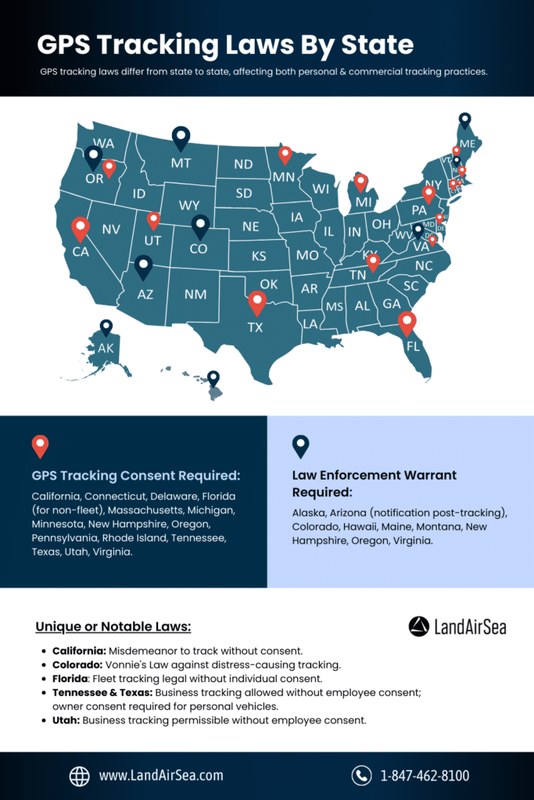
California, Texas, Florida, and several other states have specific statutes that address electronic tracking. California Penal Code Section 637.7 makes it a crime to use a GPS device to track someone without consent. Texas Penal Code Section 16.06 prohibits the use of tracking devices without consent. These state laws often carry their own penalties that stack with federal charges.
All-Party Consent vs. One-Party Consent States
Consent rules matter most in states with wiretapping statutes. In all-party consent states, everyone involved must know about the tracking. In one-party consent states, only the person doing the tracking needs to be aware. This distinction becomes critical when a tracker also records conversations inside the vehicle.
States With No Specific GPS Tracking Law
Some states have not passed a dedicated GPS tracking statute. That does not mean tracking is legal. Prosecutors in these states typically rely on stalking, harassment, trespassing, or computer crime laws to go after unauthorized trackers. The absence of a specific statute does not create a legal gray area; it just means the charge will be different.
Who Can Legally Install a GPS Tracker on a Car?
Vehicle Owners Tracking Their Own Cars
If you own the car, you can generally install a tracker on it, even if someone else is driving it. This is why parental monitoring apps and teen-driver trackers are widely available and legal. The key is that the vehicle belongs to you, and you have the right to know where it is.
Employers and Fleet Managers Tracking Company Vehicles
Businesses can track company-owned vehicles, but disclosure matters. Courts have ruled against employers who hid trackers on personal vehicles or failed to inform employees about fleet tracking. A written fleet policy that explains tracking, data collection, and retention is the best protection for both the employer and the employee.
Law Enforcement and Private Investigators
Law enforcement generally needs a warrant for real-time GPS tracking. Private investigators face a different set of rules and must comply with state licensing laws and privacy statutes. In many states, PIs cannot place a tracker on a vehicle without the owner’s consent, and doing so can cost them their license.
When GPS Tracking Becomes Illegal: Common Violations
Tracking a Spouse, Ex-Partner, or Family Member Without Consent
Domestic situations are where most GPS tracking prosecutions begin. Sliding a tracker onto an ex’s car to monitor their movements is illegal in most states, even if you are married or share children. The fact that you own the car title does not automatically make it legal, especially if the vehicle is registered to both parties or used primarily by the other person.
Installing Trackers on Vehicles You Don’t Own
Putting a tracker on a neighbor’s car, a coworker’s car, or a vehicle you sold but still have a key to is a clear violation. Ownership is the legal threshold in most states, not possession of the keys. Even if your intentions are harmless, the act of tracking someone without their knowledge is what creates liability.
Selling or Sharing Location Data Without Permission
Even if you legally collected location data, sharing it with someone who is not authorized to receive it can create liability. This is especially true for businesses that collect telematics data and then sell it to data brokers without clear consent. The Federal Trade Commission has pursued enforcement actions against companies that mishandle location data.
- Get written consent from the vehicle owner before installing any tracker
- Disclose fleet tracking to employees in a written policy
- Use visible trackers whenever possible
- Delete location data when it is no longer needed
- Install a tracker on a vehicle you don’t own without permission
- Track a spouse or partner without their knowledge
- Sell location data without clear consent
- Attempt to remove a tracker you found until police document it
How to Use a GPS Tracker Legally: Compliance Best Practices
Get Written Consent and Keep Documentation
Written consent is the gold standard. If you are installing a tracker on a vehicle you do not own, get a signed agreement that explains the purpose, the data collected, and who can access it. Keep that document as long as the tracker is active, and update it if the use changes.
Use Visible Trackers for Fleet and Business Vehicles
Visible trackers are less likely to create legal problems than hidden ones. Many fleet companies use plug-in OBD-II trackers that are obvious to drivers. A clear fleet policy that references the tracker helps establish consent and reduces the risk of an employee claiming they did not know.
Set Clear Data Retention and Access Policies
Do not hold onto location data forever. Establish a retention schedule, limit access to authorized personnel, and delete data when it is no longer needed. This reduces both privacy risks and legal exposure. If you are using a commercial tracking service, review its privacy policy to understand how your data is handled.
If you are using a fleet tracking service, review its data retention and sharing practices before signing up. Some services share aggregated location data with third parties, which can create compliance headaches under state privacy laws.
Penalties for Violating GPS Tracker Privacy Laws
Criminal Charges, Fines, and Jail Time
Depending on the state, unauthorized GPS tracking can be a misdemeanor or a felony. California treats egregious cases as felonies with up to a year in jail. Federal stalking charges carry even steeper penalties, including multi-year prison sentences. A criminal record for GPS tracking can also affect professional licenses, security clearances, and immigration status.
Civil Lawsuits and Monetary Damages
Victims of illegal tracking can sue for invasion of privacy, intentional infliction of emotional distress, and trespass. Courts have awarded significant damages, including punitive damages meant to deter future misconduct. In some states, the victim can also recover attorney’s fees, making it easier to pursue a case even with limited resources.
How to Detect and Remove an Illegal GPS Tracker From Your Car
Physical Sweep: Common Hiding Spots
Trackers are often hidden in the OBD-II port, under the dashboard, inside the bumper, or in the wheel well. Check the undercarriage with a flashlight and inspect the trunk lining and seat frames. Look for unusual wires, small magnetic boxes, or devices that do not look like factory components. The OBD-II port is the same diagnostic port that mechanics use and that some wireless CarPlay adapters rely on for power and data, so it pays to know what belongs there.
RF Detectors and Smartphone Scanning Apps
RF detectors can pick up the signal from a GPS tracker, but they require some skill to use correctly. Smartphone apps that scan for Bluetooth or Wi-Fi devices can also help, though they are not foolproof. A professional sweep is the most reliable option if you have reason to believe you are being tracked.
Steps to Take After Finding a Hidden Tracker
If you find a tracker, do not touch it more than necessary. Document its location with photos, then contact law enforcement. Do not attempt to confront the person you suspect placed it, and avoid removing the device until police have a chance to process it for evidence. Tampering with evidence or removing a tracker yourself can complicate a criminal case.
- Confirm that you own the vehicle or have written consent from the owner
- Check your state’s specific GPS tracking statutes
- Review your fleet or employee handbook for tracking policies
- Decide whether a visible or hidden tracker is appropriate for your use case
GPS tracking is legal when you own the vehicle or have the owner’s consent. When in doubt, get it in writing, keep the tracker visible, and respect state and federal privacy laws.