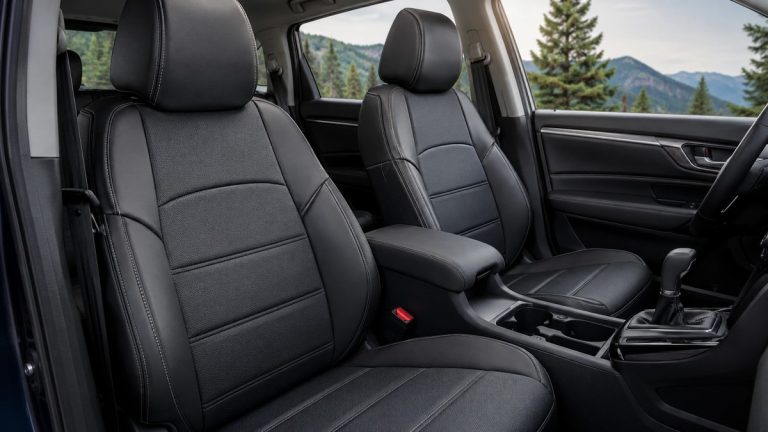
Are Leather Seat Covers Worth It? A Practical Guide for Car Owners

Yes, leather seat covers are worth it when you want better protection, easier cleaning, and a more premium interior. The best value comes from vehicle-specific covers that fit tightly and support your seat-mounted airbags.
Leather seat covers can protect factory upholstery, improve the look of an older cabin, and make daily cleanup easier. However, cheap universal covers may slide, trap heat, block seat controls, or interfere with side airbags.
My name is Brandon Walker. I enjoy road trips, automotive DIY work, and simple upgrades that make a car more comfortable without creating new problems.
I have found that leather seat covers can be a smart upgrade, but the material and fit matter more than the word “leather” printed on the box. This guide will help you decide whether they make sense for your car, truck, or SUV.
What Are Leather Seat Covers?
Leather seat covers are removable layers placed over your factory car seats. They protect the original fabric or leather from spills, dirt, sunlight, pet hair, and normal wear.
Some covers use genuine leather. Many affordable products use PU leather, vinyl, synthetic leather, or a mix of leather panels and fabric backing.
“Leather seat cover” does not always mean genuine animal leather. Read the material description closely. Terms such as PU leather, vegan leather, leatherette, and synthetic leather usually describe man-made materials.
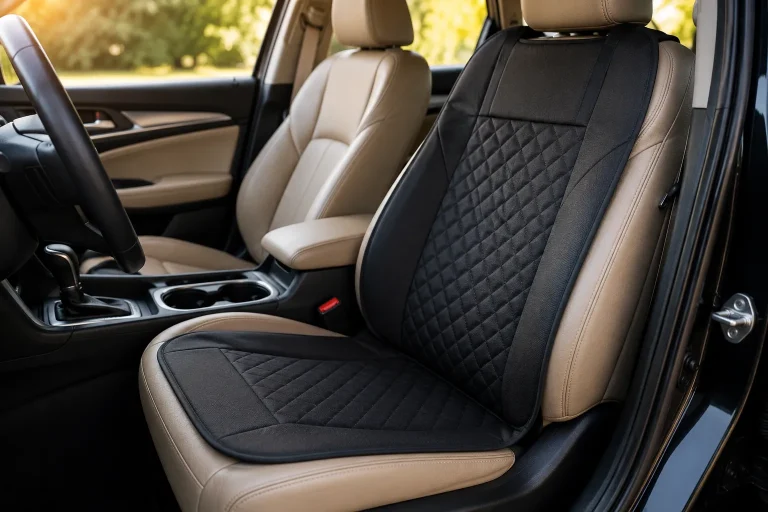
Leather covers are available in three main fit types:
| Fit Type | Best For | Main Advantage | Main Limitation |
|---|---|---|---|
| Universal | Drivers on a small budget | Low cost and easy to find | May look loose or move around |
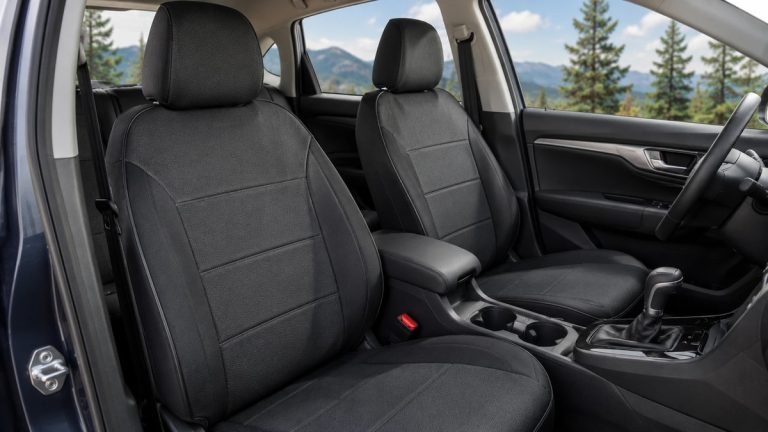
| Semi-Custom | Popular sedans, trucks, and SUVs | Better shape than a universal cover | May not match every seat control or headrest |
| Custom-Fit | Long-term owners who want a factory-style look | Tight fit and vehicle-specific cutouts | Higher cost and longer installation time |
Are Leather Car Seat Covers Worth It?
For many drivers, yes. They are especially useful when the factory seats are still in good condition and you want to keep them that way.
They can also improve a worn interior without the cost of professional reupholstery. A good set can make an older car feel cleaner and more modern.
Leather seat covers may be worth buying when you:
- Drive with children, pets, tools, or outdoor gear
- Eat or drink inside the vehicle
- Want to protect cloth seats from stains
- Want a more premium-looking cabin
- Plan to keep the car for several years
- Want easier cleanup after commuting or road trips
You can explore more cabin upgrades in our interior accessories guide.
Main Benefits and Drawbacks
- Protects factory upholstery
- Wipes clean more easily than cloth
- Can improve the cabin’s appearance
- May hide faded or stained seats
- Available in many colors and patterns
- Custom-fit sets can look close to factory upholstery
- Cheap covers can slide or wrinkle
- Dark materials may become hot in direct sun
- Some products can block seat-mounted airbags
- Universal covers may hide controls or storage pockets
- Low-quality surfaces may crack or peel
- Premium custom-fit sets can be expensive
Why Leather Seat Covers Matter
Your seats receive more contact than almost any other part of the interior. Clothing, sweat, sunlight, food, tools, and pet claws can slowly damage the surface.
A removable cover creates a barrier between daily life and the factory upholstery. This can be useful for leased cars, work trucks, family vehicles, and vehicles you may sell later.
Seat covers also make cleaning simpler. Instead of treating a deep cloth stain, you can often wipe a synthetic leather surface with a damp microfiber towel.
For safe cleaning methods and interior maintenance ideas, visit our car care guide.
When I judge a seat cover, I check it after several normal drives. I look for movement near the seat base, bunching behind the knees, blocked controls, and loose straps. A cover that looks good while parked may still shift during daily driving.
Which Material Gives the Best Value?
The right material depends on your budget, climate, comfort needs, and how hard you use the vehicle.
Genuine Leather
Genuine leather can feel soft and premium. It may develop a natural appearance over time, but it usually costs more and needs regular conditioning.
Full genuine leather covers are less common than synthetic alternatives. Some products use genuine leather only on the center panels.
PU or Faux Leather
PU leather is a practical choice for most drivers. It is cheaper, easy to wipe, and available in many vehicle-specific designs.
The main concern is long-term quality. Thin PU coatings may peel, especially in hot climates or when exposed to strong cleaning products.
Perforated Leatherette
Perforated panels have many small holes that can reduce the sticky feeling caused by heat. They may also work better with ventilated-looking interior designs.
Do not assume perforations make a cover compatible with factory ventilated seats. Airflow can still be reduced.
How to Choose the Right Leather Seat Covers
- Confirm the exact year, make, model, and trim
- Check whether the seats have side airbags
- Look for cutouts for controls, armrests, and headrests
- Confirm compatibility with heated or ventilated seats
- Choose a surface that matches your climate
- Check whether front and rear covers are included
- Read the warranty and return policy
- Review real customer installation photos
For most daily drivers, I recommend a vehicle-specific, airbag-compatible PU leather set with perforated center panels, reinforced seams, and separate headrest covers. It gives a cleaner fit without the price of full reupholstery.
How to Install Leather Seat Covers
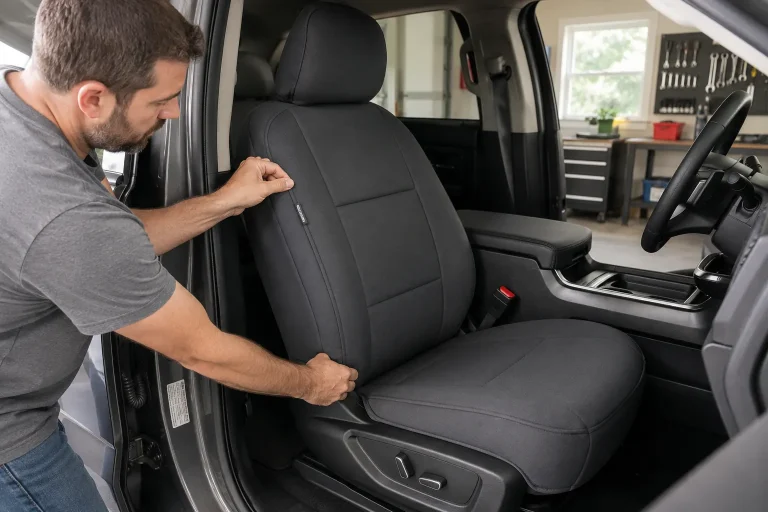
Installation varies by product. Some front covers slip into place in a few minutes. Full custom-fit sets may require removing headrests, feeding straps under the seats, and fitting separate rear-seat sections.
Vacuum crumbs, sand, and pet hair. Wipe the surface and allow it to dry before covering it.
Separate the driver, passenger, rear, headrest, and armrest pieces. Check the labels before installation.
Slide the cover over the backrest. Keep airbag-marked seams on the correct outer side of the seat.
Pull the material forward and smooth it by hand. Connect hooks, straps, or buckles without catching any wiring.
Test the seat track, recline lever, lumbar support, seatbelt buckle, headrest, and folding functions.
After a few trips, tighten loose straps and smooth any wrinkles. The cover should remain stable during entry, braking, and cornering.
Do not rely only on the words “universal fit.” Confirm compatibility with your exact seat shape, integrated seatbelt, folding armrest, headrest style, side-airbag location, heating system, ventilation system, and power controls.
Never install a cover that blocks a seat-mounted side airbag, seatbelt buckle, child-seat anchor, wiring connector, or seat control. Follow the cover manufacturer’s instructions and review the official NHTSA airbag safety information before installing covers on airbag-equipped seats.
How Much Should You Spend?
| Budget Tier | What to Expect | Best For | Value Rating |
|---|---|---|---|
| Under $80 | Universal fit, basic material, simple straps | Temporary protection or older vehicles | Fair |
| $80–$180 | Thicker material, better padding, semi-custom shape | Daily drivers and family cars | Good |
| $180–$350 | Vehicle-specific fit, better seams, full-row options | Long-term ownership | Very Good |
| $350 and Up | Premium materials, complex fitment, factory-style appearance | Enthusiasts and newer vehicles | Good if fitment is excellent |
Prices vary by vehicle, number of rows, material, brand, and installation method. A three-row SUV usually costs more to cover than a two-seat coupe.
Install Tips for a Better Fit
- Install the covers on a warm day so the material bends more easily
- Work slowly around plastic trim and seat wiring
- Keep seams straight before tightening straps
- Do not pull one strap too tightly before fitting the others
- Tuck loose material evenly instead of forcing it into one area
- Check the fit again after several days of driving
- Keep airbag labels and breakaway seams fully visible
Use a flashlight before passing straps under a power seat. Many modern seats have motors, sharp rails, sensors, and wiring below them. Route each strap away from moving parts.
Leather Seat Cover Do’s and Don’ts
- Choose covers made for your vehicle
- Clean the original seats before installation
- Use mild interior cleaners
- Test every seat control after fitting
- Retighten straps when needed
- Park in shade when possible
- Do not cover airbag seams
- Do not use harsh household chemicals
- Do not place straps over wiring
- Do not block seatbelt buckles
- Do not ignore loose or sliding covers
- Do not assume all “leather” products are genuine leather
Are Leather Covers Good for Cloth Seats?
Yes. Cloth seats are often the best candidates for leather-style covers because the original fabric can stain and hold pet hair.
A properly secured cover can also grip cloth better than smooth factory leather. The main concern is moisture. Do not install a cover over a wet seat, because trapped moisture may cause odor or mildew.
Are They Good for Factory Leather Seats?
They can be, but choose carefully. Some cover backings may mark, rub, or trap heat against factory leather.
Look for a soft, non-abrasive backing. Remove the covers from time to time so you can inspect and clean the original upholstery.
General vehicle maintenance advice from Edmunds car care resources can also help you build a regular interior and exterior maintenance routine.
Many modern front seats contain more than padding and upholstery. They may also hold airbags, occupancy sensors, heating elements, ventilation fans, motors, and wiring. That is why fitment is a safety issue, not just a style choice.
Who Should Buy Leather Seat Covers?
| Driver Type | Are They Worth It? | Best Choice |
|---|---|---|
| Family with young children | Usually yes | Easy-clean, water-resistant custom-fit covers |
| Pet owner | Usually yes | Thick, scratch-resistant covers with secure anchors |
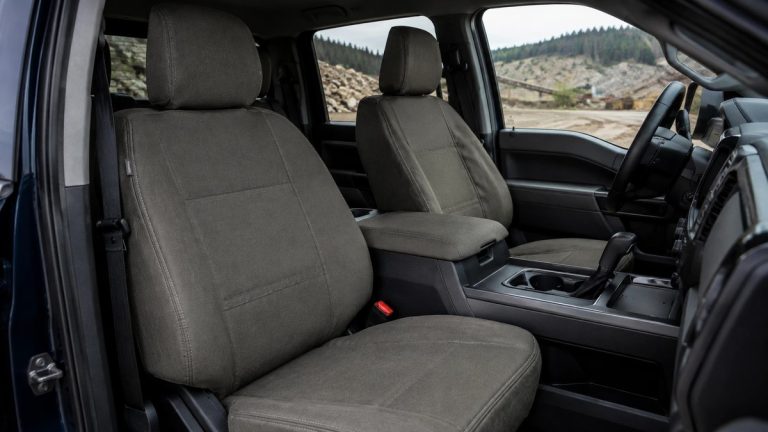
| Work-truck owner | Yes | Durable fitted covers with reinforced seams |
| Occasional weekend driver | Maybe | Affordable semi-custom front covers |
| Luxury-car owner | Only with care | Soft-backed, airbag-compatible premium covers |
| Hot-climate driver | Maybe | Light-colored perforated material |
| Driver with ventilated seats | Only if compatible | Manufacturer-approved ventilated-seat design |
Drivers who carry tools, emergency gear, or outdoor equipment may also benefit from our safety gear guide.
- Leather seat covers are worth it for protection, easier cleaning, and cabin style
- Vehicle-specific fit is usually more important than genuine leather material
- Airbag and seat-control compatibility must come before appearance
- PU leather offers the best balance of price and daily practicality for many drivers
- Premium covers make the most sense when you plan to keep the vehicle for years
Leather seat covers are worth buying when they fit your vehicle correctly, stay secure, and do not interfere with safety equipment. For most drivers, a good custom-fit synthetic leather set provides better value than a cheap universal cover or an expensive genuine leather set with poor fitment.
Frequently Asked Questions
Yes, they can be worth the money if you want to protect the original seats, improve the interior, and make cleanup easier. Vehicle-specific covers usually offer the best value.
Yes. Leather-style covers work well over cloth seats when the original fabric is clean and dry. Secure every strap so the cover does not slide.
Dark and solid leather-style covers can become hot in direct sunlight. Light colors, perforated panels, window shades, and shaded parking can help.
Yes. An incompatible cover may block or delay a seat-mounted side airbag. Use only covers clearly designed for your vehicle and airbag system.
Genuine leather usually feels more natural and premium. PU leather is cheaper, easier to clean, and often offers better value for daily use.
Many covers work with heated seats, but thick padding can slow heat transfer. Confirm compatibility with both the seat-cover maker and vehicle manual.
A quality set may last several years with normal use and proper care. Heat, sunlight, harsh cleaners, poor fit, and heavy wear can shorten its life.
Usually yes. Custom-fit covers stay in place better, look cleaner, and provide more accurate openings for airbags, controls, headrests, and armrests.
My Practical Recommendation
Leather seat covers are worth it for most family cars, work trucks, pet-friendly vehicles, and daily drivers. I would choose a custom-fit or strong semi-custom set instead of the cheapest universal option.
Before ordering, confirm the exact vehicle fitment and check every safety feature. After installation, test the seat controls, seatbelts, folding sections, airbags, heating, and ventilation.
A good cover should feel secure and comfortable while driving. It should protect the original seat without creating a new problem. When those points are covered, leather seat covers can be one of the most useful and visible interior upgrades you can make.